Evening Grosbeaks

Evening Grosbeak Courtesy Pixabay Alain Audet, Photographer
Evening Grosbeak
Courtesy Pixabay
Alain Audet, Photographer
The stunningly beautiful evening grosbeaks are mystery birds that come pouring from the canyons to invade our urban areas on a daily cycle- an eruptive population here in Cache Valley. I always hear their loud chirp notes high above, often beyond sight. They alight in towering trees where they feed and converse with chirps and trills all the while. Highly social, evening grosbeaks are unlike their four solitary grosbeak cousins.

Their behaviors leave me puzzled. – Why this daily ritual of flying back and forth from rural to urban? Where and when do they nest? Do they nest close together given their flock behavior? Are they urban or rural nesters? I was able to find some answers, but there are yet many gaps in on their behaviors and highly variable populations.

The Evening Grosbeaks were of much interest from the late 1800s to the mid-1900s, resulting from its eastward range expansion. Comparatively few recent studies have been conducted other than breeding ecology and behavior in Colorado during the 90’s. They were formerly restricted to the western United States but have expanded their range eastward across the country, perhaps a result of the establishment of box elder trees in eastern cities with abundant seeds that persist through the winter, and outbreaks of eastern forest insects which they feast on.

Evening Grosbeak Courtesy US FWS George Gentry, Photographer
Evening Grosbeak
Courtesy US FWS
George Gentry, Photographer
As is the case with many irruptive, nomadic species, it is difficult to determine their true population. Unfortunately, this bird has almost disappeared from the east once again, and has all but disappeared in the Appalachian Mountains and has suffered heavy declines elsewhere. A focus on understanding what is driving population trends is needed for developing conservation strategies to help it recover.

Potential causes of the Evening Grosbeak’s decline are tar sands mining, which has destroyed large swaths of its Canadian boreal forest breeding habitat. Pesticides used to control spruce budworm, an important food for Evening Grosbeak, may also be a factor. Large numbers are killed by window collisions, and cars during winter, when they gather on roadsides to pick up road salt and grit.

During the breeding season, their behavior is quite secretive, and courtship occurs without elaborate song or display. This secretiveness makes it difficult to study this species’ life history. They breed in high altitude and high latitude various forest types throughout North America. Nests are typically located high up in trees, on horizontal branches well out from the trunk. The female builds the nest, which is a loose saucer of roots and twigs lined with fine grass, moss, rootlets, needles, and lichen. Both parents, generally monogamous, help feed the young. They forage in treetops for insect larvae during the summer, buds in spring, and seeds, berries, and small fruits in winter. They sport heavy, strong beaks which can crack open the toughest shells, including cherry pits- a favorite. Evening Grosbeaks are known to snip off the twigs of Sugar Maple trees and sipping the sweet sap- yum!

As birders and citizen scientists, we must document all we can to supply the much needed dearth of data on this marvelous bird, and report it to www.ebird.org

This is Jack Greene for Bridgerland Audubon- and I’m wild about Utah and its evening grosbeaks!

Credits:

Pictures: Courtesy Pixabay, Alain
Courtesy US FWS,
Text: Jack Greene, Bridgerland Audubon Society

Additional Reading:

Evening Grosbeak, All About Birds, Cornell Lab of Ornithology, Cornell University, https://www.allaboutbirds.org/guide/Evening_Grosbeak

Evening Grosbeak, Coccothraustes vespertinus, Birdweb.com, Seattle Audubon Society, https://www.birdweb.org/birdweb/bird/evening_grosbeak

Evening Grosbeak, Coccothraustes vespertinus, eBird.org, https://ebird.org/species/evegro

Reseeding Great Salt Lake’s wetlands after Phragmites

Reseeding Great Salt Lake’s wetlands: A dense stand of Phragmites australis in the Great Salt Lake wetlands Courtesy & © Karin Kettenring
A dense stand of Phragmites australis
in the Great Salt Lake wetlands
Courtesy & © Karin Kettenring
 
 
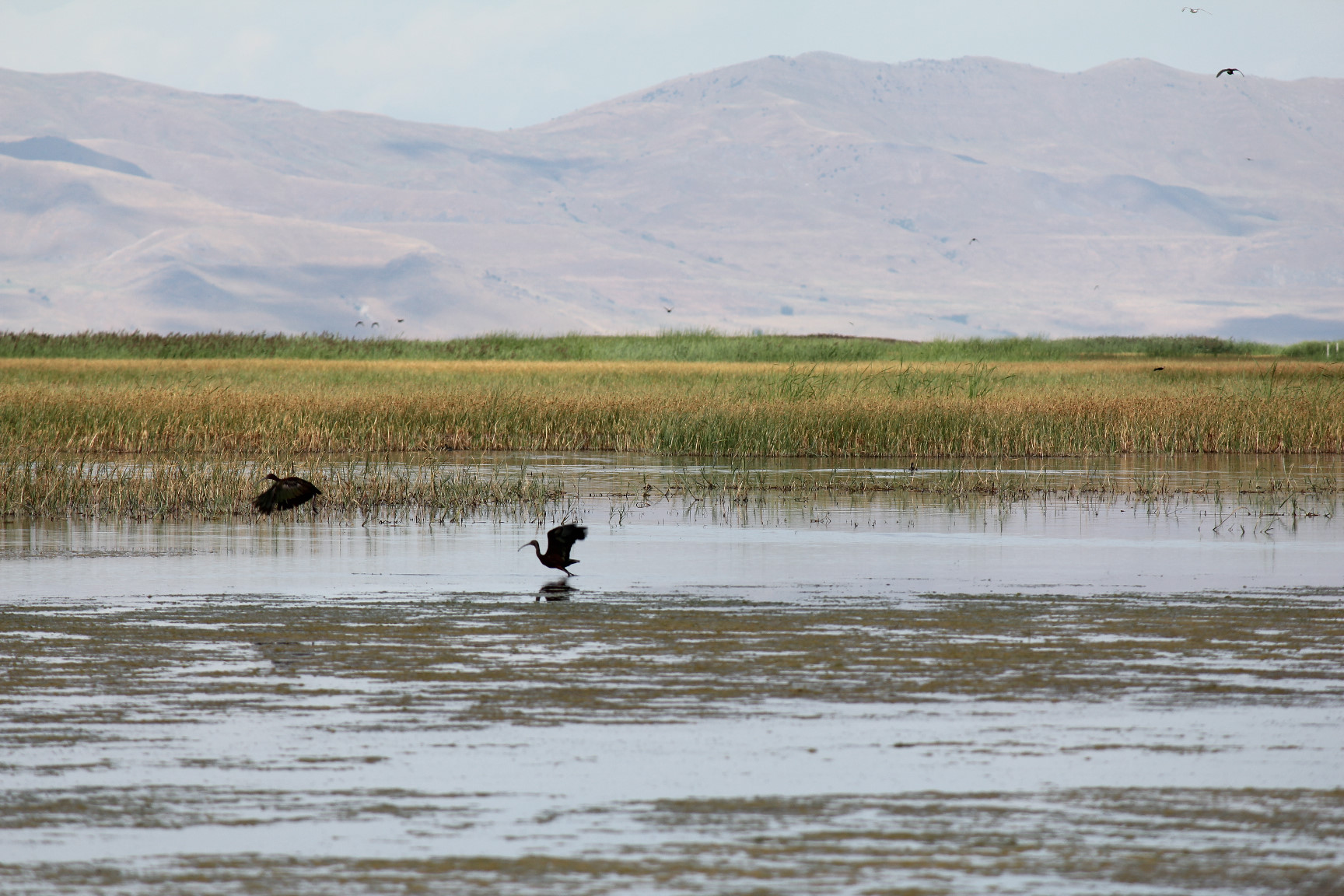
Birds take flight in the Great Salt Lake wetlands Courtesy & © Karin Kettenring Birds take flight
in the Great Salt Lake wetlands
Courtesy & © Karin Kettenring
 
 
Wetland manager & former student in the Kettenring Lab, Chad Cranney in a stand of Phragmites australis Courtesy & © Karin Kettenring Wetland manager & former student
in the Kettenring Lab, Chad Cranney
in a stand of Phragmites australis
Courtesy & © Karin Kettenring
 
 
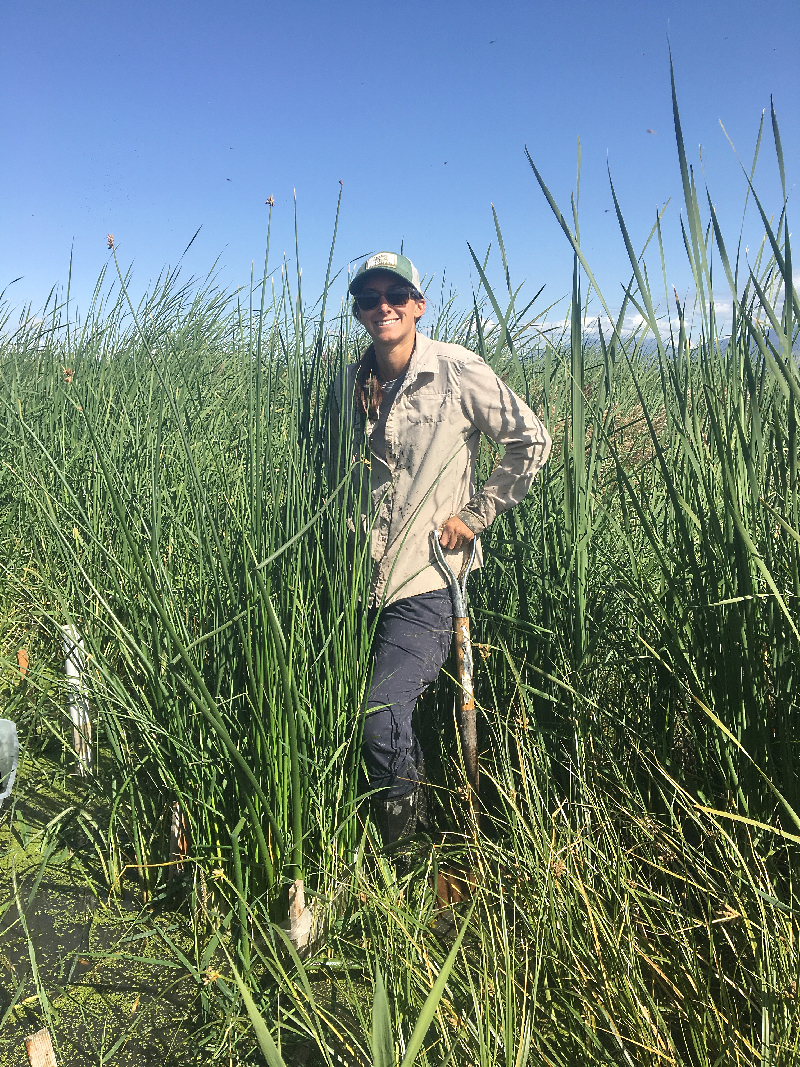
Rae Robinson stands in the wetlands at Farmington Bay Waterfowl Management Area, Courtesy & © Rae Robinson Rae Robinson stands in the wetlands
at Farmington Bay Waterfowl Management Area,
Courtesy & © Rae Robinson
 
 
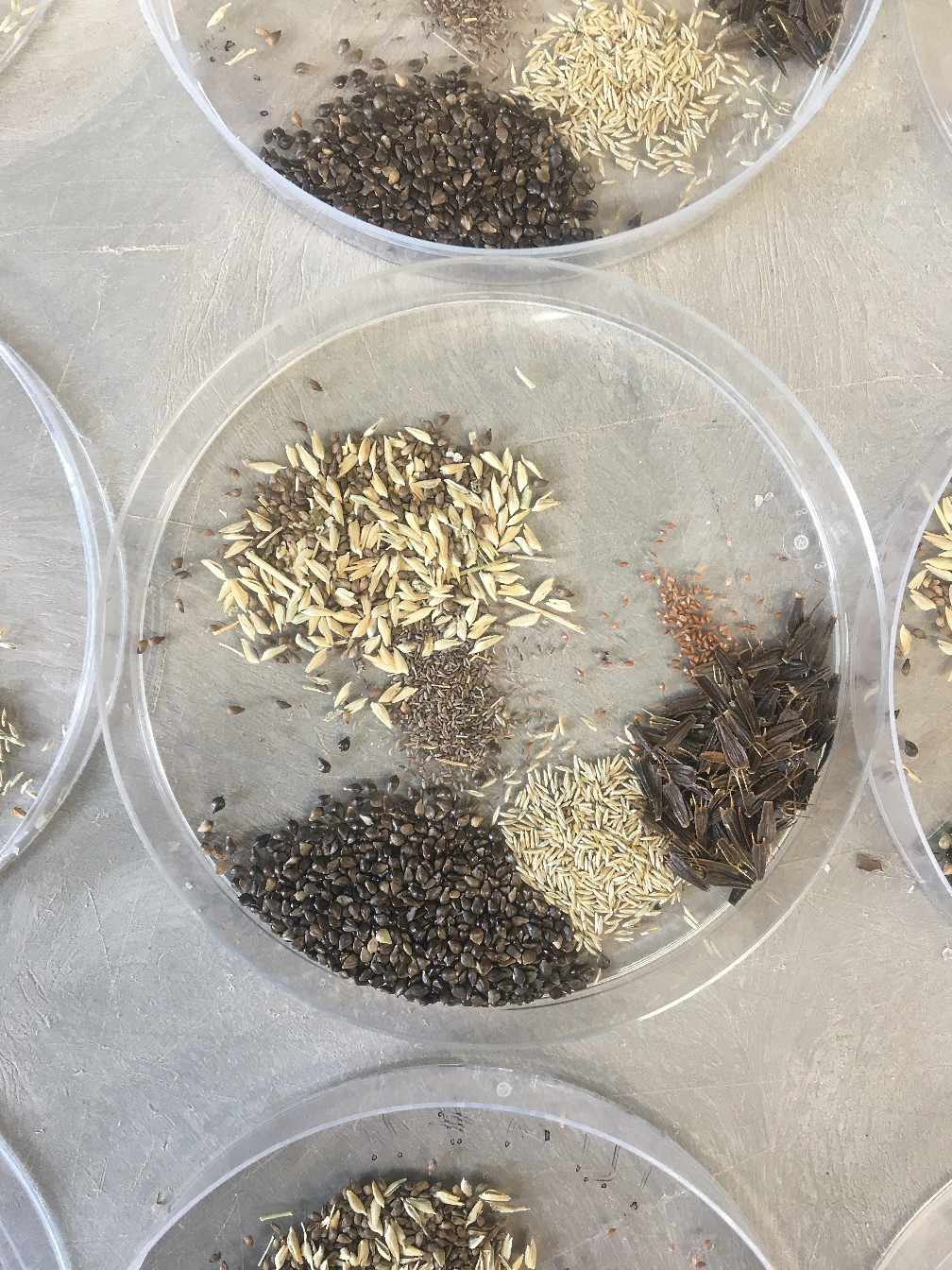
Seeds of several native wetland plant species Courtesy & © Rae Robinson Seeds of several native wetland plant species
Courtesy & © Rae Robinson
 
 
Experimental hydroseeding at Farmington Bay Waterfowl Management Area Courtesy & © Karin Kettenring 8. Seeds of several native wetland plant Experimental hydroseeding
at Farmington Bay Waterfowl Management Area
Courtesy & © Karin Kettenring
8. Seeds of several native wetland plant
 
 
Native wetland plant species grow in the USU greenhouse in February 2020 Courtesy & © Rae Robinson Native wetland plant species
grow in the USU greenhouse
in February 2020
Courtesy & © Rae Robinson
 
 
Revegetation field plots at Howard Slough Waterfowl Management Area in June 2019, Courtesy & © Rae Robinson Revegetation field plots
at Howard Slough Waterfowl Management Area
in June 2019,
Courtesy & © Rae Robinson
The Great Salt Lake provides approximately 75% of Utah’s wetlands, and is a resting area along the Pacific- Americas flyway. Migratory birds rely on the lake as a stopping spot for rest and nutrition which they obtain from the variety of native plant communities. These communities are at constant risk from the invasive reed Phragmites australis which is taking over native wetland plant communities.

This invasive species, also known as common reed, is particularly harmful because it forms monocultures that outcompete native plant communities, diminishing quality of habitat for animal species, leaving nothing but dense tall reeds which grow 5-15 feet high.

Phragmites has spread throughout the wetlands of the Great Salt Lake, Utah and North America.

For the past decade, Karin Kettenring, professor of wetland ecology in the Department of Watershed Sciences at USU and her research team have been searching for the best methods for removing Phragmites such as grazing, mowing, or using herbicides on the invasive reed. Now they are expanding their research to find ways to restore the native wetland plant communities once Phragmites is removed.

Rae Robinson, a second-year master’s student, joined Kettenring’s research team to study native plant revegetation in Great Salt Lake wetlands.

Robinson explains, “The unfortunate part of this is native plant communities often do not return [after Phragmites has been removed] so we need to reintroduce these plants. This is where my Master’s research picks up. We are investigating: what native species to include in these revegetation seed mixes, in what proportions, and in what sowing density.”

In the summer of 2019, Robinson teamed up with the Utah Division of Forestry, Fires & State Lands and Utah Division of Wildlife Resources to begin a large-scale revegetation project in an effort to find the best methods for reseeding native plant species in Great Salt Lake wetlands.

Hydroseed was applied — a mixture of water, seed, and tackifier. The tackifier is a botanical glue used to help the seeds stay in place, it stabilizes the soil so the seeds have a much better chance of sprouting and growing.

During July and August, Robinson returned to the sites to assess the success of the seeding.

Robinson explains, “It is reasonable to think that seeding density would automatically mean a high chance of seeds taking root, but this is not always the case. At one location, a high seeding density leads to greater establishment of native species, but at another spot it does not. We are finding in seed-based restoration there is a lot of plant mortality, or loss. We are asking: Why is that? What causes this failure in restoration? And what are the best ways to establish diverse native plant communities?”

During the winter months Robinson evaluated some new species in the USU greenhouse – these are potential candidates for restoration that might perform better than the species tested in 2019. Results of this preliminary greenhouse trial suggest that nodding (Bag-er-tick) beggartick, golden dock, and fringed willowherb may grow more readily than the previous species evaluated. These three species will be included in experimental revegetation mixes this summer.

The end goal of Robinson’s research is to determine best practices for seed-based revegetation in wetlands and provide better information for wetland managers faced with the challenge of restoring native plant communities.
The restoration of native plant communities in Great Salt Lake wetlands will improve the quality of habitat for birds and enhance the many ecosystem services these wetlands provide.

This is Shauna Leavitt and I’m Wild About Utah.

Credits:
Photos: Courtesy & Copyright © Rae Robinson, Courtesy & © Karin Kettenring
Text: Shauna Leavitt, Utah Cooperative Fish and Wildlife Research Unit, Quinney College of Natural Resources, Utah State University

Sources & Additional Reading

Leavitt, Shauna, Our Invasive Phragmites, Wild About Utah, March 11, 2019, https://wildaboututah.org/our-invasive-phragmites/

Leavitt, Shauna, The Invasive Phragmites, Wild About Utah, April 16, 2018, https://wildaboututah.org/invasive-phragmites/

Rupp, Larry, et al, Phragmites Control at the Urban/Rural Interface, Utah State University Extension, September, 2014, https://digitalcommons.usu.edu/cgi/viewcontent.cgi?article=1688&context=extension_curall

Larese-Casanova, Mark, Phragmites-Utah’s Grassy Invader, Wild About Utah, August 23, 2012, https://wildaboututah.org/phragmites-utahs-grassy-invader/

Muffoletto, Mary-Ann, Mighty Phragmites: USU Researcher Studies Wetlands Invader, Utah State University Extension, June 18, 2009, https://digitalcommons.usu.edu/cgi/viewcontent.cgi?article=1688&context=extension_curall

Common Reed, Phragmites australis, Utah State University Extension, https://extension.usu.edu/rangeplants/grasses-and-grasslikes/common-reed

Duncan, Brittany L., et al., Cattle grazing for invasive Phragmites australis(common reed) management in Northern Utah wetlands, Utah State University Extension, https://digitalcommons.usu.edu/cgi/viewcontent.cgi?article=3038&context=extension_curall

Spring’s Way

Spring's Way: Courtesy & Copyright Patrick Kelly, Photographer
Courtesy & © Patrick Kelly, Photographer
Springtime in Cache Valley is marked by many events. It is a seasonal turn full of unrelenting life. The signs and the emotions they revive are marked by the beauty found in every hour of the day: from the day’s first bird songs, reviving the world from slumber, to their last evening’s lullaby.

Spring is also the time when warmth returns to the sunlight. After winter, I’ll often need to sit in the celestial rays to warm my bones, always hesitant lest snows reappear in May and I get soft. When I allow myself finally to ceade, the feeling of sun on my bare face in spring can only be described though as relief.

In the sun, too, one can’t help but breathe the smell of thaw, green buds, and warming winds. The many scents of earth remind me of its very mineral diversity, often thought of as monolithic, but truly clay, limestone, sand, gravel, and granite each fill the air’s bouquet differently in the wet and dry. These and other reminders which revise winter’s nostalgic fog breathe fresh life with even more vivacity.

Spring also brings with it labor, for who can truly say to love than those who enjoy its work? For me, I do love chores, especially in spring. I enjoy mowing the lawn, pruning trees, tilling the soil, and starting crops just as the Swede enjoys stacking split wood. It is a natural work to us both, a good work, and a labor of provision.

Additionally, these simple actions signify belonging to something larger than myself. It is how I honor the world around me: by acting in accordance to an older, more widely-shared order. I act as spring dictates, and thus am realized as its agent. Tis good to be an agent of such.

It also feels good to allow myself to slip into this annual cycle with such depth. I work on this, for no worthy cause is without struggle. I engage myself to grow the better in me as I make the choices of participation with the goal that one day it shall be habit. I leave the windows ajar to hear the birds and let their sage songs smudge my home. I walk often and stop to feel the catkin buds, listen to the absence of traffic, and smell big firs. I tend to wildflowers with my attention, nurturing tomorrow’s colors, medicines, and gifts.

So this spring, I invite you to try it on: being an agent of the season. Even if you do not garden, begin by experiencing what a new-born leaf feels like. Even if you do not mow, grab a blade, breathe it in, and harvest into your mind the scent. Even if you cannot understand them, open the windows and let the birds morning revelry and lullabies bookend your days. In these ways, we can all do good and live still by spring’s way.

I’m Patrick Kelly, and I’m Wild About Utah.
 
Spring’s Way-Credits:

Images: Image Courtesy & Copyright Patrick Kelly, Photographer, all rights reserved
Audio: Contains audio Courtesy & Copyright Kevin Colver
Text:    Patrick Kelly, Director of Education, Stokes Nature Center, https://logannature.org
Included Links: Lyle Bingham, Webmaster, WildAboutUtah.org

Spring’s Way-Additional Reading

Parkhurst, Emma, MS, CHES, Eight Stress-relieving Activites to Give You a Break from the Coronavirus, USU Extension | Davis County, https://extension.usu.edu/covid-19/mental-and-emotional-well-being

Brower, Naomi, Four Tips for Cultivating an Attitude of Gratitude, Utah State University Extension, https://extension.usu.edu/covid-19/mental-and-emotional-well-being

Brower, Naomi, Finding a Cure for the Sheltering-in-Place Blues, Utah State University Extension, https://extension.usu.edu/covid-19/mental-and-emotional-well-being

Swinton, Jonathon, Remaining Coronavirus Calm, Utah State University Extension, https://extension.usu.edu/covid-19/mental-and-emotional-well-being

Spring’s Way

You, Too, Can Teach Outside!

A few months ago, I shared a piece on this program called “Why I Teach Outside.” In it, I discussed the academic research and my personal anecdotes that reaffirm the education community’s movement toward experiential learning and learning beyond the four walls of a classroom. But it was mostly theoretical—an explanation more of WHY experiential learning in nature works than HOW it can be implemented. Then, my third graders were sent home for the year. And I started getting emails. Parents needed ideas to supplement the online curriculum and to ultimately get their children unplugged on a regular and healthy basis. So, here are a few of my ideas.

There is probably no greater privilege as an educator than to witness the natural and emphatic curiosity of youngsters. Use that to your advantage. You’ll find that it’s rather simple. Let’s start with that most boisterous and emphatically curious age group of all—the lower elementary students: Kindergarten through 2nd grade. Science is the low-hanging curricular fruit for this age group outside, but it’s also rich with wonder—things in the natural world that make kids say “Huh?! What? WHY? HOW?” We call those things phenomena, and you can find them in your backyard. Have your Kindergartner explore the plant life around your home, making observations about the similarities and differences they notice between the various species. Ask guiding questions of them to help them arrive at an explanation for those patterns they find in nature. Help your first grader investigate the various sounds made by natural objects found in your yard or neighborhood. Why, for instance, does a rock make a sharp, high-pitched cracking sound when hit against another rock but creates a dull, low-pitched thud when dropped onto the ground? Second graders can move into more complex explorations of properties of matter. Have your child make a house out of leaves and sticks. Then, have them explain why they used particular materials in specific ways? What is their reasoning?

Upper elementary students in grades 3 through 5 or 6 can begin making connections between the natural world and their own lives. Moving beyond the science curriculum, I sent my third graders on a socially-distanced driving tour of Cache Valley. Without leaving their vehicles, students were able to study their communities and identify necessary natural resources that humans in the area require to survive. Fourth grade social studies curriculum is focused on Utah. Wherever you live, there is an important and noteworthy social artifact nearby that you can explore while also observing conservative social distancing measures. That research I mentioned earlier tells us definitively that even just being outside helps our brains make new connections and create better understandings. Fifth and sixth grade social studies focus in part on the rights and responsibilities of humans. What better time to sit beneath a tree and think and write about those questions of liberty and social responsibility. That journal will become a primary resource for future generations eagerly asking, “What was it like? How did you handle everything?” I for one, have to get out into the bright, green world to be able to handle life quarantined indoors.

We can’t forget socialization, either, which is one of the most important parts of middle and high school. How do we combine the natural world, social networking, and social distancing?! My school’s staff discussed Earth Day activities recently as a way of getting kids and families unplugged and active. Have your older students brainstorm with friends via video conference, text messaging, phone calls, or social media ways in which they can, individually but as a group, promote the welfare and stewardship of our planet. Pick up trash around the neighborhood; plant a garden; write a letter to a legislator. They will find what’s important to them.

These suggestions are not an exhaustive list of course. But, no matter what you end up doing with whichever age group children you have, remember, more important than the academic rigor of your homeschooling is the physical, mental, and emotional well-being of your children. Help them flourish during this difficult time. Unplug the computer. Get them outside.

I’m Josh Boling, and though I’m stuck at home, I’m still Wild About Utah!

Credits:

Photos: Courtesy & Copyright Josh Boling
Sound: Courtesy & Copyright
Text: Josh Boling, 2018

Additional Reading

Boling, Josh, Why I Teach Outside, Wild About Utah, November 11, 2019, https://wildaboututah.org/why-i-teach-outside/

OutdoorClassroomDay.com, https://outdoorclassroomday.com/resources/

Third Grade Nature Activities, Education.com, Inc, a division of IXL Learning, https://www.education.com/activity/third-grade/nature-activities/

40 Wet and Wild Outdoor Science Projects and Activities, wearteachers.com, Shelton, CT, https://www.weareteachers.com/contact-weareteachers/