Copyright © 2008 Don Rolfs
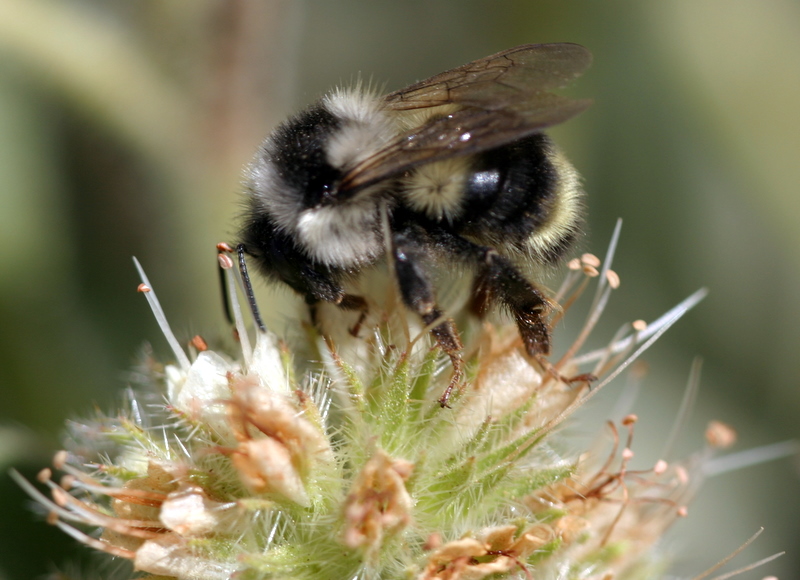
When crocuses are pushing through the snow in your garden, you might see another sign of spring: the flights of bees. Other bees may fly in spring, but few are as early or as boisterous as bumble bees. Utah is home to more than a dozen species of bumble bees, all of who belong to the genus Bombus (which in Greek means buzzing). All have a combination of black and yellow markings on their bodies. Some also have orange bands. Unlike honey bees that pass the winter warmly clustered in hives, bumble bees overwinter as solitary queens, dormant under a few inches of loose soil or leaf litter. These queens are quiescent all winter until warming soil beckons their reawakening to start their colony.
From March to May, watch for a behavior called nest searching, when the big, burly queen bumble bees fly low over the ground, stopping often to investigate holes in the earth or in building foundations. Bumble bees nest in small, insulated cavities, such as abandoned rodent burrows or bird houses. Once the queen finds a suitable nest site, she is out and about, foraging for pollen and nectar to provision her offspring. After a few days she will have sufficient food to begin laying eggs. Like all bees, her offspring progress through four life stages: egg, larva, pupa and adult. In just under a month, her daughters develop into adults, each chewing free of its cocoon.
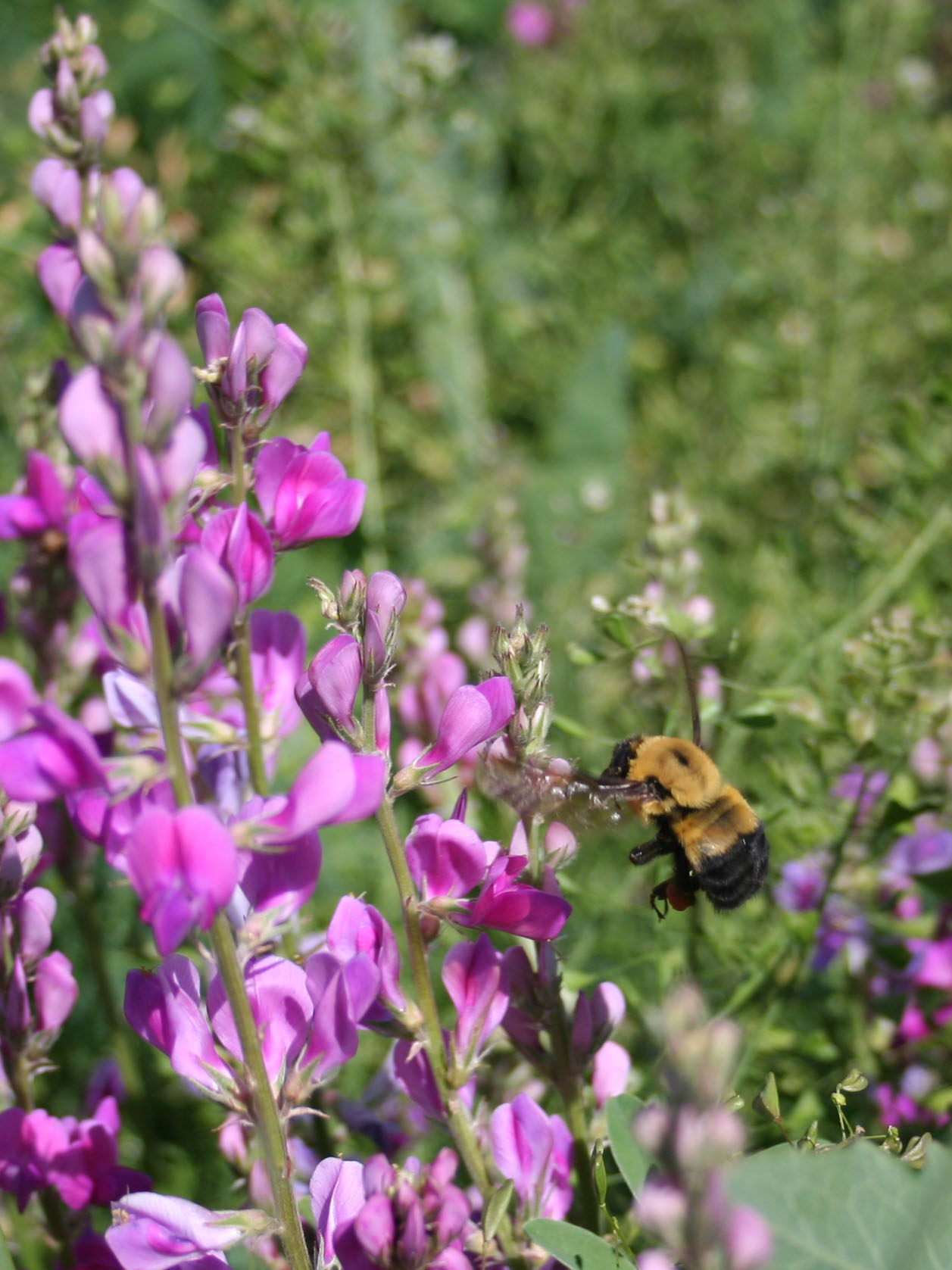
Foraging on Hedysarum
Copyright © 2008 Jamie Strange
This is Linda Kervin for Bridgerland Audubon Society.
Credits:
Photo: Courtesy & Copyright © 2008 Don Rolfs & Jamie Strange
Theme: Courtesy & Copyright Don Anderson as performed by Leaping Lulu https://www.leapinglulu.com/
Text: Jamie Strange, USU USDA-ARS Pollinating Insect Research Unit
Voice: Linda Kervin, Bridgerland Audubon Society, https://bridgerlandaudubon.org/
Additional Reading:
The following references were accurate as of the date of publication or most recent update.
How To Identify Bumble Bees of Northern Utah, written by Jim Cane with help from Matt Shepherd
illustrations by Linda Kervin, https://www.ars.usda.gov/Services/docs.htm?docid=10749
Bumblebee Watch, https://www.bumblebeewatch.org/
Bumble Bee Watch is a citizen science project through the partnership of The Xerces Society, the University of Ottawa, Wildlife Preservation Canada, BeeSpotter, The Natural History Museum, London, and the Montreal Insectarium.