Feed the Birds

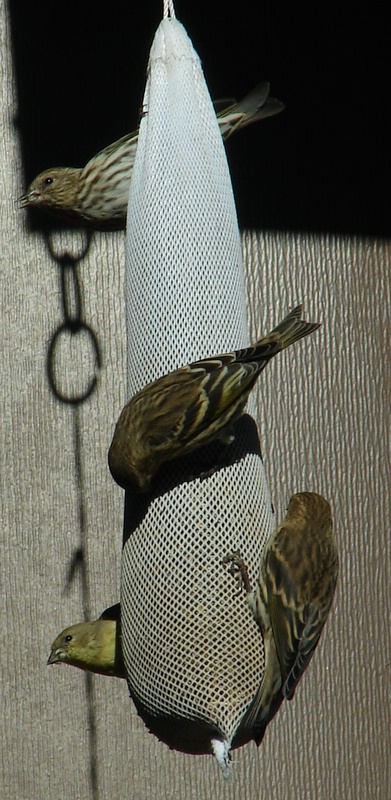
Pine Siskins and a Goldfinch feed on thistle from a sock feeder. Photo Courtesy and Copyright 2008 Jim Cane
Pine Siskins and an
American Goldfinch feed
feed on thistle from a sock feeder
Copyright © 2008 Jim Cane

Hopper Feeder
Copyright © 2008 Jim Cane
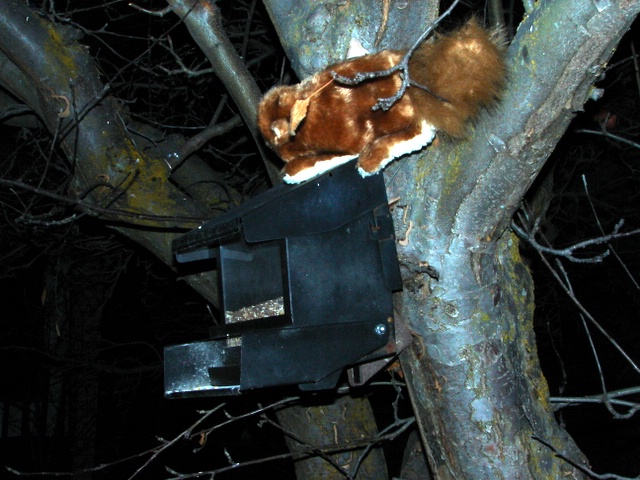
Hopper Feeder with Squirrel
Copyright © 2008 Jim Cane

Suet Feeder
Copyright © 2008 Jim Cane

Many of our songbirds have flown south to spend the winter. I confess that on frigid days I envy them. Like you and I, though, many birds remain behind. They fluff their feathers to trap body heat and spend these short days in a perpetual hunt for food to keep them warm. You can help their hungry quest by feeding our diverse songbirds using a convenient birdfeeder.

For loose seed, I use a hopper feeder. The hopper resembles a tiny roofed house which is filled with seed that is dispensed from a trough at its base. Another common style of seed feeder is a broad tray. It will need a roof and drain holes to keep the seed dry and free of mold.

(https://wildstore.wildsanctuary.com/collections/special-collections)

Our feeder is above a stone walkway for birds like juncos that prefer seed spilled on the ground. A ring of upturned tomato cages around this area excludes cats, and the season’s discarded Christmas tree will provide cover for the birds.

(https://wildstore.wildsanctuary.com/collections/special-collections)

Chickadees and finches prefer black oil sunflower seed, rich in fats and proteins, with a thin shell. If you buy seed mixes, juncos and sparrows will take white millet, but milo or so-called red millet is a filler. Doves and jays like cracked corn.

(https://wildstore.wildsanctuary.com/collections/special-collections)

Goldfinches and pine siskins flock to Niger thistle seed dispensed from a fine mesh sock that you can buy where you purchase the seed. Woodpeckers and nuthatches appreciate a suet feeder, which is a wire mesh cage containing a block of seed-filled suet. Expect magpies to hammer chunks off the suet block occasionally.

Don’t forget water, a scarce commodity for birds in winter. Plug in models remain ice free with scant power use.

Nothing quite cheers a wintry day for me like colorful songbirds noisily bustling at our feeders. If you do put up feeders, consider joining in Project Feeder Watch. You can find details on our Wild About Utah website.

Credits:

Photo: Courtesy & Copyright 2008 Jim Cane, Bridgerland Audubon Society, www.bridgerlandaudubon.org
Text: Jim Cane & Linda Kervin, Bridgerland Audubon Society

Bird Recordings Courtesy and Copyright Dr. Kevin Colver, WildSanctuary, Soundscapes, https://wildstore.wildsanctuary.com/collections/special-collections

Additional Reading:

Project Feederwatch, Cornell Lab of Ornithology, https://feederwatch.org/

How to Attract Birds to your Yard, All About Birds, Cornell Lab of Ornithology, https://www.allaboutbirds.org/Page.aspx?pid=1138

The Great Backyard Bird Count, Birdsource.org, https://www.birdcount.org/

Creating landscapes for Wildlife — A Guide for Backyards in Utah, A production of the Utah Division of Wildlife Resources, Utah State University Cooperative Extension Service & Department of Landscape Architecture and Environmental Planning, https://wildlife.utah.gov/pdf/landscapingforwildlife.pdf
A New Winter Coat

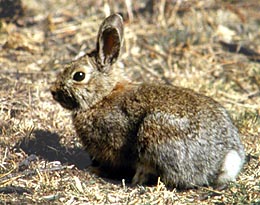
Snowshoe Hare Summer Coat
Lepus americanus
Photo Courtesy US NPS


Snowshoe Hare Winter Coat
Photo Courtesy USDA Forest Service

Hi, this is Mark Larese-Casanova from the Utah Master Naturalist Program at Utah State University Extension.

November is the time of year in Utah when the weather takes a quick turn from autumn to winter. As the line of snow from occasional October storms creeps further down the mountains, I’m inspired to bring wool sweaters and down jackets out of storage. It’s easy for us to simply wear extra layers, but what about the animals that live high in the mountains, where winter set in weeks ago?

While some mammals are cued by their internal clocks to begin sleeping the winter away, many brave creatures prepare to spend the winter searching for food. Being active in the cold requires a warmer coat, just like it does for us. The reduced amount of daylight in autumn triggers hormones that cue many mammals to grow a thicker and warmer fur coat.

Some mammals, such as weasels and hares, counter the onset of winter by ‘changing’ the color of their fur from brown to white. For instance, snowshoe hares grow long, white guard hairs that cover their brown fur in winter. The snowshoe hare benefits from this thicker, white fur not only by retaining heat, but also by using camouflage to hide from its many predators.

Surprisingly, white fur also helps insulate. It might make more sense for brown fur to be warmer since it is darker in color. But, white hairs, which lack the pigment melanin, have more air spaces that result in greater insulation.

While weasels are predators, there are other animals, including birds of prey, that feed upon them. The winter coat of the ermine, also referred to as the short-tailed weasel, is entirely white, except for the black tip of its tail. When an ermine runs, the tip of its tail swings wildly, drawing the attention of a predator away from its body to its expendable tail.

The timing of change from brown to white fur in autumn is critical to survival. An early snow can create a white backdrop for a snowshoe hare that is still brown, likely increasing the chance of predation. Conversely, a lack of snow late in autumn can make a snowshoe hare that has already turned white stand out like a sore thumb.

The number of days with snow on the ground has been decreasing in mountainous areas, and predation of snowshoe hares has been highest in spring and autumn. In some areas of the country, such as the Cascades and Olympic Mountains, snowshoe hares are mottled white and brown year round, or never turn white in winter. Comparing these populations to others across the West will help us better understand how animals, such as the snowshoe hare, are able to adapt to our changing climate.

For Wild About Utah, I’m Mark Larese-Casanova.

Credits:

Images: Courtesy US NPS & USDA Forest Service
Text:     Mark Larese-Casanova, Utah Master Naturalist Program at Utah State University Extension.
Additional Reading:

University of Montana (2009, February 24). Climate Change Hurting Hares: White Snowshoe Hares Can’t Hide On Brown Earth. ScienceDaily. Retrieved November 22, 2011, from https://www.sciencedaily.com/releases/2009/02/090224220347.htm

Rust, C.C., R. M. Shackelford, and R.K. Meyer (1965). Control of Pelage Cycles in the Mink. Journal of Mammalogy, Vol. 46, No. 4 (Nov., 1965), pp. 549-565, https://www.ncbi.nlm.nih.gov/pubmed/5838224

Fraley, J. (2006). Snowshoe Hare: Lepus americanus. Montana Outdoors Portrait. Montana Fish, Wildlife, and Parks, https://fwp.mt.gov/mtoutdoors/HTML/articles/portraits/snowshoe.htm


Why Do Birds Stand on One Leg?

Black-Necked Stilt
Himantopus mexicanus

Copyright © 2011 Holly Strand

Hi I’m Holly Strand.

On a recent Saturday my family and I visited Tracy Aviary in Salt Lake City. Walking through the wetland exhibit we saw a couple of black-necked stilts—a common Utah shorebird–snoozing near the boardwalk. They stood at the exhibit shoreline, each one balancing on a single, long, skinny, leg—the other leg drawn into the plumage underneath their bodies. Rotated almost 180 degrees, their heads and bills were tucked snugly under folded wings.

Why do birds choose to stand on just one leg? Wouldn’t it be more comfortable to distribute one’s weight on two? I’ve tried standing on one foot during yoga practice. It doesn’t feel like a good position for rest or sleep.

Over the years, several theories have emerged about this behavior in birds. One is that standing on one leg will reduce fatigue in the other leg. Then, if threatened, the bird could escape more quickly by using the rested leg to initiate motion.

Another theory is camouflage. Two parallel legs may look suspicious to ground level or aquatic prey. In contrast, one leg might resemble a reed or branch.

Perhaps the most common speculation is that birds are conserving heat via one-leggedness.

I wanted to test this last theory by standing barefoot in last weekend’s snow. First on one leg–and then on two for comparison. But I had a bad cold. I asked my biologist husband to do it for me, thinking he would be happy to support rational scientific thinking in the household. Alas, he rolled his eyes and made a noise that I’ve learned to translate as “You’ve got to be kidding me.”

Giving up on him, I dug deeper into the scientific literature.

At last I found a recent study conducted by Matthew Anderson and Sarah Williams of St. Joseph’s University. By observing Carribbean flamingoes these researchers showed that more birds stand on one foot at lower temperatures than at higher temperatures. Further, we know that loss of body heat to water is significantly greater than to air. So it would make sense to see more birds standing on one foot in the water than on land. And indeed this was the case. 80% of birds in water stood on one leg. On land, significantly less did so. Thus it does seem that temperature regulation is at least one reason for standing around on one leg.

In Utah look for one legged roosting among stilts, American avocets, night herons, double-breasted cormorants, and storks. Ducks, magpies and pigeons also stand on one foot for several minutes at a time
–it’s just harder to notice it in them because of their short legs.

For Wild About Utah, I’m Holly Strand.

Credits:

Table: Courtesy & Copyright © 2011 Holly Strand
Text: Holly Strand

Sources & Additional Reading:

Anderson, Mathew and Sarah A. Williams. 2010. Why do flamingos stand on one leg? Zoo Biology. Volume 29, Issue 3, pages 365–374, May/June 2010

Clark Jr., GA. 1973. Unipedal postures in birds. Bird-Banding, 44:22–26.

Tracy Aviary in Salt Lake City https://www.tracyaviary.org/

Nature’s Recyclers

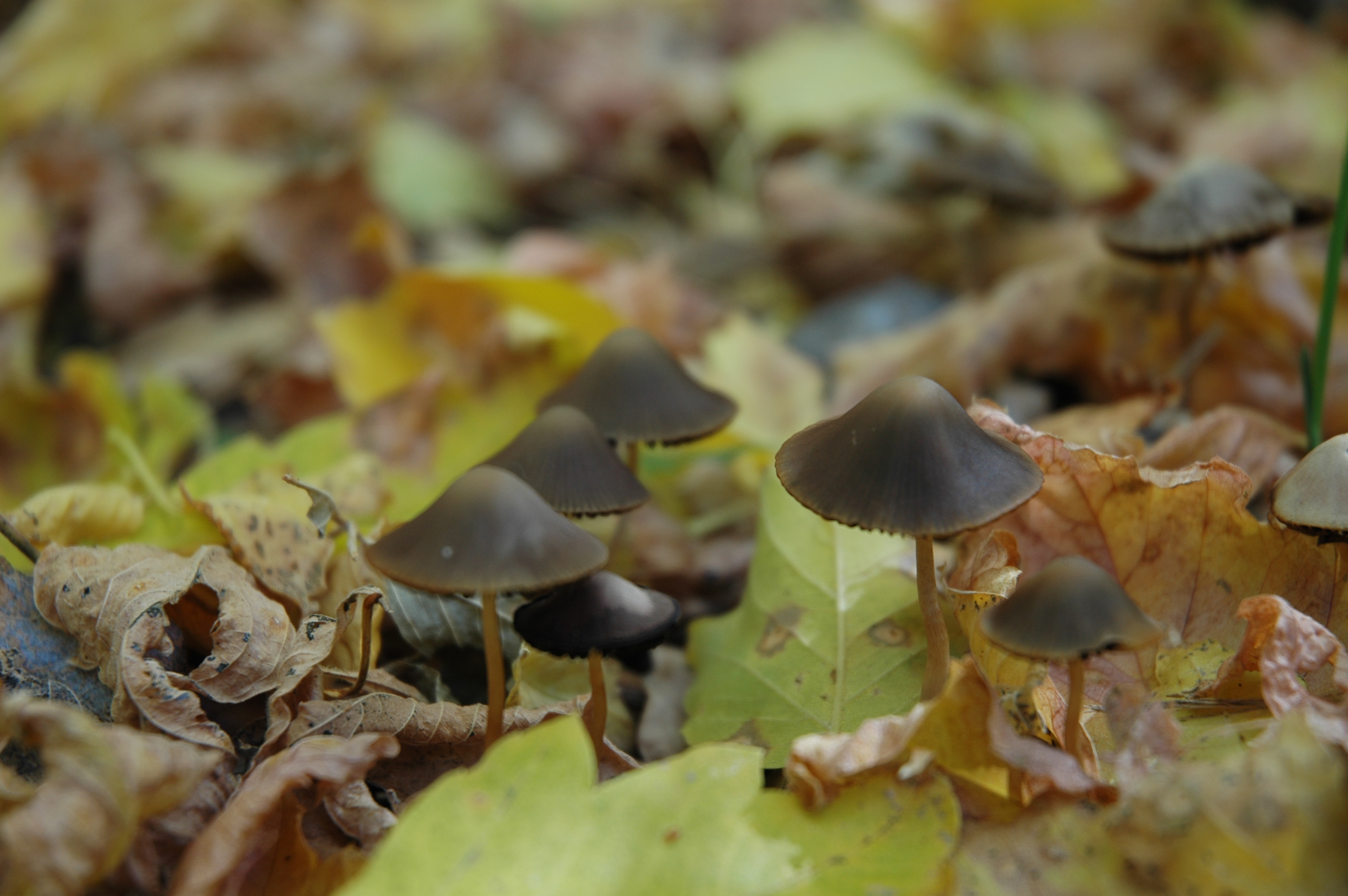
Fungi Decomposing Fall
Leaves Outside the
Stokes Nature Center
Courtesy & © 2011 Andrea Liberatore
Stokes Nature Center


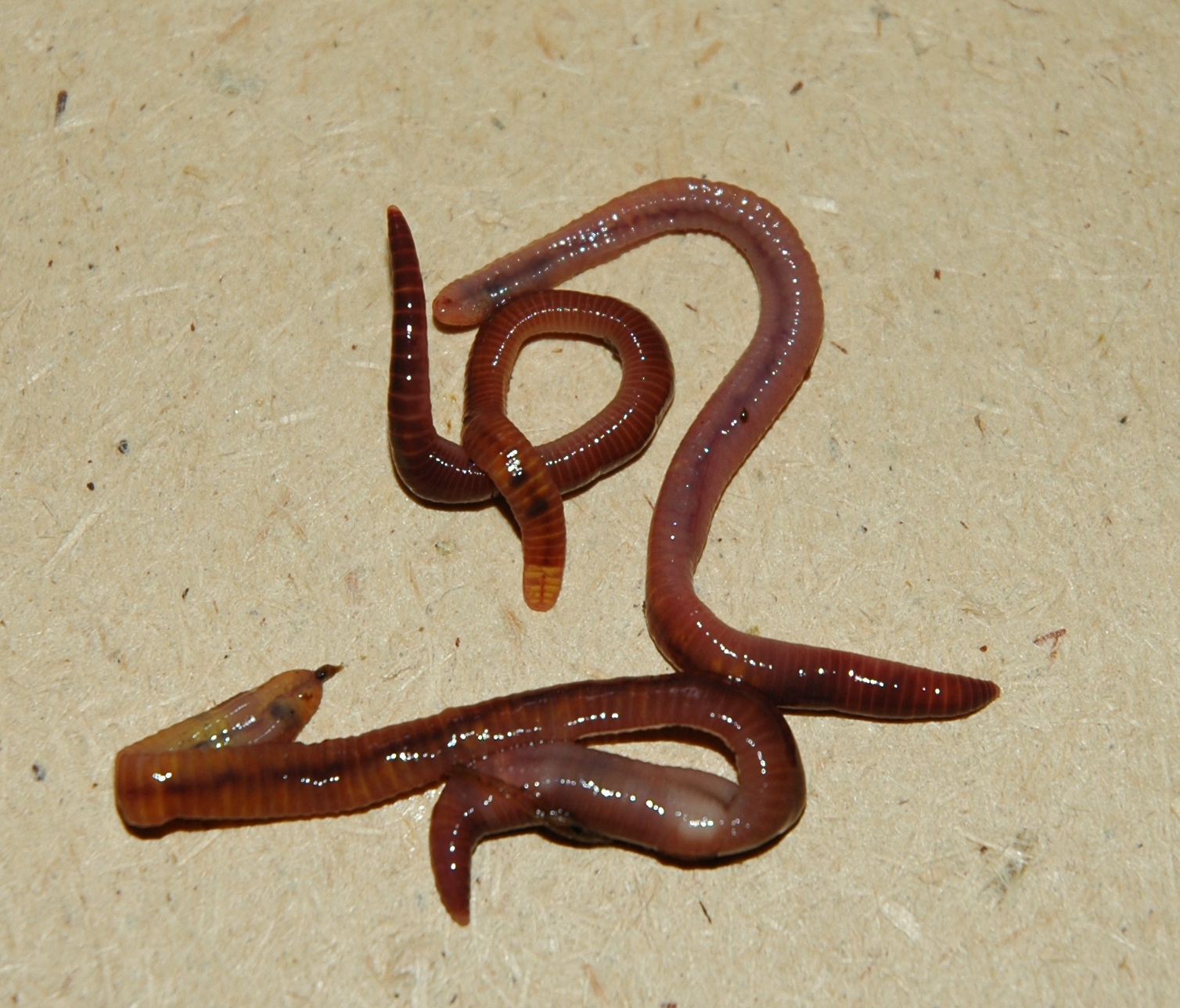
Redworms Eisenia fetida
from Stokes Nature Center’s
vermicomposting system
Courtesy & © 2011 Andrea Liberatore
Stokes Nature Center

On Tuesday, November 15th, our nation celebrates America Recycles Day. While the day itself tends to focus on human recycling activity, I thought we should also give a nod to nature’s recyclers. Worms, maggots, fungi, beetles, and bacteria – it sounds like a list of leftover Halloween horrors. But in reality, we should be more afraid of what our world would look like without these creepy-crawlies, for these are nature’s recyclers. Scientists call these organisms saprophytes, and as important as their role in life is, they are more likely to evoke a shudder than any feeling of gratitude.

What decomposers actually do is break dead things down into smaller and smaller pieces, until all that is left are the basic molecular components that make up all living things such as nitrogen, phosphorous, carbon, and potassium. Once broken down, this material is then free to be taken up again by plants and animals that use them to live and grow. This cycle of nutrients is vital to life on Earth, and our saprophytic friends make it all possible.

While decomposition would occur even without the help of the decomposers, it would take much, much longer. In some landfills, newspapers have been unearthed that are more than 20 years old, and still quite readable. This is because landfills often create anaerobic environments, where oxygen-loving insects, fungi, and bacteria cannot live and therefore cannot aid decomposition. If without decomposers, a newspaper can last 20 years, what would happen to much larger and hardier items such as tree trunks and roadkill? I shudder to think about it.

Did you know that the U.S. throws more than 33 million tons of food waste into landfills each year? This organic material goes to waste there – taking up valuable space and taking longer than normal break down. So this year, celebrate America Recycles Day by employing some of nature’s recyclers in your yard. Consider starting a compost pile where your fall leaves and food scraps can get broken down into nutrient-rich all-natural fertilizer for next year’s garden.

If you’re in Cache Valley and are looking for a way to mark America Recycles Day, please join the Stokes Nature Center for a tour of the Logan landfill to find out what happens to your garbage and how recycling programs ensure there is less of it. This free tour will be held at 4:30pm on Tuesday, November 15th. For details, visit the Stokes Nature Center website at www.logannature.org.

For composting tips and more information about nature’s recyclers, visit Wild About Utah online at www.wildaboututah.org. Thank you to the Rocky Mountain Power Foundation for the research and development of this Wild About Utah topic. For the Stokes Nature Center and Wild About Utah, this is Andrea Liberatore.

For the Stokes Nature Center and Wild About Utah, this is Andrea Liberatore.

Credits:

Photos: Courtesy & © 2011 Andrea Liberatore, https://logannature.org/
Text:    Andrea Liberatore, Stokes Nature Center, logannature.org

Composting Tips & Information:

Farrell-Poe, K. and Koenig, R. (2010) Backyard Composting in Utah. Utah State University Cooperative Extension. https://extension.usu.edu/files/publications/factsheet/HG-Compost-01.pdf

U.S. Environmental Protection Agency: Composting. https://www.epa.gov/epawaste/conserve/rrr/composting/index.htm

Additional Reading:

Fogel, R. (2002) Waste Not, Want Not: Fungi as Decomposers. Utah State University Herbarium. https://utahpests.usu.edu/ipm/ornamental-pest-guide/diseases/wood-decay-fungi

Hoff, M. (2009) Young Naturalists: Nature’s Recyclers. Minnesota Conservation Volunteer Newsletter. July-August 2009. https://files.dnr.state.mn.us/publications/volunteer/young_naturalists/natures_recyclers/natures_recyclers.pdf

U.S. Environmental Protection Agency (2011) Basic Information About Food Waste. https://www.epa.gov/osw/conserve/materials/organics/food/fd-basic.htm