The History of Our National Forests

Civilian Conservation Corps
enrollees clearing the land
for soil conservation
Photo Courtesy National Archive
Franklin D. Roosevelt Library (NLFDR)
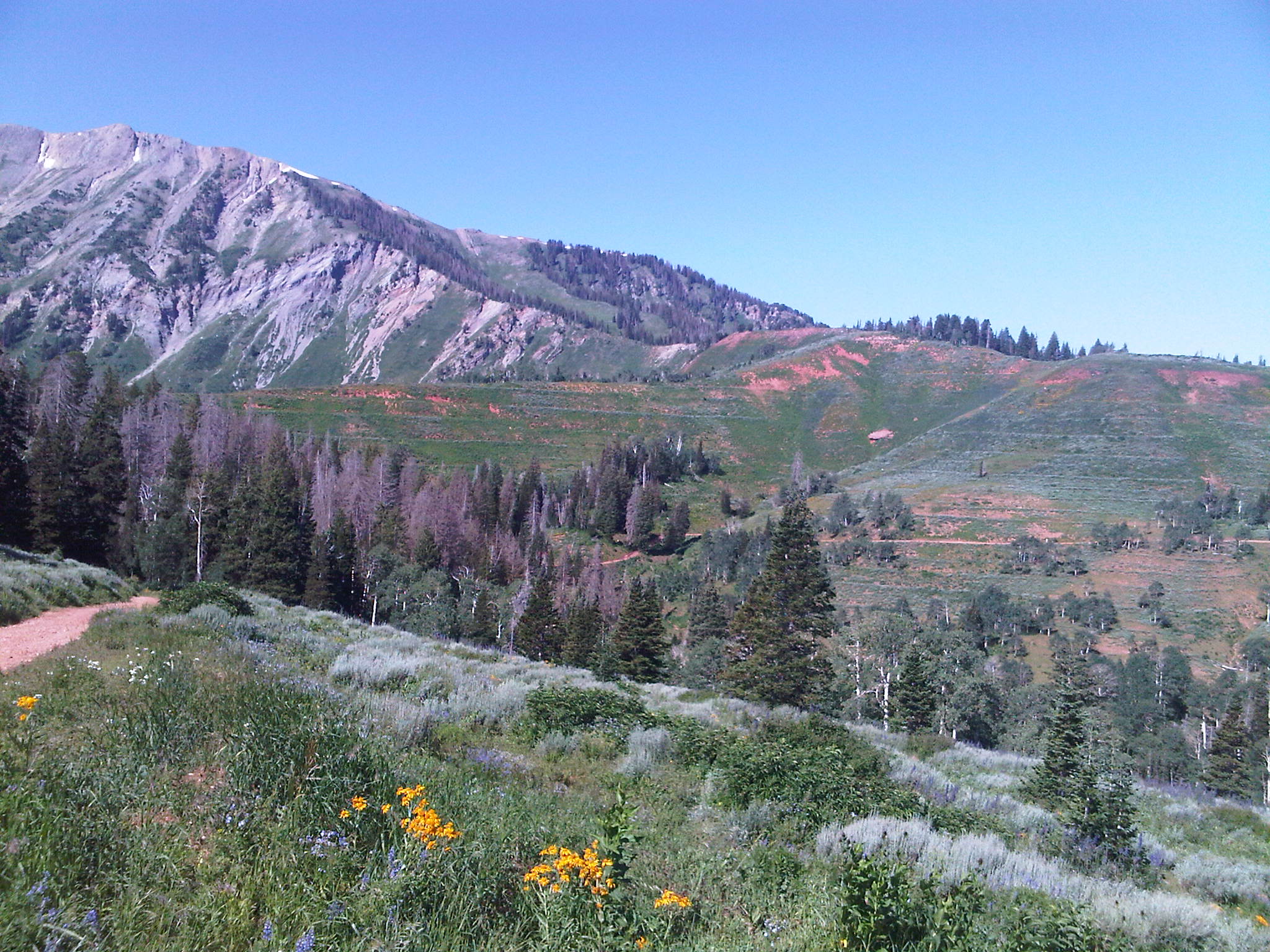
Terraces near Mount Nebo trailhead
Payson Canyon
Photo Courtesy & Copyright © 2011
Lyle W. Bingham, Photographer

Albert Potter
Photo Courtesy USDA Forest Service
The Greatest Good
A Forest Service Centennial Film

Hi, this is Mark Larese-Casanova from the Utah Master Naturalist Program at Utah State University Extension.

Warm springtime weather brings clear trails up in the mountains, and hiking through the shade of Douglas-fir on a warm weekend day had me wondering about Utah’s National Forests and how they came to be.

Back in the days of the early pioneers, Utah’s mountains were recognized as resources for survival, providing clean water for drinking and irrigation and lumber for building homes. The high mountain pastures were also valuable summer forage for livestock. In the late 1840’s, Parley Pratt declared, “The supply of pasture for grazing animals is without limit in every direction. Millions of people could live in these countries and raise cattle and sheep to any amount.” Many settlers shared this view, and unmanaged grazing resulted in deteriorated rangelands in just 20 to 30 years. By 1860, some Utah towns were experiencing regular flooding and heavy erosion due to insufficient vegetation to stabilize the soil. Unregulated wholesale timber harvesting during the same period also contributed to these conditions.

In 1881, the US Department of Agriculture’s Division of Forestry (later renamed the Forest Service) was established, and its first job was to gather information about the condition of the nation’s forests. In 1902, Albert F. Potter, who was the inspector of grazing for the General Land Office, conducted a survey of potential Forest Reserves in Utah. Potter stated that “the ranges of the State have suffered from a serious drought for several years past, and this, in addition to the very large number of livestock, especially of sheep, has caused the summer range to be left in a very barren…condition.”

The demand for lumber and wool during the First World War again led to increased timber harvesting and grazing on our forests. During the Great Depression of the 1930’s, Franklin D. Roosevelt established the Civilian Conservation Corps (CCC) to help implement conservation projects across the country. The CCC was fundamental in re-foresting much of the Wasatch and Uinta Mountain ranges, planting over three million trees in nine years.

Utah’s Forest Reserves were created in the years soon after Albert Potter’s surveys, and were gradually combined into Utah’s seven National Forests that now cover approximately 10,500,000 acres, or about 20%, of the state. Grazing and timber harvesting still occur on much of Utah’s National Forests, but our practices are supported by scientific research and over a century of experience, ensuring more sustainable multiple use and management of our forests today.

For Wild About Utah, I’m Mark Larese-Casanova.

Credits:
Images: Courtesy National Archives, Franklin D. Roosevelt Presidential Library
              and Courtesy and Copyright © 2011 Lyle W. Bingham
Text:     Mark Larese-Casanova, Utah Master Naturalist Program at Utah State University Extension.


Additional Reading:

Baldridge, K.W. The Civilian Conservation Corps in Utah. Utah History To Go.
https://historytogo.utah.gov/utah_chapters/from_war_to_war/thecivilianconservationcorps.html

Prevedel, D.A., and C.M. Johnson. 2005. Beginnings of Range Management: Albert F. Potter, First Chief of Grazing, U.S. Forest Service, and a Photographic Comparison of his 1902 Forest Reserve Survey in Utah with Conditions 100 Years Later. United States Department of Agriculture, US Forest Service. R4-VM 2005-01. https://www.fs.fed.us/rm/pubs_other/r4_vm20005_01.pdf
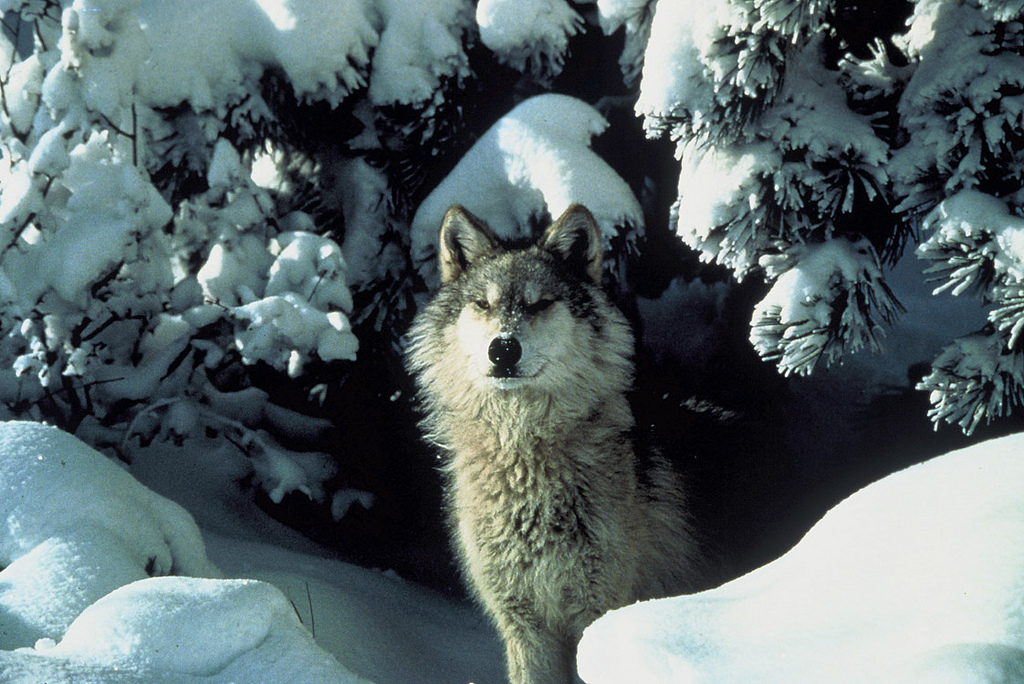
Who’s Afraid of the Big Bad Wolf?

Who’s Afraid of the Big Bad Wolf: Yellowstone Gray Wolf, Photo Courtesy US FWS. Tracy Brooks, Photographer
Yellowstone Gray Wolf(Canis lupus)
Photo Courtesy US FWS
Tracy Brooks, Photographer

Who’s Afraid of the Big Bad Wolf: Yellowstone Gray Wolf with Radio Collar, Photo Courtesy US FWS, William Campbell, PhotographerYellowstone Gray Wolf(Canis lupus)
With Radio Collar
Photo Courtesy US FWS
William Campbell, Photographer

Hi, I’m Holly Strand.

In January, a movie called “the Grey” briefly flashed across theater screens. The plot pits man against nature: after a plane crash in the Alaskan wilderness, 7 men struggle to return civilization. In the process, the group is whittled down one by one, victims of ferocious and hungry wolves.

Author Barry Lopez says the wolf as human predator is a theme that runs deep into the human psyche. Thus, this movie is just the latest in a long line of wolf eats man stories. Little Red Riding Hood maybe the most famous example. Aesop’s fables are full of wolves with questionable intentions. The tale that chills me the most is a flashback within Willa Cather’s My Ántonia. Riding sleds in a snowstorm, an entire wedding party is attacked and then devoured by a pack of hungry wolves, the bride screaming in terror until she is taken down and finished off….. Ugh.

On the other hand we have legends and accounts that praise the wolf as noble and even familial. Many native American groups revered the wolf for its strength and survival skills.

The founders of Rome, Romulus and Remus were supposedly raised by wolves, as was Mowgli in Rudyard Kipling’s Jungle Book. In 1963 Farley Mowat published Never Cry Wolf, which led many people to see wolves in a more sympathetic light.

So how do wolves regard humans? Are we a creature to be avoided or are we dinner entrees?

Not long ago, a team of researchers examined the data on wolf attacks from a handful of European countries plus North America. From these records they drew the following conclusions:

  1. The majority of attacks on humans involve wolves with rabies.
  2. Among non-rabid attacks, most victims were children, and to a lesser extent, adult women.
  3. When wolves lose their fear of humans, attacks increase dramatically.
  4. Wolf–dog hybrids are innately less fearful of humans, making them extremely dangerous.
  5. And lastly—and not surprisingly—provoking a wolf is likely to incite an attack. Cornering a wolf or entering a den with pups is not a good idea.


The study also confirmed that the number of attacks on humans has dropped dramatically in the last century. This is not just because there are fewer wolves. It’s that the situations leading to attacks are not common anymore:

For instance, the incidence of rabies has dropped dramatically in North America and Europe.

And we no longer send our children out alone to tend sheep or other livestock, an invitation for a wolf attack.

Another factor is that legislation has curtailed the breeding of wolf-dog hybrids. Now 40 U.S. states effectively forbid the ownership, breeding and importation of wolf-dogs, while others impose some form of regulation upon ownership.

In summary, the consensus of wolf specialists is that under normal circumstances people aren’t on the wolf’s menu. Bears, cougars, tigers and other large carnivores are more likely to attack humans.

For Wild About Utah, I’m Holly Strand.


Credits:

Images: Courtesy US FWS https://images.fws.gov
Text: Holly Strand

Sources & Additional Reading:


Carnahan, Joe. Director. 2012. The Grey https://www.imdb.com/title/tt1601913/

Linnell, J.D.C., R. Andersen, Z. Andersone, L. Balciauskas, J.C. Blanco, L. Biotani, S. Brainerd, U. Breitenmoser, I. Kojola, O. Liberg, J. Loe, H. Okarma, H. Pedersen, C. Promberger, H. Sand, E. Solberg, H. Valdmann, P. Wabakken. 2002. The fear of wolves: A review of wolfs attacks on humans. NINA Oppdragsmelding: 731:1-65. https://www.lcie.org/docs/damage%20prevention/linnell%20nina%20op%20731%20fear%20of%20wolves%20eng.pdf

Löe J. and E. Röskaft. 2004. Large Carnivores and Human Safety: A Review. AMBIO: A Journal of the Human Environment Aug 2004 : Vol. 33, Issue 6, pg(s) 283-288

Lopez, Barry. 2004. Of Wolves and Men. Twenty-fifth anniversary edition, Scribner.

Mech, L. David. 1991. The way of the wolf. Voyageur Press, Stillwater, MN

Palamar, Colette. A History of Attitudes Toward Wolves. University of Idaho.

https://www.class.uidaho.edu/kpgeorge/issues/wolves_history/history_symbol.htm [accessed April 18, 2012]

Silver, Marc. 2012. Would Real Wolves Act Like the Wolves of ‘The Grey’? National Geographic interview of Daniel MacNulty, Utah State University. [accessed April 18, 2012]

Wily Coyotes

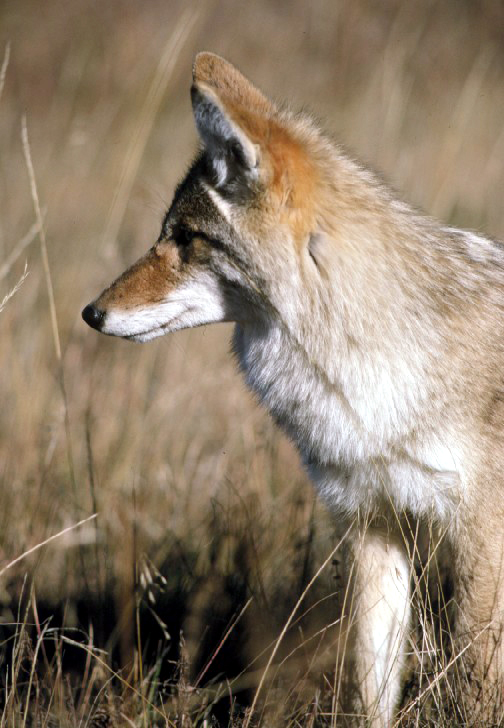
Coyote Canis latrans
Photo Courtesy & Copyright © 1991
Eric Gese, Photographer

Coyote Canis latrans
Photo Courtesy & Copyright © 1991
Eric Gese, Photographer

In many of the diverse Native American storytelling traditions, the coyote plays the same role over and over: that of the smart, sly trickster. For those who study coyote behavior, this characterization is well deserved. Coyotes are incredibly adaptable creatures – intelligent, observant, curious and well, wily.

Their ability to adjust how they live to fit their circumstances can be seen in almost every aspect of the coyote’s life. For starters, coyotes will eat just about anything. As omnivores and opportunistic feeders, coyotes might be found hunting creatures as diverse as small mammals, birds, snakes, mule deer fawns, insects, or fish, and also seek out grasses, berries and seeds. They can hunt alone or in packs, and are not below feasting on carrion, rummaging through your garbage, or raiding the cantaloupe patch.

The environments in which coyotes can be found are similarly diverse. While once restricted to the American West, coyotes are now widespread across all of North America and parts of Central America, and can be found in nearly every ecosystem from deserts to forests to urban areas from Belize to Alaska.

Sometimes called ‘song dogs’ these social creatures are known for their nighttime solos and choruses. Their scientific name, Canis latrans literally means ‘barking dog’, and their many vocalizations help pack members and families bond and communicate over long distances. Coyotes have strong family ties, especially during spring, when puppies are born to monogamous coyote couples.

Coyotes are territorial and defend their space vigorously – especially when breeding and denning. Mating occurs from January through February and after a gestation period of only 60 to 62 days, 3 to 12 pups are born blind and helpless in March or April. Young coyotes are nursed for 4-5 weeks at which point they transition to regurgitated meals brought by both parents. Youngsters tag along on family hunts at 8 weeks old and are able to hunt independently by fall.

Interestingly, studies have shown that even coyote breeding is adaptable – a phenomenon called ‘density dependent reproduction’. In areas where coyote populations are stable, females bear lower numbers of pups. But in areas where there is disturbance to the population – for example through increased predation or hunting – females have larger litters. On average, newborn pups have less than a 50% chance of surviving to adulthood due to threats from disease, predators, and starvation. It therefore makes sense for females to bear more offspring in areas where threats may be even greater.

To learn more about coyote adaptability, join the Stokes Nature Center for a tour of the USDA/National Wildlife Research Center Predator Research Facility on June 16th. For more information visit www.logannature.org. Thank you to the Rocky Mountain Power Foundation for supporting the research and development of this Wild About Utah topic.

For the Stokes Nature Center and Wild About Utah, this is Andrea Liberatore.

Credits:
Images: Courtesy and Copyright © Eric Gese
            National Wildlife Research Center, Predator Behavior and Ecology
Text:     Andrea Liberatore, Stokes Nature Center in Logan Canyon.


Additional Reading:

Stettler, Brett. 2009. Coyote (Canis latrans). Utah Division of Wildlife Resources Wildlife Notebook Series No. 19. Found online at:
https://wildlife.utah.gov/publications/pdf/2010_coyote.pdf

Video: Coyotes Cruise NYC, Science Friday & Mark Weckel, https://www.sciencefriday.com/videos/watch/10444

The Migratory Locust in North America; a post mortem

The Migratory Locust in North America; a post mortem
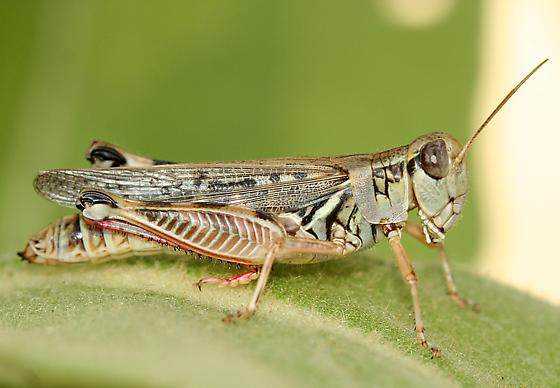
Rocky Mountain Locust were similar
to this Large Grasshopper
Melanoplus sanguinipes
Photo#215400
Copyright © 2008 Lynette Schimming
As found on www.bugguide.net

Vast migratory swarms of flying grasshoppers, or locusts, have periodically scoured arid parts of Africa and the Middle East since Biblical times, devastating crops and causing famine. But did you know that during the 19th century, American homesteaders were likewise plagued by migratory swarms of grasshoppers? The largest swarm passed through Nebraska in June of 1875; it was 110 miles wide, 1800 miles long and more than a 1/4 mile thick, taking five days to pass overhead. It remains the world’s largest recorded insect outbreak.

Here in Utah, at the time of the transcontinental railroad, migratory locusts periodically descended on the homesteads of Mormon settlers, laying up to 1 billion eggs per acre. These ravenous swarms devoured crops, vegetation, even laundry hung out to dry. Around the Great Salt Lake, drowned pickled grasshoppers would wash ahore in vast drifts. Native peoples gathered these salty, sun-dried hoppers for food, a rich source of protein and fat.

Why are we no longer plagued by locust swarms? It appears that the Rocky Mountain locust, went extinct at the turn of the 20th century. Entomologist Jeffrey Lockwood reports that the DNA of specimens preserved in the ice of glaciers in the Wind River Range are like no other grasshopper alive today. The cause of the locust’s abrupt extinction may never be known with certainty, but Lockwood believes that these outbreaks originated in the mountain meadows of the northern Rockies. By the 1880s, these public lands were packed with cattle and sheep, far more than the land could sustain. In a few short years, livestock stripped bare the very core habitats needed by the Rocky Mountain locust, leading to its abrupt extinction and the end of locust swarms in North America.

This is Linda Kervin for Bridgerland Audubon Society.

Credits:

Photo: Courtesy & Copyright © 2008 Lynette Schimming (As found on www.bugguide.net)
Text: Jim Cane, Bridgerland Audubon Society

Additional Reading:

Locust: The Devastating Rise and Mysterious Disappearance of the Insect that Shaped the American Frontier, Jeffrey Lockwood, Basic Books, 2004,ISBN:9780738208947, https://www.amazon.com/Locust-Devastating-Mysterious-Disappearance-American/dp/0465041671 See also: https://www.jeffreylockwoodauthor.com/locust

First and annual report of the United States Entomological commission for the year 1877 relating to the Rocky Mountain locust and the best methods of preventing its injuries and of guarding against its invasions Digitized by Google Books from Harvard University

https://en.wikipedia.org/wiki/Locust

Pestiferous Ironclads: The Grasshopper Problem in Pioneer Utah, Davis Bitton and Linda P Wilcox, Utah Historical Quarterly, 46 #4 as found on “Utah History to Go” https://historytogo.utah.gov/utah_chapters/pioneers_and_cowboys/pestiferousironclads.html