A Modern Day Phoenix

“Phoenix,” an immature Golden Eagle
Aquila chrysaetos
Courtesy Wildlife Rehabilitation Center of Northern Utah (WRCNU.org)

Elk Bath
From a 2000 fire in the
Bitterroot National Forest in Montana

Courtesy Wikimedia &
USDA Forest Service
John McColgan, Photographer

Hi, I’m Holly Strand.

You may have heard about the golden eagle nestling that was badly burned during a recent Utah wildfire. Its nest was totally destroyed, but the little eagle had fallen to the ground and survived. After the fire, he was found by Kent Keller, a volunteer for Utah’s Div. of Natural Resources, who had banded the young eagle a month before. The eagle was dehydrated—his feathers, face, and feet were badly burned. So Keller obtained a permit from wildlife officials to intervene. Now in the care of the Wildlife Rehabilitation Center of Northern Utah the eagle is recovering rapidly. Even so, it will take a while for the damaged feathers to be replaced by healthy new ones. Phoenix–as is he was aptly named–won’t learn to fly for at least another year.

With this and other fire-related stories in the news, I‘ve been wondering about the fate of animals caught in wildfires. Scientific observations of animal behavior during fire events are rare. But by conducting post-fire surveys, and comparing results with unburned areas, some researchers have been able to piece together an idea of who survives, who dies and who thrives.

Obviously, faster and more mobile animals have the advantage. Birds can fly away and most mammals can outrun the spreading flames. Spring fires can be disastrous, destroying birds who haven’t fledged –like Phoenix– or mammals who are still too immature to escape. Fortunately, fires are more frequent in mid to late summer when little ones have matured.

If a fire moves through an area quickly, without superheating the ground, dormant animals or those hiding in burrows can survive. The surrounding soil provides plenty of insulation. Soil also protects most soil macrofauna and the pupae of many insects.

Animals that live their lives totally or partially in the water may not suffer at all during a fire. However, smaller bodies of water, such as streams, can quickly heat up fairly quickly. Oxygen loss is a problem as well. And fire-fighting chemicals dumped from the air can end up in water, killing fish, frogs and other animals.

Indirectly, the alteration of habitat by fire can also restructure animal populations. Interestingly, there are quite a lot of animals that benefit from post-fire habitats. For example, the insect population above ground may plummet during a fire, but then increase above pre-fire levels when fresh young plants start to grow back. Burned trees are attractive to certain beetles as breeding sites. An increase in beetles is a windfall for the woodpeckers that devour them. Swallows and flycatchers use burned dead trees as perch sites. They survey from on high and then swoop to catch their insect dinner. Seed eating birds like Clark’s Nutcracker, gobble up conifer seeds when cones open in response to fire.

Among mammals, ground squirrels, pocket gophers and deer mice generally increase after severe fires. Even large herbivores such as pronghorn or deer may benefit from the increased food and nutrition on recent burns. In turn, predators of these creatures enjoy a bumper crop as well.

For images of Phoenix the recovering golden eagle and a link to the Wildlife Rehabilitation Center of Northern Utah go to www.wildaboututah.org.

For Wild About Utah, I’m Holly Strand.

Credits:

Images: Courtesy Wikimedia, Louis Agassiz Fuertes, Gavin Keefe Schaefer and Dave Menke, US FWS images.fws.gov
Text: Holly Strand

Sources & Additional Reading:


Baker, William L. 2009. Fire ecology in Rocky Mountain Landscapes. Washington, DC: Island Press.https://islandpress.org/ip/books/book/islandpress/F/bo7019409.html

Bradley, Anne F.; Noste, Nonan V.; Fischer, William C. 1992. Fire ecology of forests and woodlands in Utah. Gen. Tech. Rep. INT-287. Ogden, UT: U.S. Department of Agriculture, Forest Service, Intermountain Research Station. https://www.fs.fed.us/rm/pubs_int/int_gtr287.pdf

Hutto, RL. 1995. Composition of bird communities following stand-replacement fires in northern Rocky-Mountain (USA) conifer forests in Conservation Biology Volume: 9 Issue: 5 Pages: 1041-1058 https://www.fsl.orst.edu/ltep/Biscuit/Biscuit_files/Refs/Hulto%20CB1995%20fire%20birds.pdf

Wildlife Rehabilitation Center of Northern Utah https://wrcnu.org/
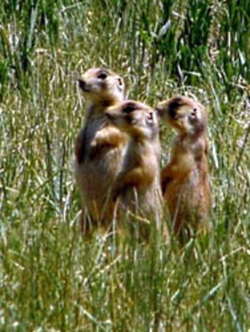
Utah Prairie Dogs

Three Utah Prairie Dogs
Cynomys parvidens
Courtesy US NPS, Bryce Canyon NP

White-tailed Prairie Dog
Cynomys leucurus
Courtesy US FWS
Rhonda Foley, Photographer

Throughout certain areas in southwestern Utah, construction is currently underway. New neighborhoods and subdivisions are being worked on daily, with mounds of dirt displaced. But this isn’t your typical suburban development. Its inhabitants are only 12 inches tall and furry.

The Utah prairie dog is the westernmost of five prairie dog species in the US and is unfortunately the most threatened. Since 1973 it has been a regular feature on the endangered species list, though it was downgraded to ‘threatened’ in 1984 and populations continue to show signs of growth.

Utah prairie dogs are very social creatures, living in large groups called colonies or towns which consist of hundreds or even thousands of individuals and their vast networks of underground burrows. While the group forages for grasses, seeds, leaves, and insects, colony guards or lookouts take turns watching for danger. If a hazard is identified, loud barks echo throughout the colony and foraging dogs run for cover.

Earlier this spring, Utah Prairie dogs in Parowan made national news when the town started construction on a $300,000 fence to keep these industrious critters from burrowing under and buckling the local airport’s runway. Their threatened status means special care must be taken in removing the dogs from airport property and relocating them to nearby public lands. Airport personnel waited until the beginning of July, after this year’s offspring had matured and left home, to begin the specialized trapping and relocation process.

While some consider prairie dogs and their digging habits to be a nuisance, these diminutive creatures are an incredibly important part of their ecosystem. Ecologists have a name for organisms whose role is disproportionately large – a keystone species. In architecture, a keystone is the uppermost piece in an arch – the one on which all the other stones lean. Ecologically speaking a keystone species is one that supports many others that live around it.

It has been estimated that more than 170 species – many of them also threatened or endangered – depend in some way on the Utah prairie dog, generally for either food or shelter. For example, the quirky and unique burrowing owl depends upon abandoned prairie dog homes for constructing its underground nests. Black – footed ferrets, whose population was at one time reduced to only 18 individuals, inhabit abandoned burrows within a large prairie dog colony and rely almost 100% upon the rodents for food.

Other animals that are linked to the Utah prairie dog include badgers, coyotes, sage grouse, Swainson’s hawks, and kit foxes. Like its architectural counterpart, if an ecological keystone is removed the whole system is prone to collapse. Thankfully, with a species recovery plan in place, and a dedicated inter-agency group of supporters, the Utah prairie dog’s housing market continues to boom.

Thank you to the Rocky Mountain Power Foundation for supporting the research and development of this Wild About Utah topic.

For the Stokes Nature Center and Wild About Utah, this is Andrea Liberatore.

Credits:
Images: Courtesy & US FWS, images.fws.gov
            Courtesy US NPS, https://www.nps.gov/brca/naturescience/upd.htm

Text:     Andrea Liberatore, Stokes Nature Center in Logan Canyon.


Additional Reading:

Hengesbaugh, M.G. (2001) Creatures of Habitat: The Changing Nature of Wildlife and Wild Places in Utah and the Intermountain West. Utah State University Press: Logan, UT,

U.S. Fish & Wildlife Service – Mountain-Prairie Region. (2012) Endangered Species: Utah Prairie Dog. Available online at: https://www.fws.gov/mountain-prairie/species/mammals/UTprairiedog/

National Park Service – Bryce Canyon National Park, Utah. (2012) Utah Prairie Dog. Available online at: https://www.nps.gov/brca/naturescience/upd.htm

Carlton, J. (2012) In Utah, A Town Digs Deep to Battle Prairie Dogs. Wall Street Journal, May 6 2012. Available online at: https://online.wsj.com/article/SB10001424052702304020104577384642186959960.html

Sereno Watson and the King Survey

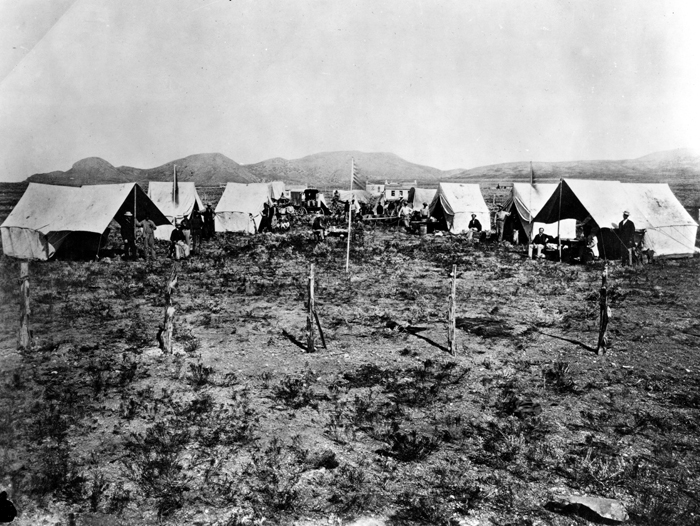
Sereno Watson and the King Survey: Click for a larger view of a King Survey Camp near Salt Lake City, Utah. Courtesy USGS, T.H. O'Sullivan, Photographer
A King Survey Camp
Near Salt Lake City

Courtesy USGS
T.H. O’Sullivan, Photographer


Click for a larger view of Ogden Canyon taken by the King Survey. Courtesy USGS, T.H. O'Sullivan, PhotographerThe Mouth of Ogden Canyon
at the time of the King Survey

Courtesy USGS
T.H. O’Sullivan, Photographer


Click for a larger view of Penstemon watsonii. Photographed in Millard County. And named for Sereno Watson of the King Survey. Courtesy PenstamenFestival.com
Penstemon watsonii
named for Sereno Watson
of the King Survey

Courtesy PenstemonFestival.com
Copyright Lisa White, Photographer

The mid-1800s were a transformative period in US history. The bloody Civil War had run its course. Twelve years earlier, the Mexican/American war had forced annexation of a vast territory that stretched from the Rockies to the Pacific Ocean. Across the northern edge of this territory, a transcontinental railroad was planned. An ambitious young geologist, Clarence King, convinced President Lincoln of the need to explore, survey and map the topography, watersheds, geology, mineralogy, flora and fauna of this vast uncharted region. King mustered 20 scientists, technicians and frontiersmen to form his Survey of the 40th Parallel. The Survey team took multiple years to thoroughly explore and map a 100-mile-wide band from Virginia City Nevada to Cheyenne Wyoming.

Among the men was one Sereno Watson, who at 42, found himself disenchanted by his forays into medicine, teaching, farming and banking. Word of the King Survey fired his imagination, so in 1867 he joined the migration west. A barefoot, penniless Sereno Watson found the Survey encamped on the lower Truckee River south of Pyramid Lake. More from pity than need, Clarence King let Watson join as an unpaid assistant. When illness sidelined the Survey’s botanist, Serano Watson eagerly took his place.

King prized Watson for his diligence and enthusiasm. In June of 1869, the Survey staked out what would become a favorite encampment at Parley’s Park north of Park City. From that base, Survey members fanned out to explore the Wasatch Range, the western spurs of the High Uintas, and the Great Salt Lake. Watson added to his plant collections, ultimately pressing 900 specimens, many new to science. He later curated them back at Yale. Watson honored the Survey’s leader by naming new plant species kingii, including a species each of biscuit root, buckwheat, bladderpod, flax, lupine, clover and ragwort. Asa Gray, then the reigning US botanist, honored Sereno in naming Penstemon watsonii, a lovely species discovered by the mining town of Austin Nevada. You can see the striking sky blue flowering spires of this wildflower amid montane meadows from eastern Nevada across central Utah into Colorado, including the vicinity of Parley’s Park.

This is Linda Kervin for Bridgerland Audubon Society.

Credits:

Images: Courtesy USGS

and Courtesy PenstamonFestival.org, Lisa White, Photographer,
Text: Jim Cane, Bridgerland Audubon Society

Additional Reading:

Cryptobiotic Soil Crusts

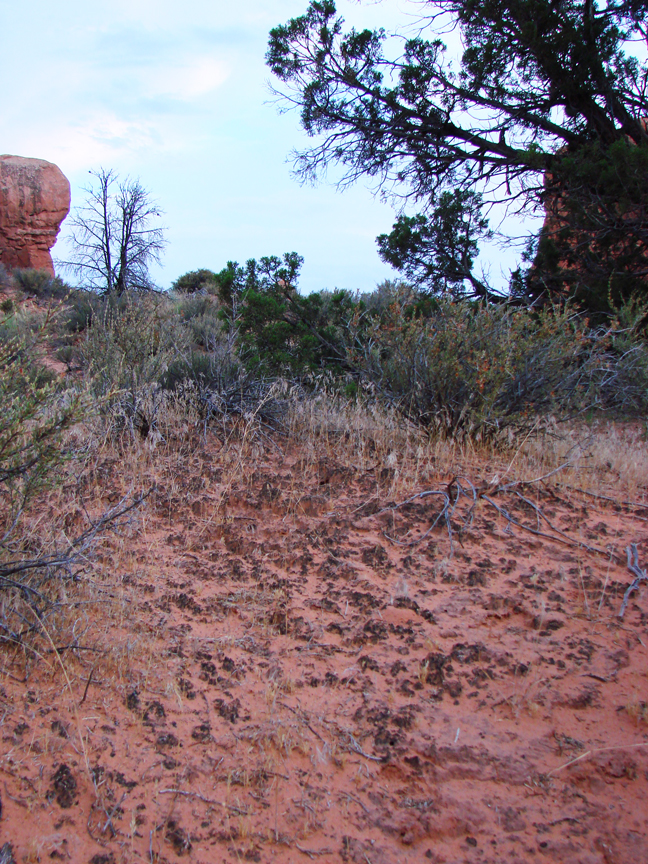
Click to view larger image of Cryptobiotic Soil Crust, Photo Courtesy and Copyright Mark Larese-Casanova
Cryptobiotic Soil Crust
Photo Courtesy & Copyright 2009
Mark Larese-Casanova

Hi, this is Mark Larese-Casanova from the Utah Master Naturalist Program at Utah State University Extension.

Looking out over a Utah desert, we might see relatively few plants- perhaps some sagebrush, maybe a few junipers or Joshua trees, or even some small wildflowers or cacti. What is less noticeable, though, is the living soil crust that holds this entire landscape together. It’s not just sand, but rather an important and vast partnership between bacteria, lichens, algae, and fungi. These soil crusts are often referred to as ‘cryptobiotic’, which means ‘living in suspended animation’. This is a fitting description, considering that water can be so rare in Utah’s deserts.

Cyanobacteria, which is often called blue-green algae, is the backbone of cryptobiotic soil crust. Vast networks of long, microscopic filaments of cyanobacteria and fungi grow in length when they are wet, and leave behind a casing that literally binds the soil together. So, what might otherwise be loose sand not only is less likely to be washed away by water or blown away by wind, but also is able to hold much more water for plants.

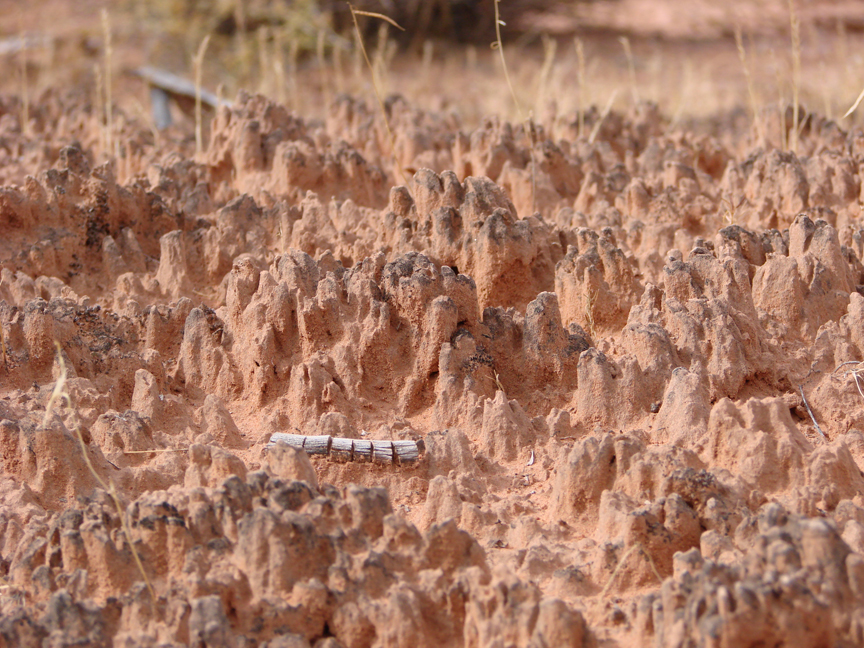
Click to view larger image of Cryptobiotic Soil Crust, Photo Courtesy and Copyright Mark Larese-Casanova
Cryptobiotic Soil Crust
Photo Courtesy & Copyright 2009
Mark Larese-Casanova

Cyanobacteria is also extremely useful to desert landscapes for its ability to take Nitrogen out of the air and make it available to plant roots in the soil. Desert soils typically have relatively low nutrients, so this is especially important to desert plants.

In many Utah deserts, cryptobiotic soil crusts can cover up to 70% of the ground surface. Old soil crust can often look like small mountain ranges with black or white peaks inhabited by lichens or mosses. The little valleys in between the tiny mountains of crust are perfect spots for the seeds of desert plants to grow. Over time, the above ground crust can grow up to ten centimeters, or four inches, thick!

However, cryptobiotic soil crust grows at an alarmingly slow rate of about one millimeter per year. So, any soil crust that is disturbed can take a very long time to recover. Depending on the amount of moisture a desert receives, it can take anywhere between 20 and 250 years for soil crust to grow back.

Next time you’re out in the desert, kneel down and have a close look at the telltale peaks and valleys of cryptobiotic soil crust. If you bring a magnifying glass, you just might be able to see some of the lichens and mosses. Be sure to stay on trail, though, and whatever you do, don’t bust that crust!

For Wild About Utah, I’m Mark Larese-Casanova.

Credits:

Images: Courtesy and copyright Mark Larese-Casanova
Text:     Mark Larese-Casanova, Utah Master Naturalist Program at Utah State University Extension.
Additional Reading:

US Department of Interior. 2001. Biological Soil Crusts: Ecology and Management. Bureau of Land Management Technical Reference 1730-2., https://www.blm.gov/nstc/library/pdf/CrustManual.pdf
Rosentreter, R., M. Bowker, and J. Belnap. 2007. A Field Guide to Biological Soil Crusts of Western U.S. Drylands. U.S. Government Printing Office, Denver, Colorado., https://www.soilcrust.org/