Thistles, Knapweeds, and Weevils

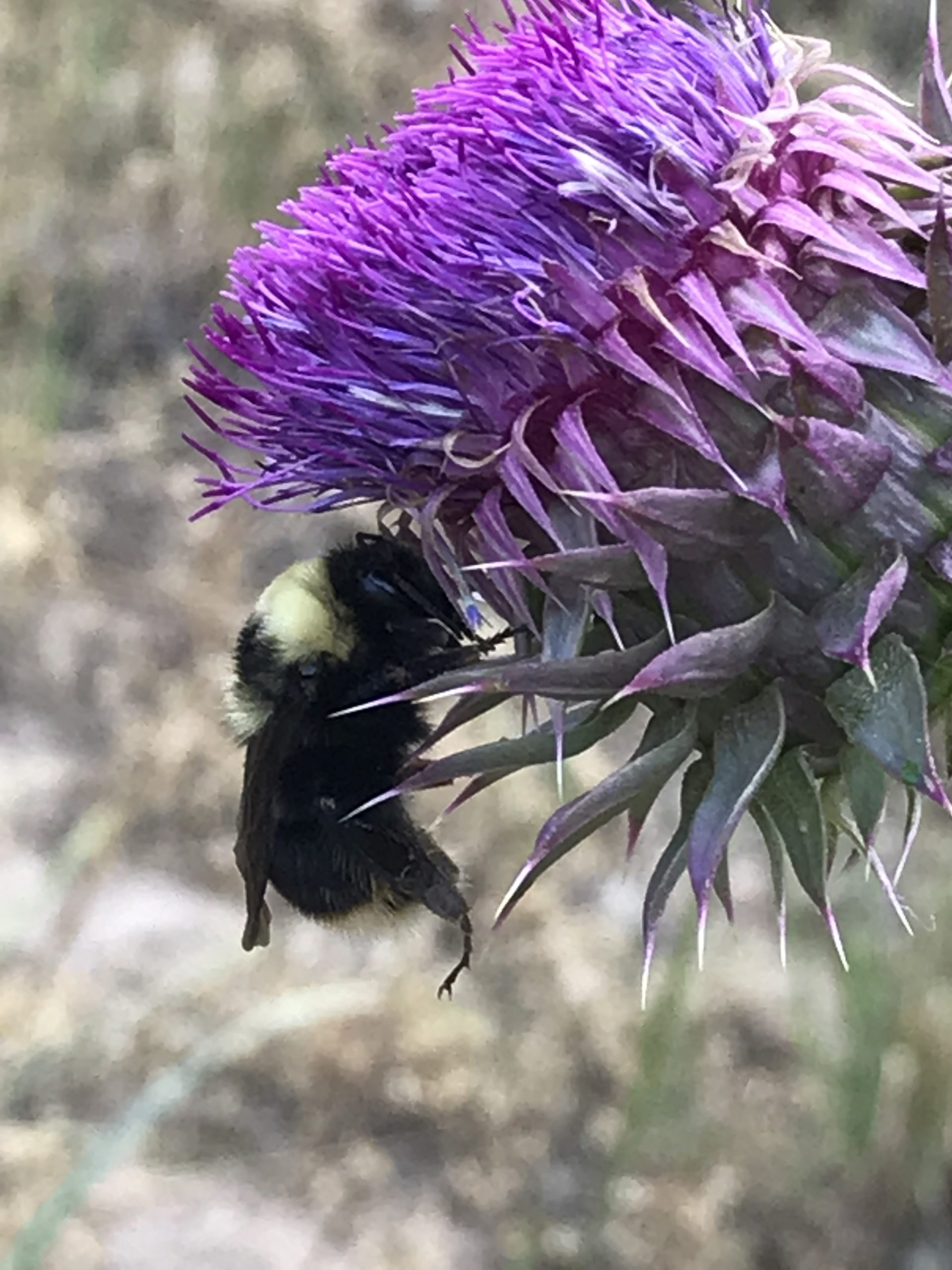
Pollinators Attracted to Thistle Courtesy & © Shannon Rhodes, Photographer
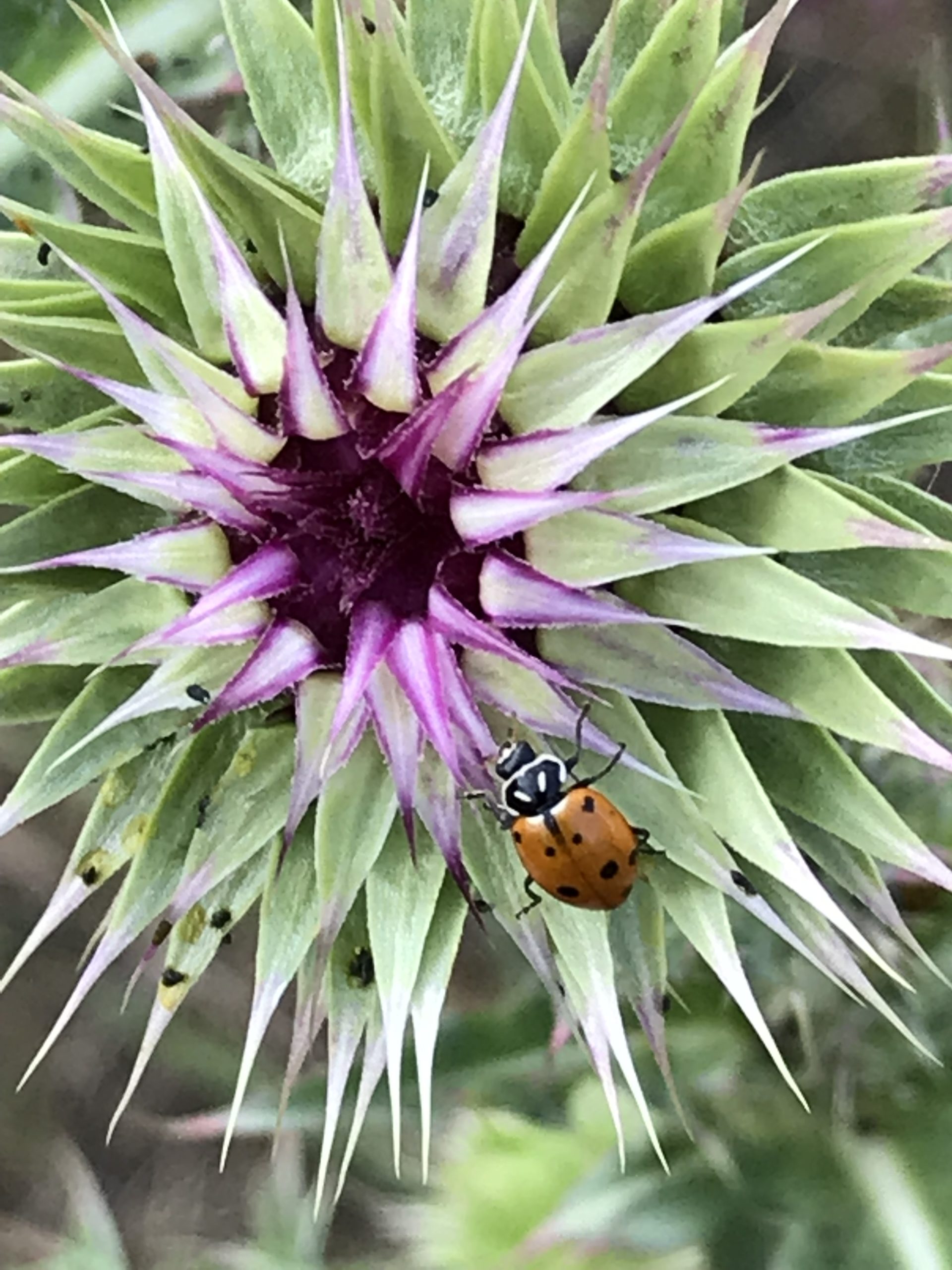
Pollinators Attracted to Thistle
Courtesy & © Shannon Rhodes, Photographer

Musk Thistle Courtesy & © Shannon Rhodes, Photographer Musk Thistle
Courtesy & © Shannon Rhodes, Photographer

A Child's Spotted Knapweed Nature Journal Courtesy & © Shannon Rhodes, Photographer A Child’s Spotted Knapweed Nature Journal
Courtesy & © Shannon Rhodes, Photographer

My mother’s mother loved the wonder of the natural world, from eye-catching minerals to how lightning drags thunder behind it like a garden cart. Grandma Eda asked that thistle be a prominent flower at her funeral. I’ve always been struck by how she saw past the prickly spikes to find beauty in the flower I know as a weed, certainly a metaphor for how she saw her life.

Butterflies, bees, and beetles love thistle. Hummingbirds, and other birds, especially goldfinches, do as well. There’s even a story of an explorer named Truman Everts who in 1870 survived on elk thistle root for more than a month as he wandered lost in what would become Yellowstone National Park a few years later.

Not everyone, however, sees thistles and their knapweed lookalikes of the Aster family the same affectionate way. Wildlife and livestock find most unpalatable, and they certainly can be a spiny nuisance as one moves past them in the field. There are some native thistles, but the Utah Noxious Weed Act code 4-17 designates Canada thistle, musk thistle, nodding thistle, plumeless thistle, and Scotch thistle, as well as spotted knapweed and other knapweeds as either species to be controlled or contained to halt their spread. These invasive non-native weeds prolifically reproduce and aggressively crowd out native plants.

Fortunately, there is hope in the noxious weed battle beyond herbicides and handpicking. A creative partnership of Utah’s Division of Wildlife Resources, Weed Supervisors Association, and Cache County Weed Department have been working with Edith Bowen Laboratory School students at Hardware Ranch Wildlife Management Area for several years. They use weevils to eradicate the noxious weeds from the tons of hay grown in the meadow and surrounding areas that is then used to feed the elk each winter. This program called Kids in Action: Going Wild With Science engages children and adult scientists and other professionals as they gather data and do service learning with native and non-native plants and insects for the benefit of the elk and the greater community.

As a partnering educator, I have assisted fourth grade students as they sample sites in the meadow and along nearby Curtis Creek with these partnering adults, gathering data on the prevalence and health of Canada thistle as a way to determine the effectiveness of a biocontrol species, the Hadroplontus litura, that have been released in the area previous years. This stem-boring weevil literally bores into the stem of the Canada thistle plants and eats the inner tissue, killing the plants and leaving behind insect larva excrement called frass. They have done similar projects targeting spotted knapweed, and it is the best kind of citizen science where students are able to see results as they learn, even if Grandma would scold me for meddling with her beloved wild purple Mother’s Day bouquets.

For Wild About Utah, I’m Shannon Rhodes.

Credits:
Images: Courtesy & Copyright Shannon Rhodes, Photographer
Additional Audio: Courtesy & © Kevin Colver https://wildstore.wildsanctuary.com/collections/special-collections
Text: Shannon Rhodes, Edith Bowen Laboratory School, Utah State University https://edithbowen.usu.edu/
Additional Reading Links: Shannon Rhodes

Additional Reading:

Anderson, Mike. Cache Valley Students Get Work as Biologists for a Day at Hardware Ranch. Sept. 1, 2016. KSL News. https://www.youtube.com/watch?v=TkZaHNTMxOU

Bengston, Anna. Trouble with Tumbleweeds. May 9, 2014. https://wildaboututah.org/trouble-with-tumbleweeds/

Dzurisin, Dan. What’s in a Name? The Misadventures of Truman Everts. 2019. https://www.usgs.gov/news/whats-name-misadventures-truman-everts

Eckberg, James et al. Native Thistles: A Conservation Practitioner’s Guide. 2017. https://xerces.org/sites/default/files/2018-05/16-029_01_XercesSoc_Native-Thistles-Conservation-Guide_web.pdf

Green, Jack. Pioneer Day Edible Native Plants. July 13, 2015. https://wildaboututah.org/pioneer-day-edible-native-plants/

Hellstern, Ron. Invasive Species. Sept. 24, 2018. https://wildaboututah.org/invasive-species/

Hoopes, Carla. Kids in Action for Biological Control. January 2021. https://bugwoodcloud.org/bugwoodwiki/archive/20210216140118!KIA_Initiative_Who_We_Are.pdf and https://bugwoodcloud.org/bugwoodwiki/EBLS_2020_Report.pdf

Lowry, Brenda Jarvis et al. Noxious Weed Field Guide for Utah. Utah State University Extension. 2017. https://digitalcommons.usu.edu/cgi/viewcontent.cgi?article=2351&context=extension_curall

Mendenhall, Amber. Hardware Ranch Student Biocontrol Program. 2020. https://utahweedsupervisors.com/hardware-ranch-student-biocontrol-program/

Mendenhall, Morgan. Common Weeds of Utah Forests. https://forestry.usu.edu/files/utah-forest-facts/common-weeds-of-utah-forests.pdf

Utah Department of Agriculture. Utah Noxious Weeds. 2020. https://www.invasive.org/species/list.cfm?id=33 https://www.invasive.org/species/list.cfm?id=33

Winston, Rachel et al. Biology and Biological Control of Exotic True Thistles. U.S. Forest Service Forest Health Technology Enterprise Team. https://www.fs.fed.us/foresthealth/technology/pdfs/ExoticTrueThistles.pdf

Wolves and wolverines in Utah? Oh my!

Wolves and wolverines in Utah? Oh my! Endangered Yellowstone Grey Wolf with Radio Collar Courtesy US FWS, William Campbell, Photographer
Endangered Yellowstone Grey Wolf with Radio Collar
Courtesy US FWS, William Campbell, Photographer
Wolves and wolverines in Utah? Oh my! As I prepare for a 3 day trip with students to Yellowstone, a stronghold for what once was, these iconic critters come to mind. The last wolves were cleared from Cache Valley in 1869. A predator drive through our valley was mustered, where every able-bodied citizen was called to arms to rid us of these villains. A wolverine met its demise on the hill where the Logan Temple now stands.

Thank goodness, we have awakened to the value of predators in maintaining healthy ecosystems, and for their aesthetic and spiritual value. After all, they coexisted along with their prey for millions of years before our species came along and began tinkering.

There are well-documented visits by these two species in Utah, including actual tactile experience. However, established breeding populations are yet to be found. Both require vast, relatively undisturbed wildlands to thrive.

Since wolves were reintroduced in Yellowstone in 1995, the Utah DWR has been able to confirm 20 wolves in our state. Nearly all confirmed sightings have been consistent with lone, dispersing wolves.

Due to a recent court ruling, wolves in much of Utah are once again listed as endangered under the federal Endangered Species Act except a small portion of northern Utah where wolves are not welcome. There is a statewide wolf management plan and personnel to manage them. Any wolves that move out of the small, delisted area are considered endangered and are subject to exclusive federal jurisdiction.

A wolverine was recently spotted in Rich County, now wandering the Uinta Mountains with a GPS collar around its neck. This is the first wolverine ever captured in Utah history. The wolverine is a male, between 3-4 years old, and biologists say he is in excellent physical condition. They are excited to learn more about this elusive animal with only eight confirmed sightings in Utah since 1979. We are on the southern edge of the wolverine’s typical habitat. This GPS tracking will allow us to understand and manage wolverines in Utah.

Now on to Yellowstone where both species are well established. Around a hundred wolves in 8 packs, and about 7 wide ranging wolverines may be found in the park. Climate-change models predict that by 2050, the spring snowpack needed for wolverine denning and hunting will make the greater Yellowstone ecosystem a critical part of its southern range. Wolverines are so rarely seen and inhabit such remote terrain at low densities that assessing population trends is difficult and sudden declines could go unnoticed for years.

I doubt we will see a wolverine on our visit, but wolf sightings are a good bet as we will be led by a park wolf technician, that is if we don’t succumb to hypothermia before a howl is heard!

Jack Greene for Bridgerland Audubon Society. With confirmed sightings of wolves and wolverine in our state, I’m even wilder about Utah!

Credits:
Pictures: Courtesy US National Parks Service, William Campbell, Photographer
Audio: Courtesy & Copyright J. Chase and K.W. Baldwin, https://upr.org/
Text: Jack Greene, Bridgerland Audubon, https://bridgerlandaudubon.org/
Additional Reading: Lyle W Bingham, Webmaster, and Jack Greene, Author, Bridgerland Audubon, https://bridgerlandaudubon.org/

Additional Reading:

Jack Greene’s Postings on Wild About Utah, https://wildaboututah.org/author/jack/

Wolves in Utah, Utah Division of Wildlife Resources, Utah Department of Natural Resources, State of Utah, Last Updated: Thursday, March 3, 2022, https://wildlife.utah.gov/wolves.html#:~:text=Are%20there%20wolves%20in%20Utah,20%20wolves%20in%20the%20state.

Gray wolves again listed as endangered in most of Utah, A recent court ruling limits wolf-management options, Utah Division of Wildlife Resources, Utah Department of Natural Resources, State of Utah, March 1, 2022, https://wildlife.utah.gov/wolf/wolves.pdf

Podmore, Zak, (Report for America), A gray wolf is in Utah for the first time in years. The state is setting traps, The Salt Lake Tribune, June 3, 2020, https://www.sltrib.com/news/2020/06/03/gray-wolf-is-utah-first/

Wolverine captured, collared and released in Utah, Utah Division of Wildlife Resources, Utah Department of Natural Resources, State of Utah, March 14, 2022, https://wildlife.utah.gov/news/utah-wildlife-news/1380-wolverine-captured-collared-and-released-in-utah.html

Miller, Jordan, Wolverine spotted in Utah this month marks third publicized sighting this year, The Salt Lake Tribune, Oct. 20, 2021, https://www.sltrib.com/news/2021/10/20/wolverine-spotted-utah/

A Tale of Green Inspirations

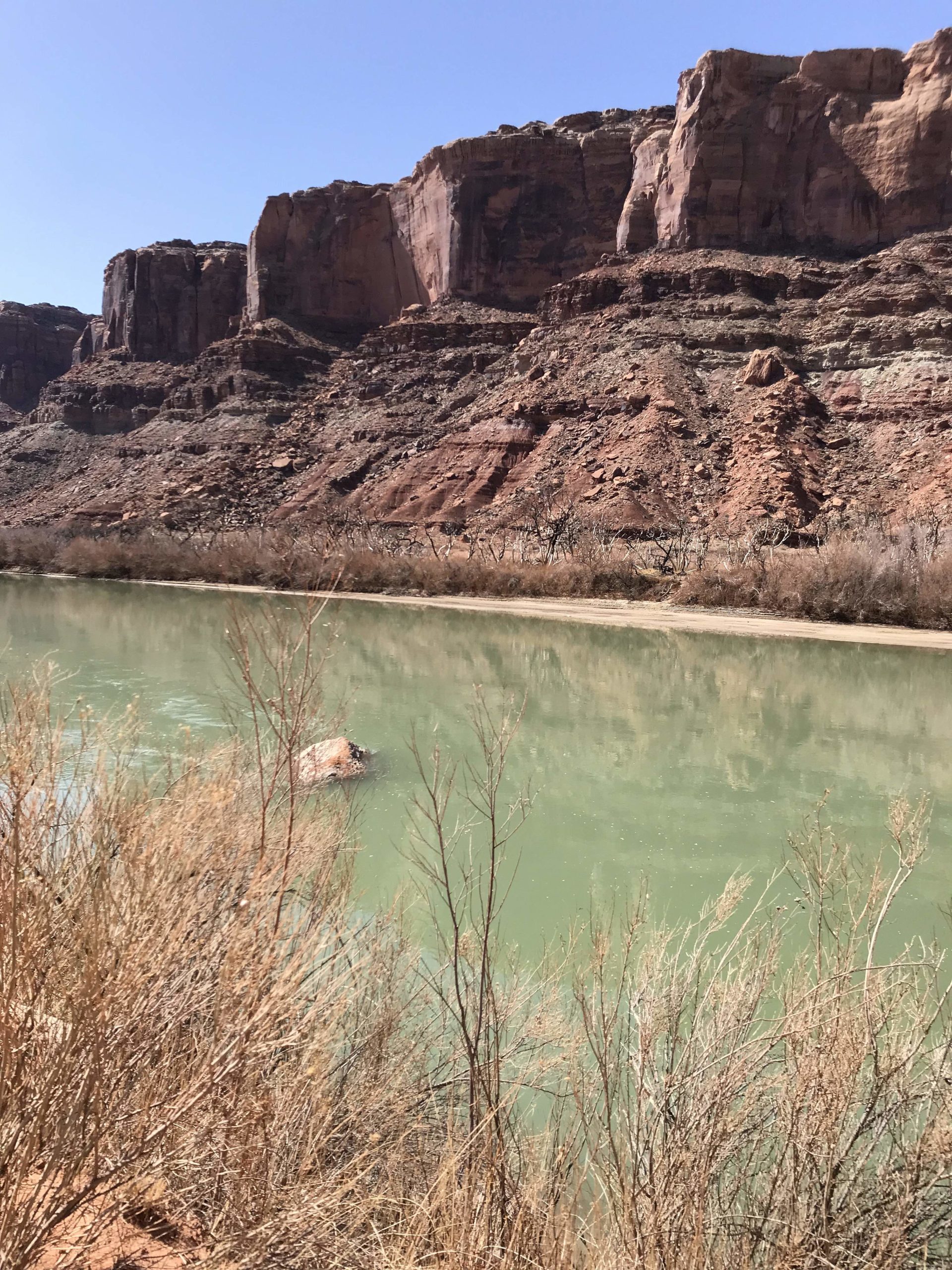
Green River Courtesy & Copyright Shannon Rhodes, Photographer
Green River
Courtesy & Copyright Shannon Rhodes, Photographer

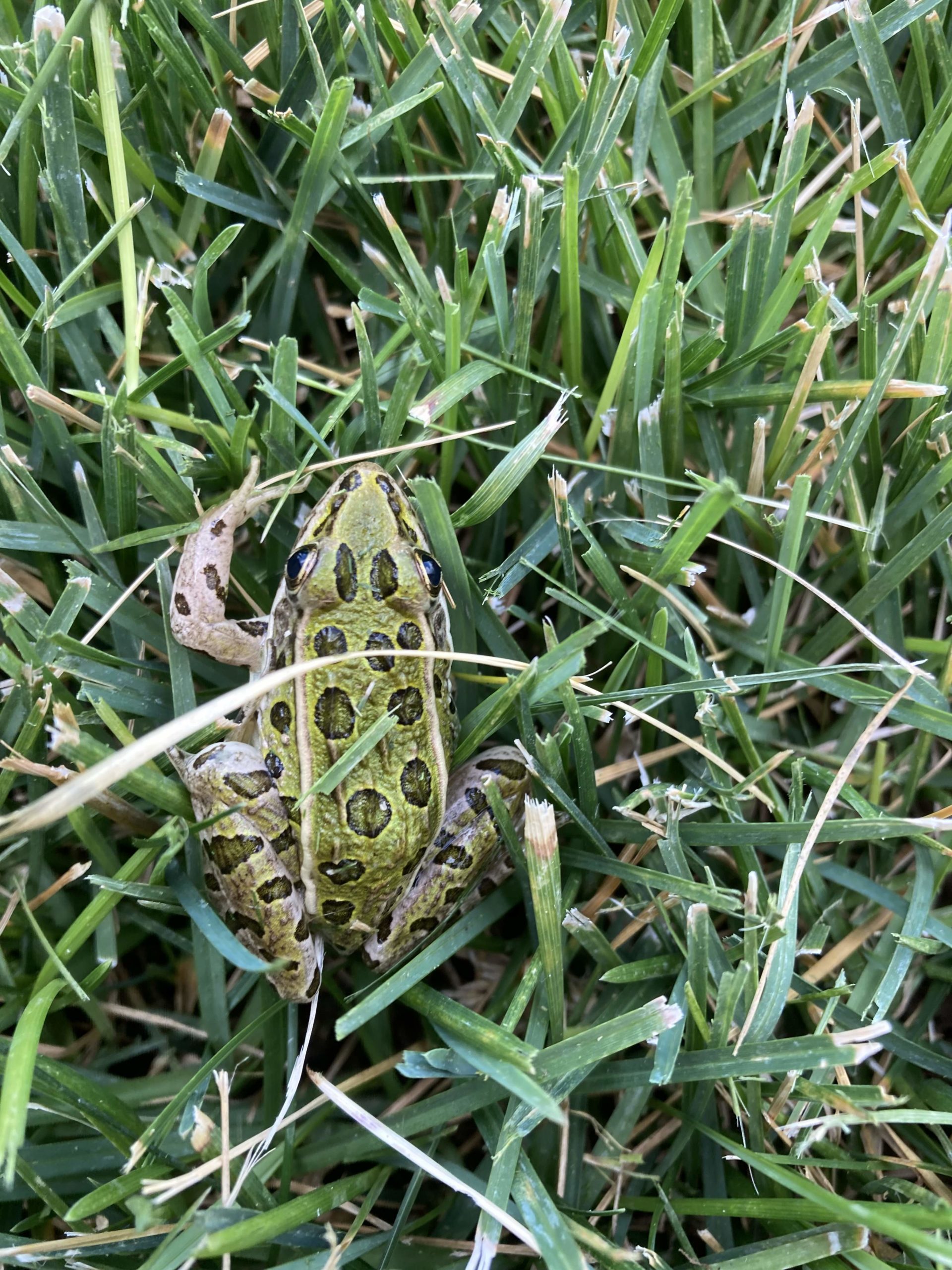
Leopard Frog, Lithobates pipiens Courtesy & Copyright Shannon Rhodes, Photographer Leopard Frog, Lithobates pipiens
Courtesy & Copyright Shannon Rhodes, Photographer

Wolf Lichen, Letharia vulpina Courtesy & Copyright Shannon Rhodes, Photographer Wolf Lichen, Letharia vulpina
Courtesy & Copyright Shannon Rhodes, Photographer

In one of my first childhood books I met a washerwoman hedgehog named Mrs. Tiggy-winkle who lived on a hilltop higher than the clouds that had a spring, peculiar rocks, and mysterious footmarks. Its author had studied and recorded both in words and watercolor detail in her sketchbooks everything from bird eggs and bees to caterpillars and cornflowers to water lilies and Flopsy Mopsy rabbits with naturalist precision.

What if children’s book author Beatrix Potter would have known Utah the way she captured interesting elements of places she visited while on her family holiday outings in the English Lake District, North Wales, and Scotland? I wonder how her mind might have played with our minty Green River, sometimes in Utah’s history known by the names Rio Verde and Seedskeedee. What would she have done with its Gates of Lodore or Desolation Canyon?

Green. Everywhere I look outside I see green. Perhaps that is why green is my favorite color. Nothing stops me in my tracks like chartreuse wolf lichen clinging to the bark of conifer trunks. What stories would Potter spin with that had she wandered through Utah’s forests? It is said that her favorite organism was actually fungi like the Amanita gemmata or jeweled deathcap, so much so that her naked-eye and microscope-enhanced renderings led her to compose an essay about spore germination for the Linnean Society in 1897.

The world knows her best for her Peter Rabbit tale, yet because she was such an observant nature artist, spinning fantastical stories about creatures in the wild and pairing them with companion pencil and watercolor illustrations begs little of the reader in the way of imagination.

Few may know her, though, for her beautiful nature journals. Her entry of a painted lady butterfly, zooming in specifically on the wing scales, or magnified studies of a ground beetle’s leg and elytra reveal hours she spent noticing. I marvel at how long it must have taken her to know amphibian structures and behaviors to craft a tale with such specificity. In “The Tale of Mr. Jeremy Fisher,” she portrays a frog punting like on the River Cam, fishing, and nibbling butterfly sandwiches. She draws him dipping his foot in the pond, swimming, and leaping across the meadow in his tattered macintosh. What would she have imagined the Northern Leopard frog thinking as it zigzagged through my lawn last summer? Why did it have to come from the far-away canal across concrete and road to my home before I noticed its distinctive snoring and clicking croak or learned to appreciate its tenacity?

Potter found equal perfection in “the highest and the lowest in nature,” aware and eager to capture it all with imagination and detail. As our world greens this spring, I hope we take time to sit and sketch the wonders, even if we don’t have the courage to eat “roasted grasshopper with lady-bird sauce.”

I’m Shannon Rhodes, and I’m wild about Utah.

Credits:
Images: Courtesy & Copyright Shannon Rhodes, Photographer
Additional Audio: Courtesy & ©
Text: Shannon Rhodes, Edith Bowen Laboratory School, Utah State University https://edithbowen.usu.edu/
Additional Reading Links: Shannon Rhodes

Additional Reading:

Wild About Utah Posts by Shannon Rhodes https://wildaboututah.org/author/shannon-rhodes/

Drost, Charles. Status of Northern Leopard Frogs in the Southwest. December 15, 2016. https://www.usgs.gov/centers/southwest-biological-science-center/science/status-northern-leopard-frogs-southwest

Larese-Casanova, Mark. The Call of Springtime: Utah’s Frogs and Toads. March 22, 2012. https://wildaboututah.org/the-call-of-springtime-utahs-frogs-and-toads/

Lear, Linda. About Beatrix Potter. 2011. The Beatrix Potter Society. https://beatrixpottersociety.org.uk/about-beatrix/

National Park Service. Northern Leopard Frog. https://www.nps.gov/articles/northern-leopard-frog.htm

Northern Leopard Frogs. Biokids’ Inquiry of Diverse Species. https://www.biokids.umich.edu/critters/Lithobates_pipiens/

Potter, Beatrix. The Tale of Mr. Jeremy Fisher. 1906. https://www.gutenberg.org/files/15077/15077-h/15077-h.htm

Potter, Beatrix. The Tale of Mrs. Tiggy Winkle. 1905. https://www.gutenberg.org/files/15137/15137-h/15137-h.htm

Strand, Holly. Last Blank Spots on the Map. October 29, 2009. https://wildaboututah.org/last-blank-spots-on-the-map/

Thomson, Keith. Beatrix Potter, Conservationist. May-June 2007. https://www.americanscientist.org/article/beatrix-potter-conservationist

Beatrix Potter, Author and Conservationist, Born (1866), Day by Day in Conservation History, Today in Conservation, July 28, 2017, https://todayinconservation.com/2020/04/july-28-beatrix-potter-author-and-conservationist-born-1866/

U.S Department of Agriculture Forest Service. Lichens. https://www.fs.fed.us/wildflowers/beauty/lichens/didyouknow.shtml

Victoria and Albert Museum. Beatrix Potter: Drawn to Nature. 2022. https://www.vam.ac.uk/collections/beatrix-potter

Webb, Roy. Green River. Utah History Encyclopedia. 1994. https://historytogo.utah.gov/green-river/

Wilkinson, Todd. Utah Ushers Its Frogs Toward Oblivion. High Country News. May 27, 1996. https://www.hcn.org/issues/60/1858

Woolley, Ralf R. The Green River and Its Utilization. United States Department of the Interior. 1930. https://pubs.usgs.gov/wsp/0618/report.pdf

A game called ball; a game called chase

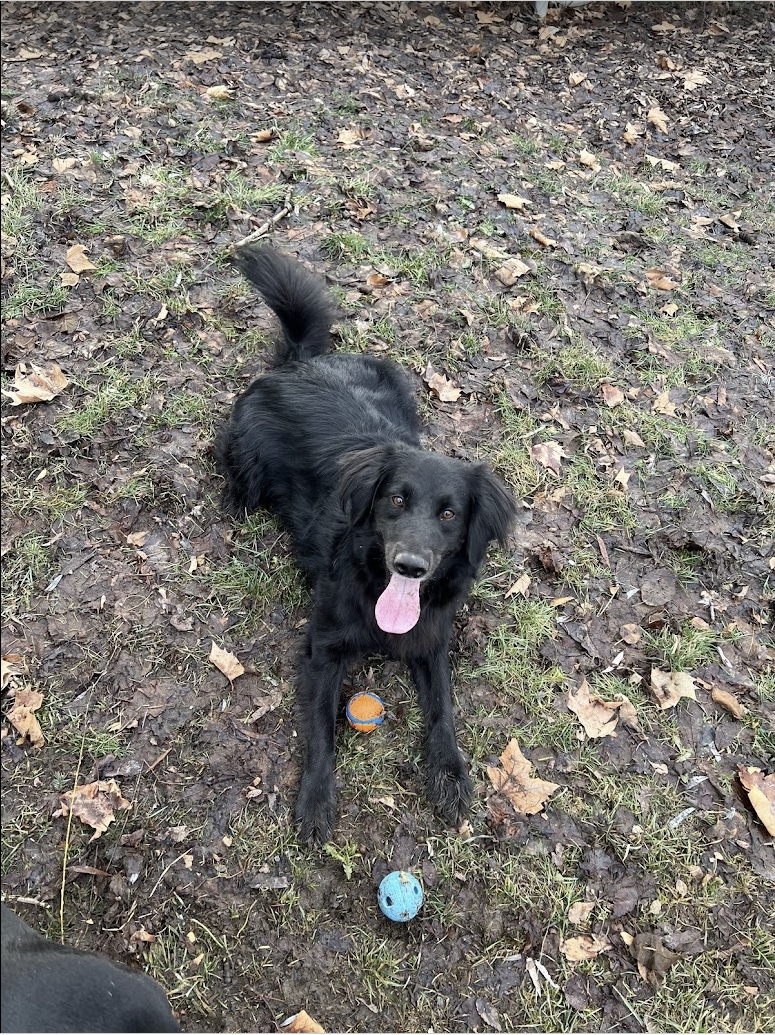
A game called ball; a game called chase: Sable Courtesy & © Katarzyna Bilicka, Photographer
Sable
Courtesy & © Katarzyna Bilicka, Photographer
Me and my partner have three dogs who love two games and this is their favorite time of year to play them. The first game is called ‘ball.’ There is one rule in ball: ball. The goal is to have the ball and taunt the other player that you have that ball. Sometimes, there are two balls and the stakes for both wealth and risk increase. But most of the time, there is just one. Me and the dog who loves ball the most, Sable, will go outside especially this time of year after all of our snow has melted and the ground has firmed well, and, with a ball chucker to ease my deteriorating shoulder, hunt for any token to play with. Usually she finds one first, leaping upon it like a fox hunting shrews in snow, then parades the ball with full royal vanity, pomp, and pride. My play then is to have another ball I’ve kept hidden in my pocket: the new most valuable ball. As I slowly reveal it, Sable freezes and stares. “Oh dear,” she thinks, “ball.” As I clasp it into the chucker, her jaw goes slack and now yesteryear’s ball drops to the ground with a dull thud. All she wants is this new old ball, because, well, ball.

Sable will then do one of three things. Most often, she gives a short enthusiastic dash in the direction that she believes I will throw the ball, then quickly sits to wait with patience, even though she’s already decided her lead. Sometimes, she will run all the way to the end of where she anticipates the arc to be complete to get an even more keen lead. And sometimes, she will try to snatch the ball right from the chucker. Wily is the game of ball.

Either way, as soon as she’s done one of those three things, I direct her to settle and wait. If she’s gone down the field to gain a lead, I will turn on my heels and throw the ball the other way. Ha. She must learn not to over-anticipate. If she is but a short way in front, I’ll throw the direction she anticipated to teach that good guesses are sometimes right. If she gets scrappy and goes for it before I’ve even let it go, I’ll make her sit and wait for it to already be downfield and out of sight, then when she’s settled, I let her go and she sprints like lightening to snatch the treasured new old ball. Once retrieved, she comes back in full tilt with fuller pride, and parades it yet again. I’ll find that first ball she dropped, and the game continues. New new old ball. Same new old game.

The second game played is chase. Sometimes it’s just my other two dogs which play, sometimes it’s all three, and sometimes it’s all four of us. This game is simple, though there is still one rule: chase. We’ll zip and zag all about the garden, ducking under trees, hiding behind bushes, and intermittently stalking the chickens as intermission to catch our breath. We run, tumble, and freeze when we all see a Eurasian collared dove unwittingly selecting millet off the ground while we are here, instead of biding its time in the safety of a perch until we’ve gone indoors. Even though chase requires fewer materials and less patience, it’s still, like ball, best enjoyed outside and in free form. It’s harder to break lamps that way, too.

So as our spring blooms and the ground firms, see what draws you to be outdoors yourself, whether it be games, or dogs, or robins, or sunshine. Rediscover that it’s no longer hard to love being outdoors if it was, just as each crocus and violet surely must renew that same urge each year after it, too, getting through winter. Remember that no matter which draw you choose, even if none at all, every day a new surprise awaits for patient and keen eyes: the raptures of such a season of renewal, emergence, and life. Doesn’t it feel good to be outside and play.

I’m Patrick Kelly, and I’m Wild About Utah.
 
Credits:

Images: Courtesy & © Patrick Kelly
Audio: Courtesy & © Kevin Colver https://wildstore.wildsanctuary.com/
Text:    Patrick Kelly, Director of Education, Stokes Nature Center, https://www.logannature.org
Included Links: Patrick Kelly & Lyle Bingham, Webmaster, WildAboutUtah.org

Additional Reading

Wild About Utah, Posts by Patrick Kelly

Stokes Nature Center in Logan Canyon, https://www.logannature.org/