The Call of Springtime- Utah’s frogs and toads

The Call of Springtime- Utah’s frogs and toads: Click to view larger image of , Photo Courtesy US FWS, Katherine Whittemore, Photographer
Single Chorus Frog
Photo Courtesy US FWS
Katherine Whittemore, Photographer
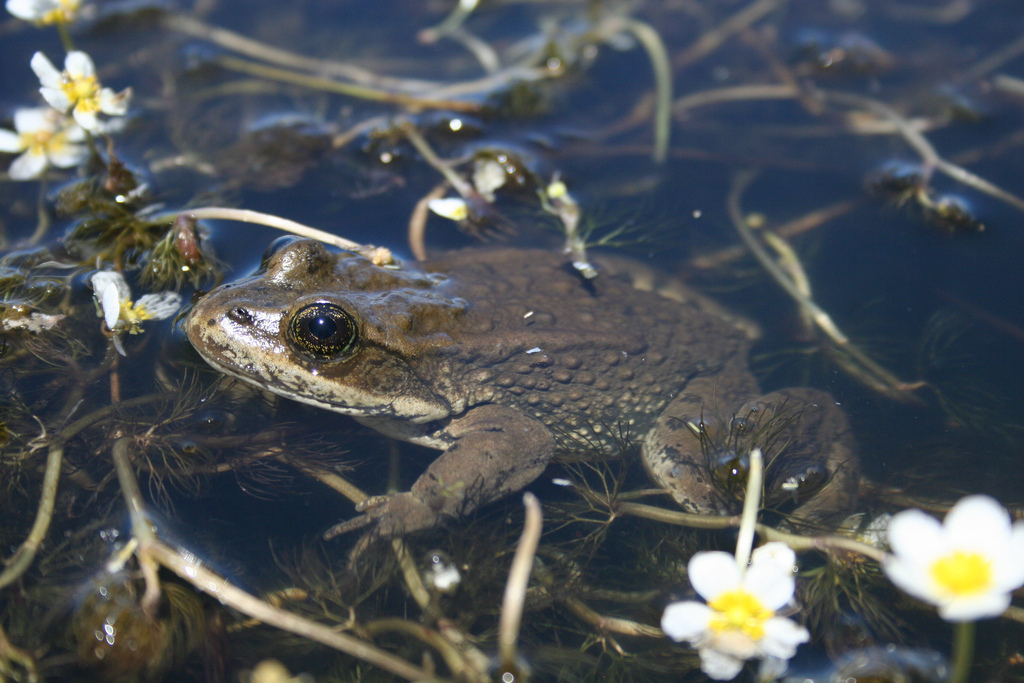
Click to view larger image of Columbia Spotted Frog, Photo Courtesy US FWS
Columbia Spotted Frog
Photo Courtesy US FWS

Click to view larger image of Woodhouse’s toad, Photo Courtesy US FWS, Gary M. Stolz, Photographer
Woodhouse’s toad
Photo Courtesy US FWS
Gary M. Stolz, Photographer

Hi, this is Mark Larese-Casanova from the Utah Master Naturalist Program at Utah State University Extension.

For me, nothing rings in the arrival of spring like a chorus of frogs and toads at the nearby wetlands. Male frogs and toads emerge from hibernation in spring to establish territories along the edges of wetlands, and the females return to find mates and lay eggs.

The most common native frog that can be heard in spring is the western, or boreal, chorus frog. It’s our western equivalent of the spring peeper in the east. The call of this tiny frog is unmistakable- just run your fingernail along the teeth of a comb.

[boreal chorus frog call]Courtesy Western Soundscape Library Copyright 2009 Kevin Colver https://wildstore.wildsanctuary.com/collections/special-collections

The introduction of the American bullfrog west of the Rocky Mountains has contributed to declines in native amphibian populations. Adult bullfrogs are voracious eaters, consuming nearly anything that will fit in their mouths. Other tadpoles, smaller frogs, insects, and even mice make a tasty meal for a bullfrog. Their great ability to outcompete native frogs has contributed to their abundance among Utah’s wetlands statewide. Their low, humming call seems to fill the air in springtime.

[bullfrog call]Courtesy Western Soundscape Library Copyright 2006 Kevin Colver https://wildstore.wildsanctuary.com/collections/special-collections

Northern leopard frogs were once quite common in Utah, but it’s thought that they are in decline. As one of the largest native frogs, it has perhaps suffered the most from competition with bullfrogs. Still, leopard frogs can be found throughout Utah. Keep an ear out for their low tapping call.

[northern leopard frog call]Courtesy Western Soundscape Library Copyright 2005 Gary Nafis

The two most common toads in Utah are Woodhouse’s toad and the Great Basin spadefoot toad. Since toads are usually more terrestrial than frogs, they can often be found further away from water. The call of Woodhouse’s toad is enough to put anyone on edge in the middle of the night!

[Woodhouse’s toad call] Courtesy Western Soundscape Library Copyright 2005 Gary Nafis

Spadefoot toads are very common at lower elevations in Utah’s deserts. But, they spend most of their time buried in the soil, emerging to breed only during spring and summer rainstorms.

[spadefoot toad call] Courtesy Western Soundscape Library Copyright 2005 Gary Nafis

Less-common species include the boreal toad and Columbia spotted frog among wetlands in the mountains, and southern Utah is home to the canyon treefrog and red-spotted toad.

The best time to listen for frogs and toads is just after sunset in an area close to water. To learn more about Utah’s frogs and toads, and to join a volunteer frog monitoring program, get connected with Utah’s Chapter FrogWatch USA on Facebook, or visit wildaboututah.org.

For Wild About Utah, I’m Mark Larese-Casanova.
Credits:

Images: Courtesy US FWS images.fws.gov

Text:     Mark Larese-Casanova, Utah Master Naturalist Program at Utah State University Extension.
Additional Reading:

Utah Conservation Data Center https://dwrcdc.nr.utah.gov/ucdc/

FrogWatch USA. Field Guide for Northern Utah. Utah’s Chapter FrogWatch USA. Suzanne Zgraggen (szgraggen [at] hoglezoo.org)

https://www.akronzoo.org/frogwatch

https://www.aza.org/frogs-in-utah/
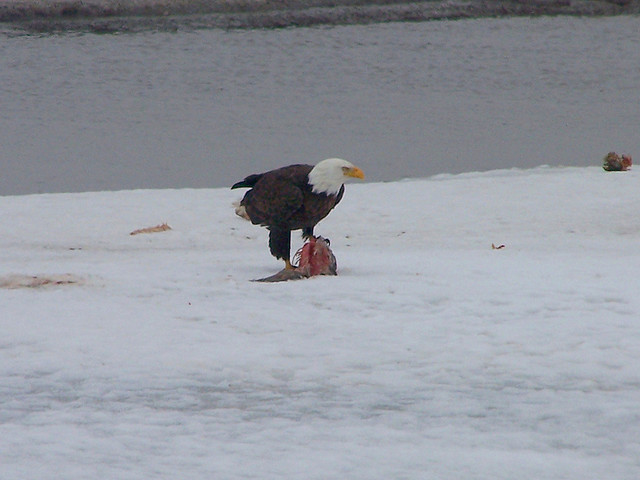
 

Bald Eagles

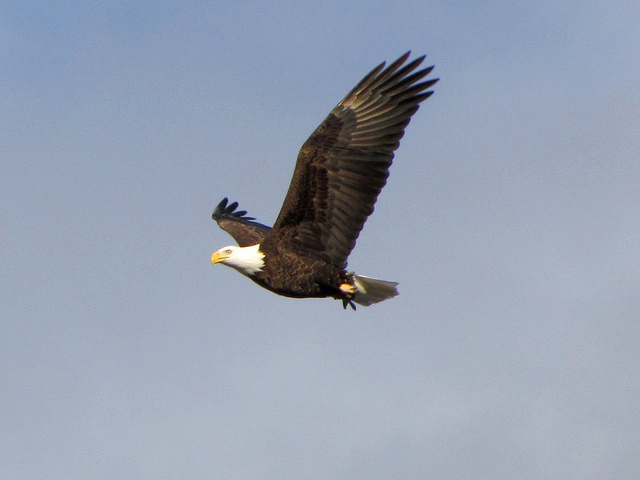
bald eagle feeding, Courtesy and Copyright 2011 Bryan Olsen, Photographer

Bald Eagle Feeding
Copyright © 2011 Bryant Olsen

 bald eagle in flight, Courtesy and Copyright 2011 Bryan Olsen, Photographer Bald Eagle in Flight
Copyright © 2011 Bryant Olsen

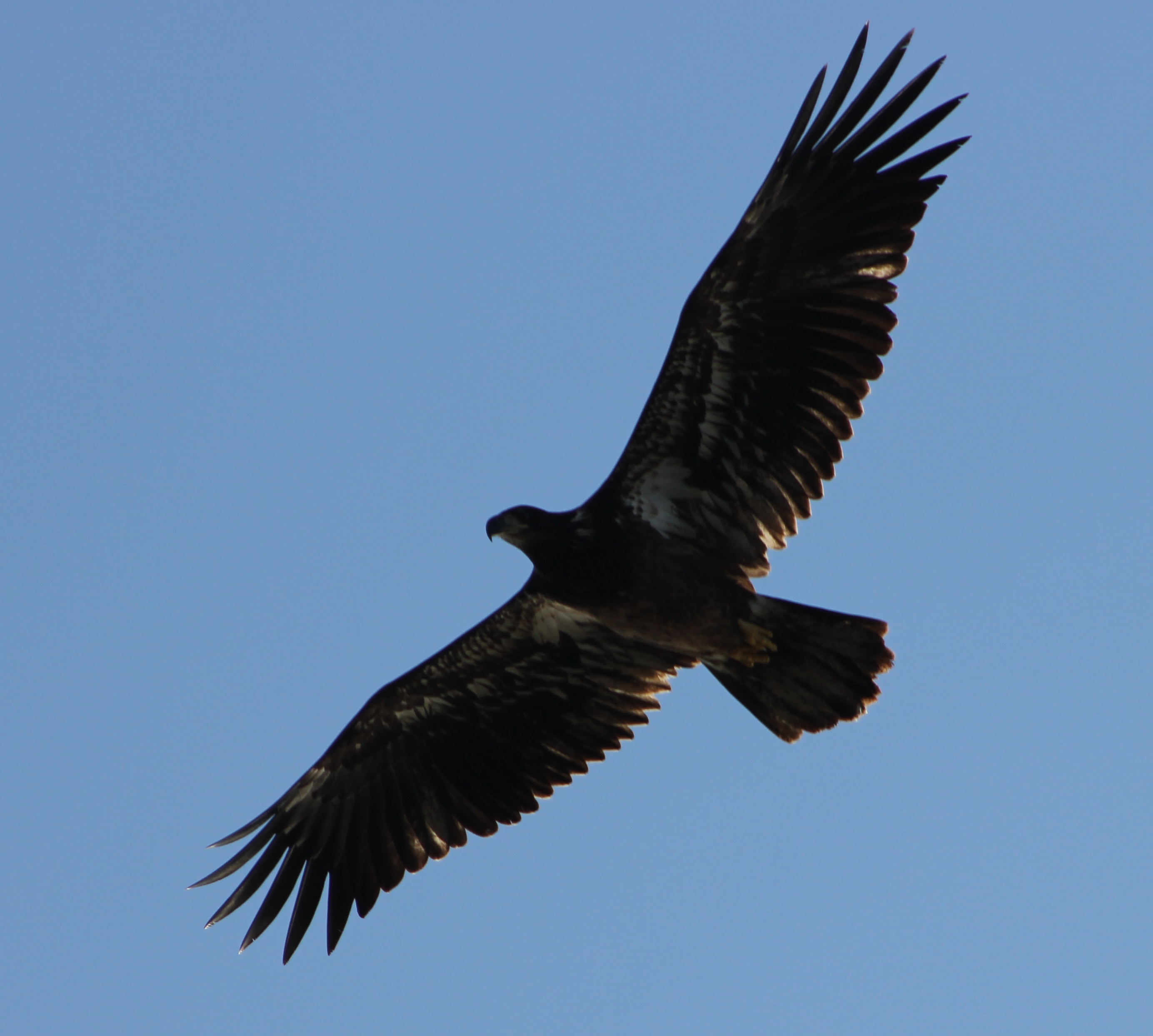
juvenile bald eagle in flight, Courtesy and Copyright 2011 Terry Greene, Photographer Juvenile Bald Eagle in Flight
Copyright © 2011 Terry Greene

flying immature Bald Eagle, Courtesy & Copyright 2011 Terry Greene, Photographer Flying Immature Bald Eagle
Copyright © 2011 Terry Greene

Flying Immature Bald Eagle

Copyright © 2011 Terry Greene, Photographer

When winter arrives in Utah, a number of our bird species hit the road – some flying thousands of miles to Mexico and Central America in search of a warm winter home.

But there is one notable bird that actually migrates to Utah in the winter – the bald eagle. In general, birds migrate because of seasonal food shortages. Think of the hummingbirds that rely on flower nectar and insects, which Utah cannot provide in winter, but which are abundant other times of the year. The same is true for bald eagles, whose main food source is fish. Winter comes on strong in Alaska and Canada, freezing lakes, ponds, and all but the strongest flowing rivers. So the birds travel to seek out the relatively mild winters found farther south.

One of the largest birds of prey you’ll see in our Utah skies, a mature bald eagle can have a wingspan of 6 to 8 feet and stand almost three feet tall. Only the golden eagle rivals it in size. Pairs are thought to mate for life, and they are also responsible for the largest nests of any bird in North America. One record-setting abode measured 9 feet wide, 20 feet deep, and weighed more than 2 tons.

And to think, we almost lost this incredible species. Since DDT and hunting heavily affected bald eagle numbers in the early half of the 20th century, the birds have made a truly remarkable comeback. From a low point around 4,000 individuals in the lower 48 states, they are now thought to number in the tens of thousands, and have been removed from the Threatened and Endangered Species lists.

Perhaps as their comeback continues, Utah will once again see these majestic animals make their massive nests here, fishing in our many rivers and lakes year round. For now, though, aside from a few rare exceptions, bald eagle enthusiasts will have to make the most of their short winter stay. To observe bald eagles, consider a visit to the Great Salt Lake Nature Center at Farmington Bay. Every year, the Bay plays host to hundreds of eagles, from November to March, and while this milder-than-usual winter has brought in fewer numbers of eagles, you may still be able to catch a glimpse. They will likely be heading north later this month, however, so don’t delay. And be sure to keep your ears tuned into the bald eagle’s haunting song:

[Bald Eagle call from https://wildstore.wildsanctuary.com/collections/special-collections Kevin Colver https://wildstore.wildsanctuary.com/collections/special-collections]

Thank you to the Rocky Mountain Power Foundation for supporting the research and development of this Wild About Utah topic. For the Stokes Nature Center and Wild About Utah, this is Andrea Liberatore.

For the Stokes Nature Center and Wild About Utah, this is Andrea Liberatore.

Credits:

Audio: Courtesy & Copyright Kevin Colver
Photos: Courtesy & Copyright Bryant Olsen and
            Courtesy & Copyright Terry Greene
Text:    Andrea Liberatore, Stokes Nature Center, logannature.org

Additional Reading:

Parrish, J. and Walters, B., Editors. (2009) Bald Eagle (Haliaeetus leucocephalus). Utah Division of Wildlife Resources: Wildlife Notebook Series No. 3. https://wildlife.utah.gov/publications/pdf/2010_bald_eagle.pdf

National Geographic Society (2012) Animals: Bald Eagle (Haliaeetus leucocephalus)
https://animals.nationalgeographic.com/animals/birds/bald-eagle/

Bird Bathing

Click for more a larger view of a Northern Flicker and two American Robins at a bird bath.  Courtesy and Copyright 2012 Linda Kervin, Photographer

Two American Robins and a
Northern Flicker Drinking
Copyright © 2012 Linda Kervin

Click for more a larger view of three American Robins at a bird bath.  Courtesy and Copyright 2012 Linda Kervin, Photographer

Three American Robins Drinking
Copyright © 2012 Linda Kervin

No songbird can be led to water, and you certainly cannot make them drink. Give them a birdbath, though, and many birds will drink and bathe with gusto, especially here in the arid West. As a yard ornament the idea is not so old; the word “birdbath” was first coined in the Gilded Age. At our birdbath, robins daily crowd the rim, as many as six at a time, alternately bobbing and thoughtfully swallowing. Few birds can suck in water with their beak immersed. Instead, they lift their head with a beak full of water which they drink down in a few gulps. The gray Townsend’s solitaire, another regular visitor, perhaps needs to wash down its winter diet of dry, tangy juniper berries.

Birds like to bathe, even in winter. Just why they bathe is not so obvious. Cleaning their insulative layer of down may keep it fluffy to trap maximum heat. After bathing, birds often nibble their flight feathers. This preening removes dirt, feather detritus and parasites, while realigning each feather’s barbs so that they lock together for flight. Feathers repel water not by oils, but through their fine structure. Some game birds, such as quail, take dust baths, squatting in a shallow dirt scrape to ruffle loose dust through their feathers. When quail were experimentally denied dust baths, their plumage became greasy and disheveled. Bathed, preened birds are dapper.

So what features make a good birdbath? It should be shallow, just an inch or two deep and placed two feet or more above the ground to thwart terrestrial predators. A nearby preening perch is helpful. The bath should be convenient to refill, both because bathing birds splash a lot, and also because changing the water frequently deters disease transmission. Our birdbath mounts to our deck railing and has a low wattage heating element that prevents freezing. If you are already feeding birds, consider adding a birdbath. The exuberance of a bathing bird is a joy to behold.

This is Linda Kervin for Bridgerland Audubon Society.

Credits:

Graphics: Courtesy and Copyright 2012 Linda Kervin, Bridgerland Audubon Society

Text: Jim Cane, Bridgerland Audubon Society

Additional Reading:

Bird Notes from Sapsucker Woods, Cornell Lab of Ornithology, 2004, https://www.birds.cornell.edu/pfw/Members/BirdNote09–ProvideWater.pdf

Providing Water for Birds, Great Backyard Bird Count, Cornell Lab of Ornithology, https://www.birds.cornell.edu/bbimages/gbbc-email/ProvidingWater.pdf

Sleeping the Winter Away

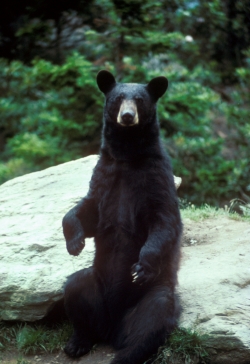
Click to view larger image of male Black Bear, Photo Courtesy US FWS, Mike Bender, Photographer
This Black Bear will retain heat
much better during hibernation
because it has a larger body
compared to the area of its outer
surface and it has thicker fur
compared to smaller animals
Photo Courtesy US FWS
Mike Bender, Photographer

Click to view the Mountain Chickadee, courtesy and copyright Stephen Peterson
Mountain Chickadee
Even though some small birds, like chickadees, may enter torpor,
they use almost all of their
energy stores each night.
Courtesy & Copyright
Photographer: Stephen Peterson

Hi, this is Mark Larese-Casanova from the Utah Master Naturalist Program at Utah State University Extension.

While I’ve mentioned how certain animals are well adapted to being active in winter, some choose to save their energy and sleep the winter away. Maintaining a constant body temperature in winter, when air temperature is relatively low, can require consuming great amounts of energy stores, such as fat. This can be especially difficult during a time of year when food is scarce.

Smaller animals especially struggle with heat loss because, relative to their body size, they have much more surface area from which they can lose heat. Compare a mouse to a bear- the bear will retain heat much better because it has a larger body compared to the area of its outer surface. Not to mention, a bear’s fur is much thicker than that of a mouse!

For certain animals, it makes sense to lower body temperature while being inactive so that they can conserve as much energy stores as possible. This can happen in several different ways. Sleeping for part of a daily cycle can conserve a little energy since body temperatures drop slightly during sleep. If air temperatures are particularly low and food is scarce, some animals will enter torpor, allowing their body temperatures to drop closer to air temperatures in order to save even more energy. An animal can be in torpor for just a night, or perhaps a few days. If it is able to store enough energy reserves and can survive a decrease in body temperature for longer periods, some mammals may enter deep torpor and hibernate for several weeks or months in the winter. During this time, the rate of energy consumption is just a small fraction of what it might normally be when the animal is active.

Body size and energy stores influence just how inactive an animal can be in winter. Some of our smallest mammals, such as shrews and mice, lose heat so readily and can store so little fat that they cannot afford to hibernate. They must always find food in order to survive. Even though some small birds, like the black-capped chickadee, may enter torpor, they use almost all of their energy stores each night. If they fail to replenish their fat reserves each day, they might not survive.

The true hibernators are the mid-sized mammals. While ground squirrels, jumping mice, and bats may hibernate for much of the winter, they occasionally wake up for a day or two of activity. Even larger mammals, including raccoons, skunks, and bears, don’t actually need to hibernate. Their body temperature drops just a little, and they are able to survive on their stored fat simply by sleeping.

So, while I sometimes envy the true hibernators on some of those cold winter days in Utah, I’m still thankful that I can adapt to winter and enjoy our great outdoors year-round.

For Wild About Utah, I’m Mark Larese-Casanova.

Credits:

Images: Courtesy US FWS and Stephen Peterson, Bridgerland Audubon Society

Text:     Mark Larese-Casanova, Utah Master Naturalist Program at Utah State University Extension.
Additional Reading:

Heinrich, B. (2009). Winter world: The ingenuity of animal survival. Harper Perennial.

Eckert, R., D. Randall, and G. Augustine. Animal physiology: Mechanisms and adaptations. W. H. Freeman and Company.