Snowshoe Hare

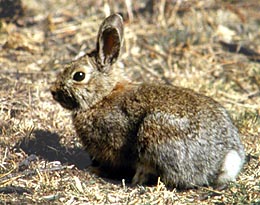
Snowshoe Hare Summer Coat
Courtesy US National Parks Service

Hi, I’m Holly Strand from Stokes Nature Center in beautiful Logan Canyon.

The approach (opening) of the 2010 Olympics in Vancouver brings back fond memories of Utah’s stint as host of the winter games back in 2002. Many Utahns will recall that among Salt Lake’s three Olympics mascots was “Powder,” a playful snowshoe hare.

Powder represented “faster” in Salt Lake’s triumvirate motto of “Citius, Altius, Fortius” (Faster, Higher Stronger) and the description is apt for the nimble mammal that owes much of its survival to its comically large feet.

USU wildlife biologist Dustin Ranglack says the snowshoe hare’s feet are ideally suited for racing from predators in deep mountain snow. “Snowshoe hares are known as the ‘Snickers bars of the forest’ because they’re a popular treat for a host of carnivores, including coyotes, foxes, lynx, bobcats, bears and birds of prey.”

Ranglack notes that the hare, which he describes as “the cutest bunny rabbit you’ve ever seen,” sports another defensive trait that serves the animal well: its distinctive camouflage coat. In winter, the hare’s soft, fine fur turns white to blend into the snowy terrain. As spring thaws the wintry landscape, the hare’s fur turns brown to help it elude predators.

Snowshoe Hare Winter Coat
Courtesy USDA Forest Service

Coupled with its prolific breeding habits, the snowshoe appears to have a robust arsenal of defenses as it feeds at night following well-worn forest paths to feast on trees, shrubs, grasses and plants. Yet scientists observe that climate change may disrupt photo cycles that keep the color of hares’ fur in sync with its surrounding landscape. A white hare may end up sitting on brown earth in full view of ravenous predators, upsetting the delicate balance of advantage.

“The hares are fast, yes, but their best mechanism of defense is camouflage,” Ranglack says.

Thanks to Mary-Ann Muffoletto and Utah State University College of Natural Resources for supporting the development of this Wild About Utah program.

For Wild About Utah and Stokes Nature Center, I’m Holly Strand.
Credits:

Images: Courtesy US Forest Service and US National Parks Service

Text:     Mary-Ann Muffoletto, Holly Strand, Stokes Nature Center

Sources & Additional Reading

Dustin Ranglack, USU Department of Wildland Resources https://www.usu.edu/ust/index.cfm?article=35951

Huang, Lilly. “The Case of the Disappearing Rabbit,” Newsweek, July 25, 2009.https://www.newsweek.com/id/208445

Snowshoe Hare Lepus Americanus, National Geographic, https://animals.nationalgeographic.com/animals/mammals/snowshoe-hare.html

Rocky the Flying Squirrel

Northern Flying Squirrel
Photo Courtesy
Phil Myers (photographer, copyright holder)
Museum of Zoology, University of Michigan
This work is licensed under a
Creative Commons
Attribution-Noncommercial-Share Alike
3.0 Unported License.

Hi, I’m Holly Strand from Stokes Nature Center in beautiful Logan Canyon.

There’s a large paper wasp nest on display on a bookcase at the Nature Center. Last week, Anna and I noticed some strange noises emanating from it. It even seemed to move a little on the shelf. We carefully –and a bit nervously–approached to investigate. I picked up the nest and it began to shake vigourously. Then a live missile shot out of the opening. It was a chubby little squirrel with huge dark eyes. He jumped from the bookcase and went scurrying across the floor with Anna and I in hot pursuit. Then he scampered up to the top of a door frame. We tried to catch him with a cardboard box, but he spread his little legs out wide and went sailing over our heads, landing smoothly on floor across the room. And then he ran under the couch. We stood there in amazement. He wasn’t your normal squirrel—he was a flying squirrel!

The northern flying squirrel is one of two flying squirrels found in United States, the other being the southern flying squirrel . Northern flying squirrels occur in many of Utah’s mountainous areas, primarily in mature coniferous forests and riparian zones.

According to Mike Wolfe at the Utah State University’s College of Natural Resources, they aren’t exactly rare in Logan Canyon. In fact, they are active here throughout the year, but they’re completely nocturnal. So many people never see them and are surprised to find that we have them.

Flying squirrels don’t really fly. They glide. They have a loose fold of skin known as a patagium which runs along each side of the body from the ankle of the hind leg to the wrist of the foreleg. When they stretch this membrane and launch they instantly become a furry paraglider, capable of covering great distances using a small fraction of the energy it would take to run.

Rocky, as we called the nature visitor, proved very difficult to catch. In the end, we used a live trap baited with apples and sunflower seeds. On Thanksgiving morning, my husband and I found him sitting in it, wishing he were somewhere else. We took him up the canyon and released him. He scampered up a tree and seemed to regard us thoughtfully. On the way back to the car, I looked back once more and was lucky enough to see one last beautiful 20 ft glide from tree to tree.

Thanks to the USU College of Natural Resources for supporting research and development of this Wild About Utah topic.

For Wild About Utah and Stokes Nature Center, I’m Holly Strand.
Credits:

Images: Courtesy Washington Department of Fish and Wildlife and Phil Myers (photographer, copyright holder), Museum of Zoology, University of Michigan, licensed under CCA-Noncommercial-Share Alike 3.0 Unported License.
Text:     Holly Strand, Stokes Nature Center

Sources & Additional Reading:

Flyingsquirrels.com  [Accessed December 4, 2009]

Utah Division of Wildlife Resources.  Utah Conservation Data Center. Species database.  NORTHERN FLYING SQUIRREL.  https://dwrcdc.nr.utah.gov/rsgis2/Search/Display.asp?FlNm=glausabr  [Accessed December 04, 2009]

Malamuth, E. and M. Mulheisen. 1999. “Glaucomys sabrinus” (On-line), Animal Diversity Web. https://animaldiversity.org/accounts/Glaucomys_sabrinus/pictures/collections/contributors/phil_myers/classic/sabrinus1/   [Accessed December 04, 2009]


Tales of the Packrat The Legacy of Early Grazing on Utah’s Rangelands

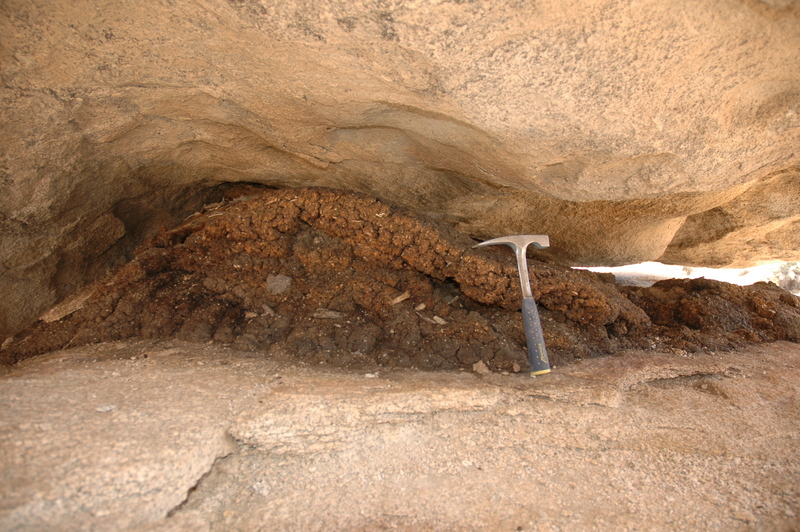
Tales of the Packrat: Pack Rat Midden,  Photo Courtesy and Copyright 2009 Ken Cole - All Rights Reserved
Pack Rat Midden
Copyright © 2009 Ken Cole

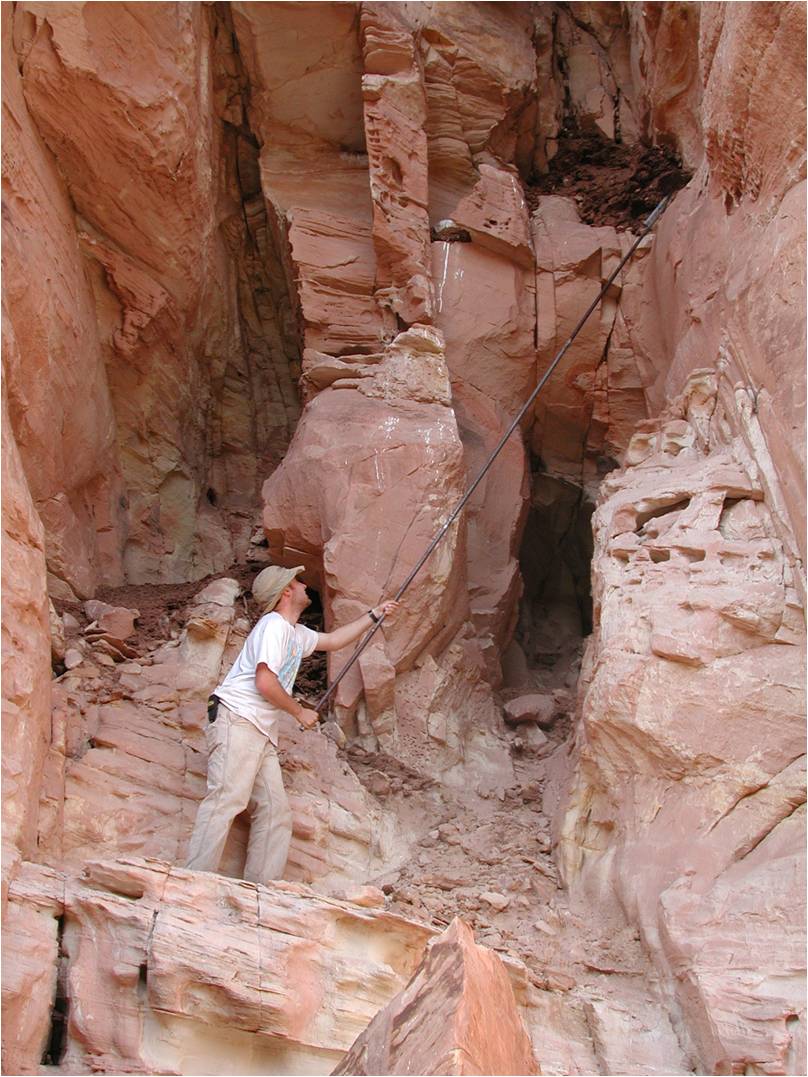
Reaching for a Pack Rat Midden, Click to Zoom, Photo Courtesy and Copyright 2009 Ken Cole - All Rights Reserved Reaching for a Pack Rat Midden
Copyright © 2009 Ken Cole

One of the best storytellers in Utah’s national parks is not a ranger, but the lowly packrat.Tales of the Packrat
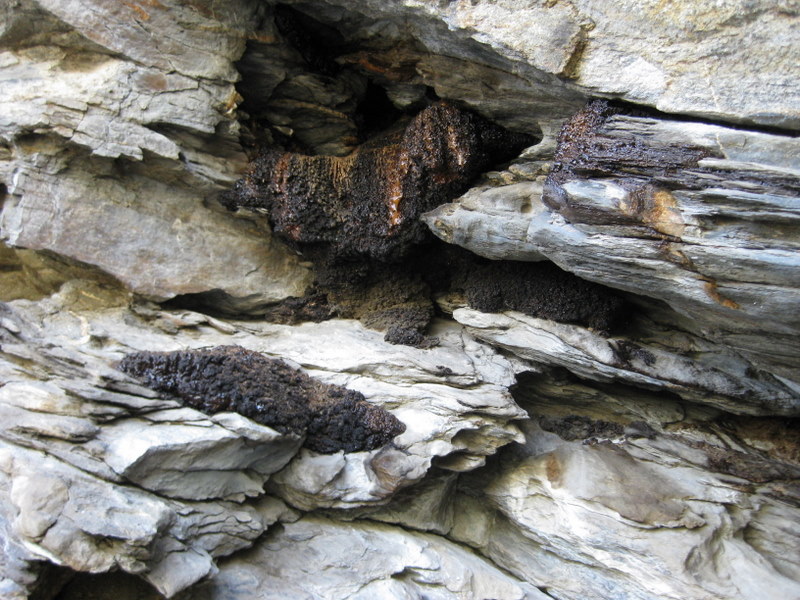
Their stories of past plant communities are written in their middens. The midden is a heap of leaves, twigs, seeds and fruits the packrat discards outside its nest. Protected in a desert cave or rock crevice and preserved by a rat’s own urine, this heap is a detailed and accurate time capsule of the past local flora.

Ken Cole with the US Geological Survey is a fluent translator of the packrat’s stories. Ken and colleagues sampled old packrat nests around Glen Canyon National Recreation Area and Capitol Reef National Park. By carbon-14 dating, the nest ages are known to span the last 10,000 years. As controls, they also collected nests from mesa tops inaccessible to livestock. Ken and colleagues then carefully translated these packrats’ stories by identifying and counting the plant fragments in these fossil nests.

At both Capitol Reef and Glen Canyon, old packrat nests revealed pre-settlement plant communities that were rich in diverse grasses, wildflowers and shrubs. Then these floras changed. Beginning 150 years ago, vast herds of sheep and cattle tromped and chewed their way across the unfenced rangelands of Utah in numbers unimaginable today. We know that palatable plant species and those susceptible to trampling suffered declines, because they are absent from middens from that time period. Unpalatable shrubs multiplied. Despite curtailed grazing in subsequent decades at Capitol Reef and Glen Canyon, packrats show us that the flora still has not recovered. Like Aesop’s fables, this cautionary lesson of the packrat’s ecological tale remains clear and relevant today. We should all listen.

This is Linda Kervin for Bridgerland Audubon Society.
Tales of the Packrat
Credits:
Photos: Courtesy and Copyright Ken Cole
Text: Julio Betancourt USGS and Jim Cane, Bridgerland Audubon
Additional Reading:

Betancourt, Julio L., Thomas R. Van Devender, and Paul S. Martin, eds. Packrat Middens: The Last 40,000 Years of Biotic Change, University of Arizona Press, 1990 https://www.uapress.arizona.edu/books/BID40.htm

Pack Rat Middens, Colorado Plateau in Land Use History of North America, Ken Cole, USGS/Northern Arizona University, https://cpluhna.nau.edu/Tools/packrat_middens.htm

Introduction [to Carbon 14 Dating], Tom Higham, Radiocarbon Laboratory, University of Waikato, New Zealand https://www.c14dating.com/int.html [Sep 24, 2009]

Utah’s Recent Pinyon Migrations and the Prospects for Climate Change

Packrat Fossil Midden City of RocksCourtesy and Copyright 2009 Julio Betancourt - All Rights Reserved
Packrat Fossil Midden
City of Rocks
Copyright © 2009 Julio Betancourt

In the late 1970’s, springtime in the American West warmed abruptly by 2 degrees Fahrenheit in the valleys, double that higher up. Our average onset of Spring now comes a week earlier across the West. If these are the first signs of climate change, even longer growing seasons will trigger not just earlier blooms but also northward plant migrations.

The past provides us with lessons about plant migrations. A thousand years ago, one-needle pinyon hopped from the Raft River Mountains in Utah to City of Rocks, Idaho. Across Utah, two-needle pinyon leaped over the Uintas to Flaming Gorge. We know this from radiocarbon dates on pinyon pine needles taken from ancient nest heaps of packrats preserved in caves. According to Dr. Julio Betancourt of the U.S. Geological Survey, who uses these packrat middens and tree rings to reveal past plant migrations, these recent advances by Utah’s two pinyon pines followed the Medieval Climate Anomaly, a period from 900 to 1300 AD marked by warming in Europe and severe drought in Utah.

Packrat 7000 year old Midden Joshua Tree Natl Park, Courtesy and Copyright © 2009 Julio Betancourt - All Rights Reserved
Packrat 7000 year old Midden
Joshua Tree Natl Park
Copyright © 2009 Julio Betancourt

Droughts figure prominently in Dr. Betancourt’s view of tree migrations. Droughts trigger bark beetle infestations, wildfires, and tree dieoffs, opening up niches for regeneration. When the drought abates, the resident tree species typically return. With long-term warming, however, other species can move in from lower elevations or further south. Dead trees now abound on Utah’s landscape, and Dr. Betancourt thinks that we are on the verge of a new spate of tree migrations.

This go around, which species retreat or advance will depend on new factors, including human fragmentation of the landscape and accelerated dispersal of native and non-native species that hitch rides with us. To conserve ecological goods and services associated with some species, Dr. Betancourt argues, we will have to manage for these plant migrations.

This is Linda Kervin for Bridgerland Audubon Society.

Credits:

Photo: Courtesy and © Copyright 2009 Julio Betancourt

Text: Julio Betancourt USGS NRP Tucson: Biotic Response to Climate Variability

Faculty and Staff > Julio Betancourt

Additional Reading:

USGS National Research Program: Tucson AZ
https://wwwpaztcn.wr.usgs.gov/home.html

Climate Change and the Great Basin, Jeanne C. Chambers, USDA Forest Service, Rocky Mountain Research Station, Reno, NV, 2008,

A Database of Paleoecological Records from Neotoma Middens in Western North America, USGS/NOAA North American Packrat Midden Database, https://esp.cr.usgs.gov/data/midden/ (Accessed 27 August 2009)