
To Be a Dog in the Sun

To be a Dog in the Sun Courtesy and Copyright Katarzyna Bilicka, Photographer
To be a Dog in the Sun
Courtesy and Copyright Katarzyna Bilicka, Photographer
Every winter comes with its ups and downs, and the downs are not always on the slopes. Sometimes we catch a bug or a nip. Sometimes we get those winter blues. Sometimes it’s even not safe for us to be outside and take a deep breath. Those are my most down days I feel: when you look out your window in the morning and see… thickness. Those are the days where we must hunker down indoors, though we long for the out of.

What I tend to do on these days in order to build that down into an up is lean in. I’ll do chores, bake something, stew something up, and make the most of it. If I must be indoors, then by god I shall be indoors. I keep myself busy so that I am still doing something. But what does one do when it’s been days or over a week of staring out that window at the thickness? What does one do when the house is clean, more bread is imprudent, and the stews all begin to form a beige film on your palette? What do you do when making the most of it becomes completed?

Now, I’m sure for every person there are different strategies for these issues. Maybe some folks don’t ever run out of steam. For them, that must be lovely. For the rest of us, though, Plan B is truly where creativity can shine, can it not? For where does imagination come from when our habits can no longer be relied upon and we must remember a bit of play?

I have found that my Plan Bs on those lingering thick sky days are a countermeasure to my Plan A, naturally. What I have discovered, from peering about my home, is that when the air is so bad outdoors and there is no more work to be done, the next best thing you can do is be a dog in the sun.

Me and my partner have three dogs, and from them we get so much. Endless fur on our clothes, large vet bills when they chase porcupines, barrels of love, and life lessons aplenty. When the air is too poor out, even for our dogs who typically love running and wrestling about in the yard and on hikes, they all do one thing which for its naturalness makes incredible sense. What they do is they find any ray of sunshine which peers into our home, even if dim and gray, lie squarely within its frame, and sleep like they’re storing fat for spring. What this means to Plan B can be straightforward. Have I ever plopped myself on the carpet alongside the pack and also napped in the light which happens to peer through the smog? Absolutely. It’s delightful. I highly recommend it. It’s warm, and soft, and the gentle snores from all make it an especially delightful respite. But what this also means to me is to be cozy in the light. Natural when possible, lamplit when not.

In the day I’ll put on the kettle, make some tea, and do any work I must in the sun with the aroma of spring leaves seeping into my nostrils and pores. When the sun is poor and my work is through, perhaps I’ll sit under a good lamp, maybe even stoke a fire, I’ll have a wee dram of uisce beatha fresh from aged shores and pull up a good book. I’ll read about a land where the air is clean but the company kept not even fiction can muster better, for that is another perk of having dogs: the good ones are good company, and those that aren’t are not themselves truly to blame, and therefore are good still the same.

So, when you find yourself noticing that the air once more is beginning to yellow, which makes your blues turn to gray, do what you can to keep your mind at ease while giving your lungs not their daily dose of PM2.5 and 10. And, if you find yourself like I often do after these long winter stretches, of having a cost benefit analysis of mind or lungs, remember that there can be a Plan B. Remember, that you can also be a dog in the sun. Find a book, have a slow down, drink something hot, warm, or neat, and gather yourself to the sun. Find your square of white light on the carpet, and give it a lie. Soak it up, feel the warmth, and remember that even on those days where to be in the wilds of Utah would do more harm than good, good still always may visit you from the wilds themselves.

I’m Patrick Kelly, and I’m Wild About Utah.
 
Credits:
Images: Courtesy and Copyright Katarzyna Bilicka, Photographer
Audio: Courtesy & © Shalayne Smith-Needham AND J. Chase and K.W. Baldwin. https://www.upr.org/
Text:    Patrick Kelly, Director of Education, Stokes Nature Center, https://www.logannature.org
Included Links: Patrick Kelly & Lyle Bingham, Webmaster, WildAboutUtah.org

Additional Reading

Wild About Utah, Posts by Patrick Kelly

Stokes Nature Center in Logan Canyon, https://www.logannature.org/


Vinegar Honeydew

Vinegar Honeydew: Cucumber Pickles Courtesy Pixabay, CongerDesign, Photographer
Cucumber Pickles
Courtesy Pixabay, CongerDesign, Photographer
Winter is the season of withholdings come free and taboos undone. Those things we tell ourselves which are not for the warm months come to roost, and our allowances to ourselves grow as the season’s light shrinks.

Winter is when we get to have a sit by the fire and exhale from our work like young exhausted parents, listening to the world’s sleep because of our good labor done. It’s when we can crack open our stores and taste the results of our year on this earth from the gardens and fields; the flavors of hope without fear of waste. Vinegar truly is the honeydew of the long nights.

It’s also when we can have freedom in the snow. The snow is that sweeping medium which allows us to climb mountains and then descend at speeds which in any other season would be a cause for concern, even if moderate.

Each mode of winter travel has its partakers and dissuaders, though none is surely the best for all. Cross country, sitski, telemark, downhill, snowbike, snowskate, snowboard, sled, tube, and contractor bag all each have their place for us to slide at speeds too great to pass up. Some have edges for control, some have fewer for fun, yet all allow for wind to blow through your hair and to dance with gravity, more apparent than ever in the cold.

Winter also gives us stories not available elsewhen. Many skilled naturalists have given many good lessons to me on how to read the snows over the years, yet not one lecture can compare to what happens when you go out by yourself and see what the world itself has to say. I’ve spent good hours finding a good track and following it, whether it’s a hare to its burrow, deer to the nearest alfalfa field, or my eyes wandering skywards to see whose wings caught the vole which once did scurry all a tither. The words though melt in the sun, and so the snow is the rarest of books. Perhaps it is also the most precious. Stories carved in stone seem mortibund to those on paper, and so those tattooed upon tree pulp seem to the cuneiform in the nivian ether.

So this winter, do not forget to enjoy the allowances you’ve worked all year: warming your bones by the fire; reading the precious snows; sliding down hills; and vinegar honeydew from your stores.

I’m Patrick Kelly, and I’m Wild About Utah.
 
Credits:
Images: Courtesy Pixabay, CongerDesign, Photographer https://pixabay.com/photos/cucumbers-pickle-jar-preserves-886036/
Audio: Courtesy & © J. Chase and K.W. Baldwin. https://upr.org
Text:    Patrick Kelly, Director of Education, Stokes Nature Center, https://www.logannature.org
Included Links: Patrick Kelly & Lyle Bingham, Webmaster, WildAboutUtah.org

Additional Reading

Wild About Utah, Posts by Patrick Kelly

Stokes Nature Center in Logan Canyon, https://www.logannature.org/

Strand, Holly, Snowshoe Hare, Wild About Utah, February 18, 2010, https://wildaboututah.org/snowshoe-hare/

Larese-Casanova, Mark, The Shape of Wildlife in Winter Wild About Utah, January 26, 2012, https://wildaboututah.org/the-shape-of-wildlife-in-winter/

Larese-Casanova, Mark, Utah’s Rich Skiing History Wild About Utah, January 23, 2014, https://wildaboututah.org/utahs-rich-skiing-history/

Strand, Holly, A Utah Skier’s Snow Lexicon Wild About Utah, January 29, 2009, https://wildaboututah.org/a-utah-skiers-snow-lexicon/

Nummer, Brian, Getting Crisp Home Pickled Vegetables, Extension, Utah State University, https://extension.usu.edu/preserve-the-harvest/research/getting-crisp-home-pickled-vegetables

Food Safety & Preservation, Extension, Utah State University, https://extension.usu.edu/saltlake/home-family-food/food-safety-preservation

The Natural Ebbs of the World

The Natural Ebbs of the World: Snow Goose Courtesy Pixabay, Hans Benn, Photographer
Snow Goose
Courtesy Pixabay, Hans Benn, Photographer
I can never tell if the anachronism of daylight savings is ironic. Maybe that’s due to my newly syncopated circadian rhythm. Or maybe it’s all a dream. Or perhaps, it’s somewhere in between.

Either way, it strikes me odd that we take our supposed linear direction on time from circular mechanisms that are unable to change of their own volition, except for once a year where we make morning seem earlier, even though it really isn’t, then in the fall we realize what an odd choice we made and go back on our decision.

Winter then sees us forget about our lapse. The cloud of amnesia, gained through time influencing time, shrouds our minds, so that come spring we’re intellectual infants, fresh as the crisp crocus air.

Now, I am actually not opposed to daylight savings. In fact, I’m very for it, though I differ in how it is implemented. I actually enjoy that, twice a year, our inner apes get to upset the rigid clockwork of clockwork, and use arbitrary tradition to tell our shared system of accountability that it does not have all the sway, and that it is ultimately, itself, an arbitrary tradition. I like that we get to be human in a world that is increasingly machine.

My umbrage with daylight savings, then, is that it isn’t wild enough. A strict date to spring and fall? That doesn’t seem right. It’s too orderly. My vote is that in every town, we pick one critter who wakes then dens, or arrives then leaves, and base our system of time off of something that is actually real, tangible, and unconditional. Maybe for the towns here in Utah, it can be a ground squirrel. Or a swan. Or RV tourists. Instead of having a strict immobile date, we give all time its greatest accountability: the natural ebbs of the world. We give time the context it is itself within.

This system I’d find actually meaningful, and just great fun. Imagine a likeness to groundhog day, twice a year, in every town, with all sorts of menagerie. The message we’ll send is that time doesn’t control us, nor we time. Instead time is controlled by those who are unaware of their own influence. Each living thing would have a potential chance to alter how we conduct ourselves. In this way, daylight savings no longer becomes anachronistic, or even ironic. Instead, daylight savings can become a dialogue with the world; a conversation with our participation in life. Time becomes grounded in reality. I imagine this conversation:

“What time is it?”
“Depends, has the first snow goose arrived?”
“No, but the last leaves fell off the box elder by the post office.”
“Then that explains why Bill isn’t here and we are.”

So this daylight savings, if you or someone you know is grumbling that all of this could be so much easier, just say yes, it could, and pitch them this idea if you’re keen on it, too. Let them see that we don’t have to be where we are, with an inane change of the time based on time, but instead we could change the time based on the world which is alive and vibrant around us each day. We could force ourselves to participate in time, by seeing that who we are depends on where we are and the life which encircles the lives we live. Maybe then, we can lose the ironic anachronism we currently have, and let our circadian rhythms be aligned to those natural forces which run deeper than a calendar date wherever, or whenever, you are.

I’m Patrick Kelly and I’m Wild About Utah.
 
Credits:
Images: Courtesy Pixabay, Hans Benn, Photographer https://pixabay.com/photos/goose-white-snow-goose-flies-4190673/
Audio: Courtesy & © Kevin Colver https://wildstore.wildsanctuary.com/collections/special-collections
Text:    Patrick Kelly, Director of Education, Stokes Nature Center, https://www.logannature.org
Included Links: Patrick Kelly & Lyle Bingham, Webmaster, WildAboutUtah.org

Additional Reading

Wild About Utah, Posts by Patrick Kelly

Stokes Nature Center in Logan Canyon, https://www.logannature.org/
Sermons of Birds

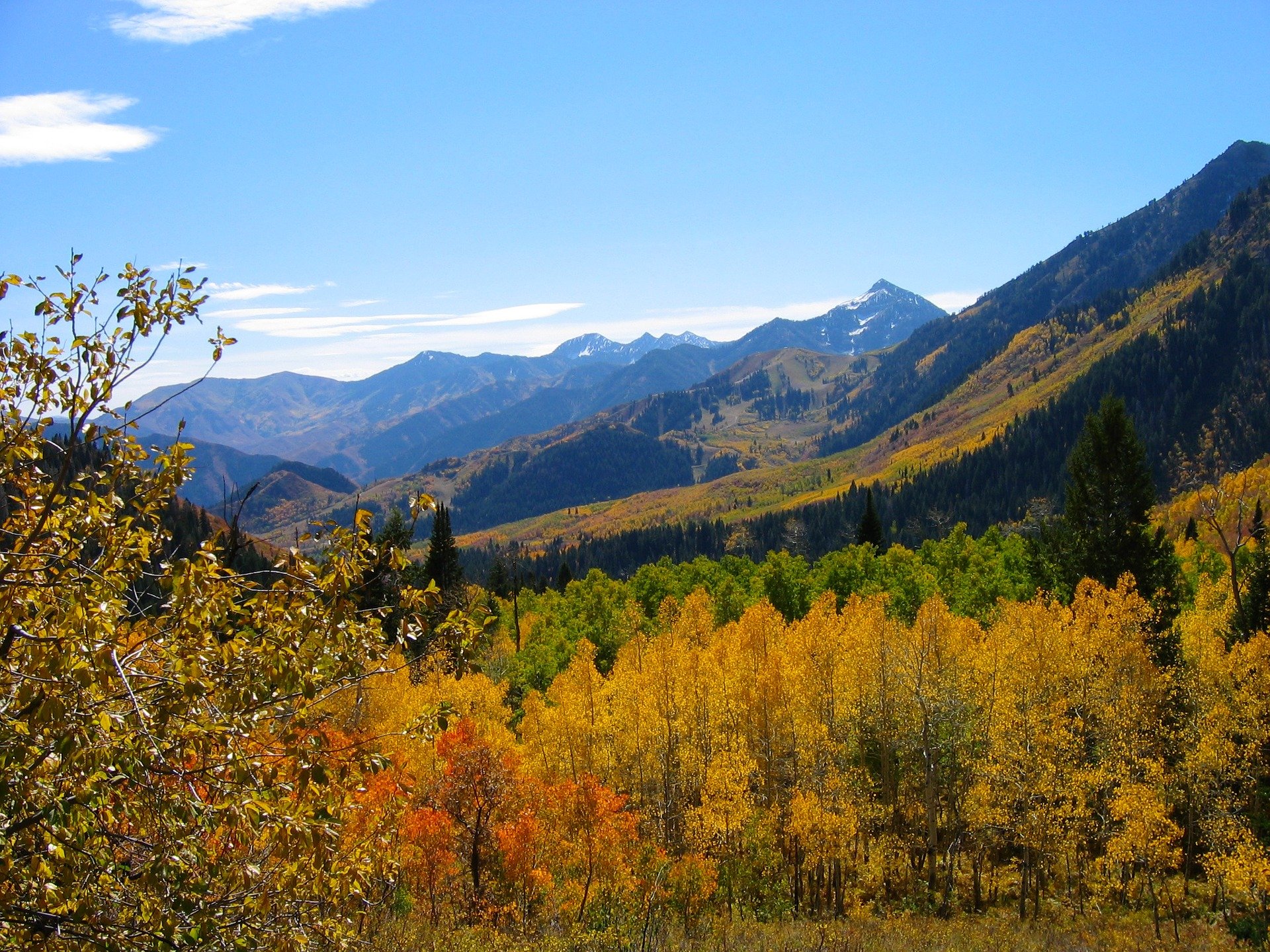
Sermons of Birds: Forest in Autumn Courtesy Pixabay.com, HmsFree, Photographer
Forest in Autumn
Courtesy Pixabay.com, HmsFree, Photographer
There is a story I like of an old Zen master who one day was asked to speak wisdom to his acolytes as they were sitting outside. He obliged. He rose and walked to the front of the students. He waited a moment to think carefully about his words, opened his mouth, and then just as he was about to speak, a bird in a nearby tree sang its beautiful warbling song. The master did not interrupt but instead simply listened and waited until the song finished, and the bird had flown away. When it had, he finally spoke: “The sermon has been delivered,” he acknowledged, and took his seat once more.

I think about this story often and dwell on its themes. The true master who is the truest student. The songbird who speaks truth without language. The wisdom elevated by listening to the world without ego.

This time of year, I try to take the lesson of the Zen master and listen to the autumn world around me, the softening sounds of my time on earth. I take pause and hear the breeze which rustles box elders scarlet and shivers aspens gold. The wind which blankets the land and grows it rosy before winter’s snowy slumber.

The birds’ notes, the bearers of great truths, have shifted from their summer selves, too. No longer do they sing for love, but instead call for companions as they find flocks to blunder between fermented crabapple trees with, and telegraph where the good black oil seed is for the benefit of all who husk germ.

I find solidarity with their industry, for I believe we all come from the same inner place. They, doing what is good and right, and I as well. I, too, likely like you, get a hankering, a reckoning to winterize, to preserve, to stock up like a tree’s fattening roots, swollen full with the liquor of next spring’s buds and blossoms. I do it through crisp cider, hot corn chowder, steamed cans, jammed jars, strong mulled toddies, and wool. These are my fruits and fat stores. These are my natural inclinations.

I take from the story of the Zen master, too, that we are all on the same team. Just as the master understood to defer a message of truth to the birds, we can all recognize the truth in what autumn fills us all with: that drive of readiness for spring by ways of winter. That our season of without only can be because of seasons of with, and that our seasons of bounty can only be through the rest with which we are pulled in winter.

So this autumn, I encourage you to listen like the Zen master to the world around you. When it whispers, “put on a sweater and sip hot drinks by the hearth,” do so. When it bellows, “can and jam all of the things for winter is coming and the taste of summer is that season’s delight,” do so as well.

And when the world says, “listen,” in beautiful birdsong, do so, and know that you sing, too, by being who you are to your core.

I’m Patrick Kelly, and I’m Wild About Utah.
 
Credits:
Images: Courtesy Pixabay, HmsFree, Photographer
Audio: Courtesy & © Kevin Colver https://wildstore.wildsanctuary.com/collections/special-collections
Text:    Patrick Kelly, Director of Education, Stokes Nature Center, https://www.logannature.org
Included Links: Patrick Kelly & Lyle Bingham, Webmaster, WildAboutUtah.org

Additional Reading

Wild About Utah, Posts by Patrick Kelly

Stokes Nature Center in Logan Canyon, https://www.logannature.org/