The Colorado River, a World-class Sculptor

Today’s story was written by Carlos Ramos, facilities director at Stokes Nature Center. I will be reading the English translation. To hear Carlos’s version in Spanish, you can find it online or listen Wednesday night at 9:01 p.m.

August arrived and the heat was at its peak. Summer was well established in Utah, and educational outings were making the most of the season. There is nothing better than leaving everyday life behind and spending a few days immersed in nature.

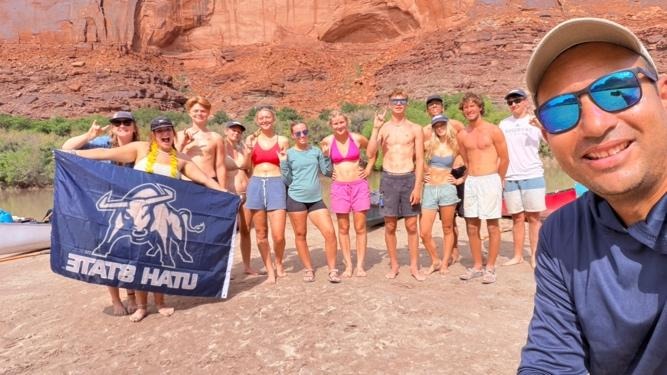
This last August, I went canoeing on the Green River with incoming freshmen of Utah State University and a few guides from the USU outdoor programs. The Green River is the main tributary of the Colorado River and stretches some 730 miles through Wyoming, Utah, and Colorado.

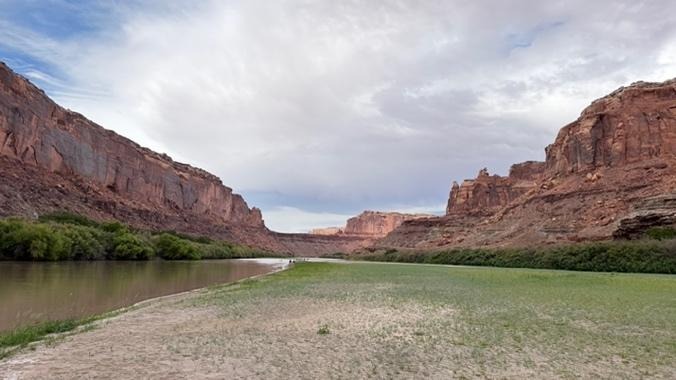
It is a brilliant, world-class sculptor, taking its time to shape magnificent red and orange sandstone mountains into unique, priceless works of art. During the late summer, the river is very calm, an excellent time to paddle. The journey becomes a time to listen, observe, sing the most off-key melodies, and learn about everything around us.

After five days, we learn that disconnecting from daily routines and worries about what might happen in the world makes us more attuned to nature, more observant, more creative, and more grounded.
One of the non-negotiable requirements of this trip was no technology. At first, I wondered how we could return to a time when we did not depend on cell phones and other communication systems, so we can enjoy the world around us.

After five days, we learn that disconnecting from daily routines and worries about what might happen in the world makes us more attuned to nature, more observant, more creative, and more grounded. As we realize that it does not take much to be happy.

Labyrinth Canyon is home to a wide variety of bird species and serves as a nesting sanctuary for peregrine falcons and golden eagles. You can see great blue herons and, of course, bald eagles as well as swallow nests on the immense walls of the colorful cliffs.

Mammals include beavers and otters, as well as larger mammals such as desert bighorn sheep, mule deer, coyotes, and foxes. On some days during this trip, we saw other nature lovers like us taking the time to enjoy fishing.
These dark, muddy waters are home to several federally protected fish native to Utah, including the Colorado pike minnow, the humpback chub, the bonytail chub, and the razorback sucker.

The banks of the Green River are adorned with trees such as willows and cottonwoods. In addition to adding a touch of beauty, their roots help stabilize sand bars, and they provide food and building material for beavers.

Above the canyons, the land is covered by a delicate living carpet of cyanobacteria, mosses, and lichens, known as cryptobiotic crust, which is vital for preventing erosion and fixing nutrients in the soil.

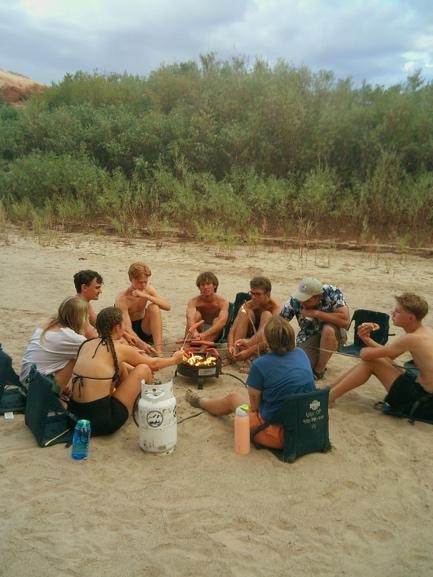
Night fell, and the camp began to take shape. Everyone pitched their tents, and dinner was prepared and enjoyed, accompanied by stories, games, and trivia amid laughter and murmurs. The hours passed slowly in this wonderful place, somewhere you never want to leave.

When darkness fully settled in, our guests of honor arrived. A night filled with lights, whose shapes and names leave even the greatest dreamer pondering. The stars made their majestic entrance, tracing even the unimaginable across the sky, where creativity can discover 1000s upon 1000s of shapes. We waited for a glimpse of the Milky Way, and of course, the Queen of the Night, the Moon.

If I could wish for time to stand still, I would choose this place without hesitation, in the company of people as special as these traveling companions. They will forever be among the 1000s of explorers who have journeyed through these beautiful treasures of a wild Utah.

The story was written by Carlos Ramos, a Utah naturalist with a passion for the nature of this incredible planet, and he is definitely Wild About Utah.
El Río Colorado, un escultor de talla mundial

Last August, I went canoeing on the Green River with incoming freshmen of Utah State University and a few guides from the USU outdoor programs. Courtesy & Copyright Carlos Ramos, Photographer
Last August, I went canoeing on the Green River with incoming freshmen of Utah State University and a few guides from the USU outdoor programs.
Courtesy & Copyright Carlos Ramos, Photographer
La historia de hoy está en inglés y en español.

Para escuchar la traducción al español nos puedes sintonizar los miércoles a las 9 pm o en línea en UPR.org

Se llego el mes de agosto y la calor esta en su mejor momento, ya el verano esta establecido en Utah y los paseos educativos estan aprovechando este verano, nada mejor que dejar lo cotidiano e internarse unos cuantos dias en la naturaleza.

Este año me fui a viajar en canoa en el Green River con los estudiantes del primer ingreso de la Universidad Estatal de Utah USU y sus respectivos guias.

Un detalle importante sobre este rio es que el Green River es el principal afluente del rio Colorado y se extiende una 730 millas atravesando los estados de Wyoming, Utah y Colorado, durante años se ha convertido en un brillante escultor de talla mundial tomandose el tiempo para crear maravillosas montañas entre rojas y naranjas de areniscas en unicas e invaluables obras de arte.

The Green River, Labyrinth Canyon, Utah Courtesy & Copyright Carlos Ramos, Photographer
The Green River, Labyrinth Canyon, Utah
Courtesy & Copyright Carlos Ramos, Photographer
Durante esta temporada el rio esta bastante calmado excelente momento para remar, el viaje se convierte en un tiempo de escuchar, ver, cantar las mas desafinadas melodias y aprender sobre todo lo que nos rodea.

Este es un viaje donde uno de los requisitos inquebrantable fue la no tecnologia, al principio me puse a pensar como podremos volver a años atrás donde no dependiamos de telefonos celulares y demas sistemas de comunicación para poder disfrutar del ambiente a nuestro alrededor.

Despues de 5 dias, pudimos aprender no solamente que el desconectarse de las rutinas diarias, de las noticias y del que pasara con el mundo nos convierte en personas mas enfocadas con la naturaleza, mas observadoras, mas creativas y con mas sentido comun al darnos cuenta que no se necesita mucho para ser feliz.

Labyrinth Canyon alberga gran cantidad de especies de aves, sirve de santuario de anidacion para el alcon peregrino y el aguila real, se pueden ver las garzas azules y sin faltar el aguila calva, ademas se distinguen los nidos de las golondrinas en las paredes inmensas de las rocas de colores.

Mamiferos como los castores y nutrias, ademas de otros grandes mamiferos como ser borrego cimarron del desierto, ciervos mulas, coyotes y zorros.

Durante este viaje algunos dias pudimos observar otros amantes de la naturaleza como nosotros tomandose el tiempo para disfrutar pescando y es que estas ocuras y lodosas aguas albergan algunos peces nativos de utah que han sido protegidos a nivel federal como ser el colorado pikeminnow (un depredador que puede llegar a medir mas de tres pies de largo), el humpback, el bonytail chub y el razorback sucker.

El green river esta adornado en sus contornos con arboles como sauces y alamos los cuales ademas de darle una pincelada de belleza ayudan a estabilizar las barras de arena con sus raices y sirven de alimento y material para los castores.

En la parte alta de los cañones la tierra esta cubierta por una delicada alfombra viva de cianobacterias, musgos y liquenes conocida como costra criptobiotica, vital para prevenir la erosion y fijar nutrientes en el suelo.

Llego la noche y el campamento comenzo a tomar forma, cada quien instalo sus casas de acampar, la hora de la cena regreso acompañada de historias, juegos, trivias entre risas y murmullos, las horas van despacio en este maravilloso lugar del cual nunca quisieras salir.

Dinner time at The Green River, Labyrinth Canyon, Utah
Courtesy & Copyright Outdoor Programs, USU
Dinner time at The Green River, Labyrinth Canyon, Utah
Courtesy & Copyright Outdoor Programs, USU
Al entrar completamente la noche llegaron nuestras invitadas de honor, una noche llena de luces con formas y nombre que dejan pensando hasta al mas soñador, y es asi como las estrellas hacen su majestuosa entrada dibujando hasta lo inimaginable, donde tu creatividad puede llegar a descubrir miles y miles de formas, esperando el avistamiento de la via lactea y por supuesto no debia faltar la reyna de la noche La luna.

Si pudiera pedir el deseo de detener el tiempo lo haria sin lugar a dudas en este lugar con la compañia de personas tan especiales como lo han sido estos compañeros de viaje que estaran por siempre entre los miles de exploradores que han recorrido estos hermosos tesoros de una Wild Utah.

Soy Carlos Ramos, Utah Naturalist y un apasionado por la naturaleza de este increible planeta.

Créditos:

Versión en español: Carlos Ramos, Facilities, Stokes Nature Center https://logannature.org/staff/
Imágenes: cortesía del Carlos Ramos y Outdoors Programs, Utah State University
Audio destacado: Cortesía y derechos de autor Kevin Colver https://wildstore.wildsanctuary.com/collections/special-collections/ y Anderson, Howe y Wakeman
Texto: Carlos Ramos y Kate Hunter, https://logannature.org/staff
Lectura adicional: Kate Hunter y Carlos Ramos, https://logannature.org/staff y Lyle Bingham, https://bridgerlandaudubon.org/

Lectura adicional

USU Outdoor Programs, https://www.usu.edu/campusrec/outdoor/

High Uintas

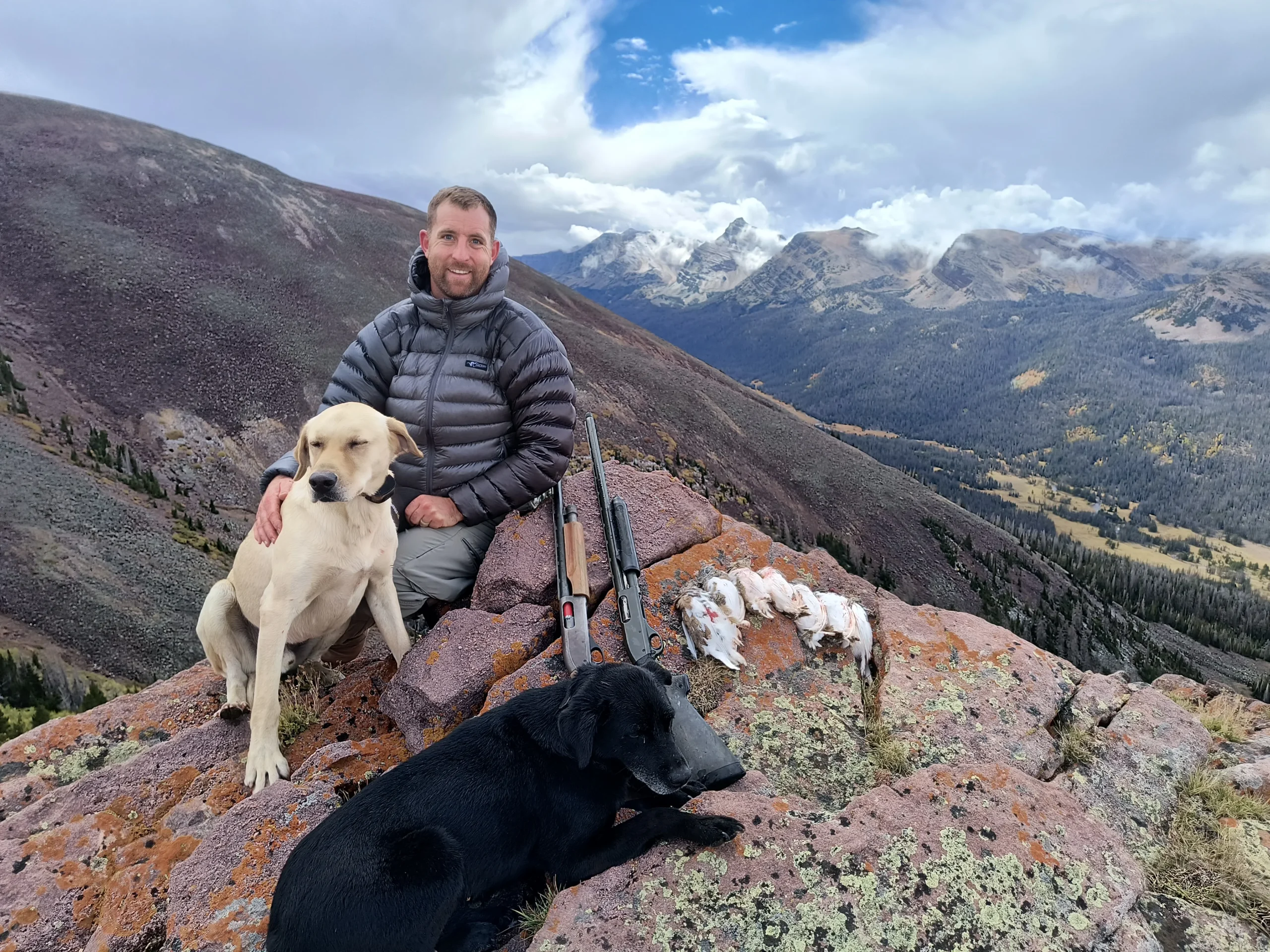
Joseph with his lab Blue and black lab Jesi after the Uintas hunt for White-tailed Ptarmigan
Courtesy & Copyright Joseph Kozlowski, Photographer
Joseph with his lab Blue and black lab Jesi after the Uintas hunt for White-tailed Ptarmigan
Courtesy & Copyright Joseph Kozlowski, Photographer

Camping in the High Uintah’s is never easy. Due to the rugged landscape and high elevations, every trip offers its own unique adventure. On this occasion, my long-time hunting buddy and two labs, after a 4-mile hike with 2000 feet of vertical climb, were setting up tents in the dark with pelting graupel, lightning, and rain, at nearly 11,000 feet elevation. After getting the dogs and gear under a second rain fly we bring for just these occasions, we scrambled into our tent for a long, lightning-rattling type of Night.

The alarm began its rude song at 4 AM. We woke, worked on our gear, and made our way out of the tent to be greeted by the endless galaxies above. Those black mornings in the mountains, warming water for oatmeal and an instant cup of joe over a single burner portable stove, preparing to take off into the night, are cherished memories never forgotten.

We had our gear, guns, and dogs, and under the dim glow of headlights, started up the mountain towards the peak.

Sun barely began to illuminate shadowy surfaces when we reached our destination. We had come on this High Uintah adventure with two goals in mind, one being this. We had come to look for elk.

Elk are crepuscular, meaning they are most active in the morning and evening, so we needed the right vantage point at the right time of day. It wasn’t long after the east-facing hills slowly gained contrast and color that we started seeing elk. Nearly all of them enjoyed the steep slopes of the mountainsides, rather than valley bottoms. We watched as they meandered through the vegetation and lazily ate as they soaked in the morning rays. At about 9:00 AM, when most of the elk had found their way to timbered cover, it was time to pursue our next goal, which was why we had my two trusty dogs by my side.

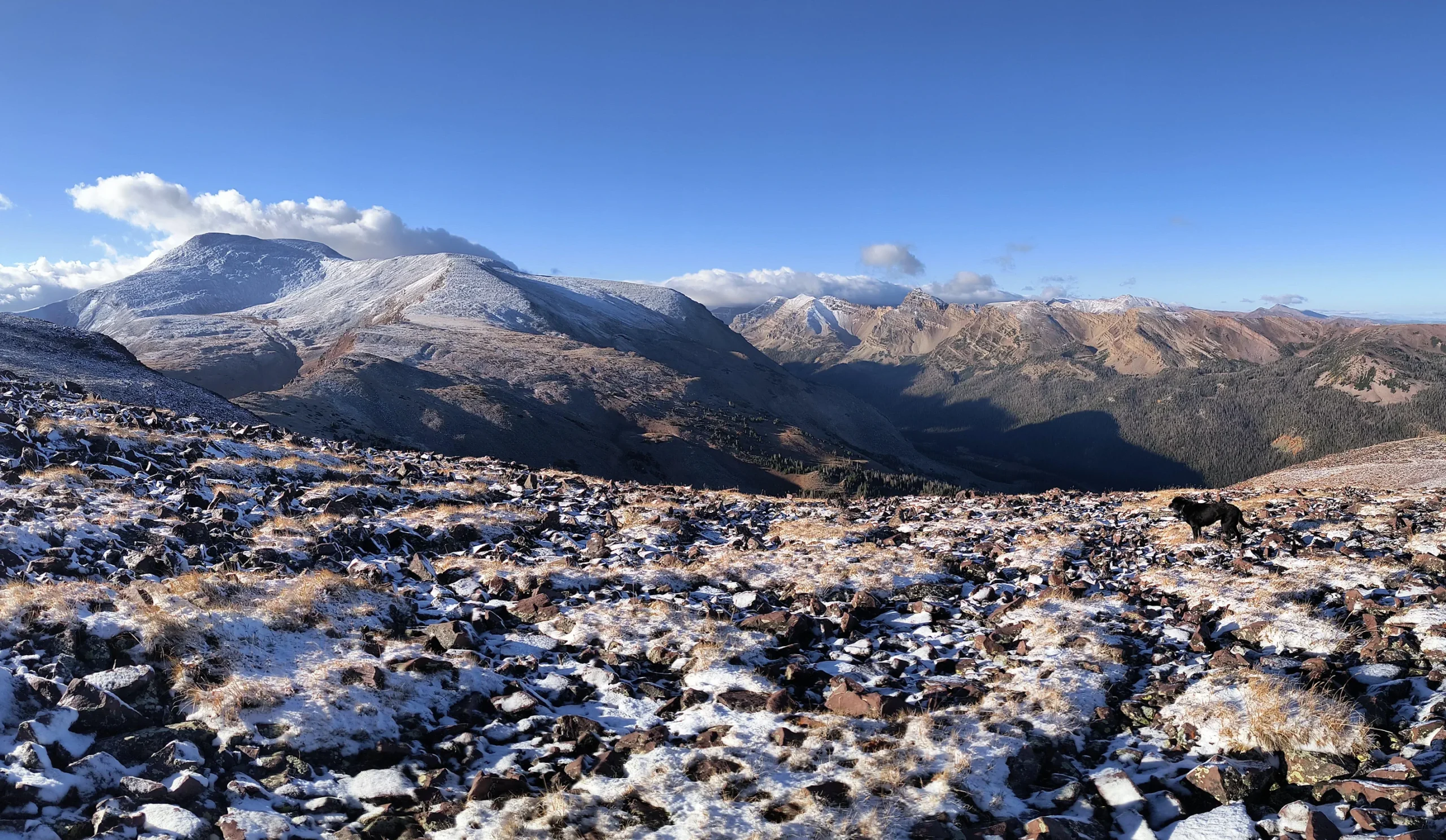
Bouldery Slope of the Uintas with Snow

Courtesy & Copyright Joseph Kozlowski, Photographer
Bouldery Slope of the Uintas with Snow
Courtesy & Copyright Joseph Kozlowski, Photographer

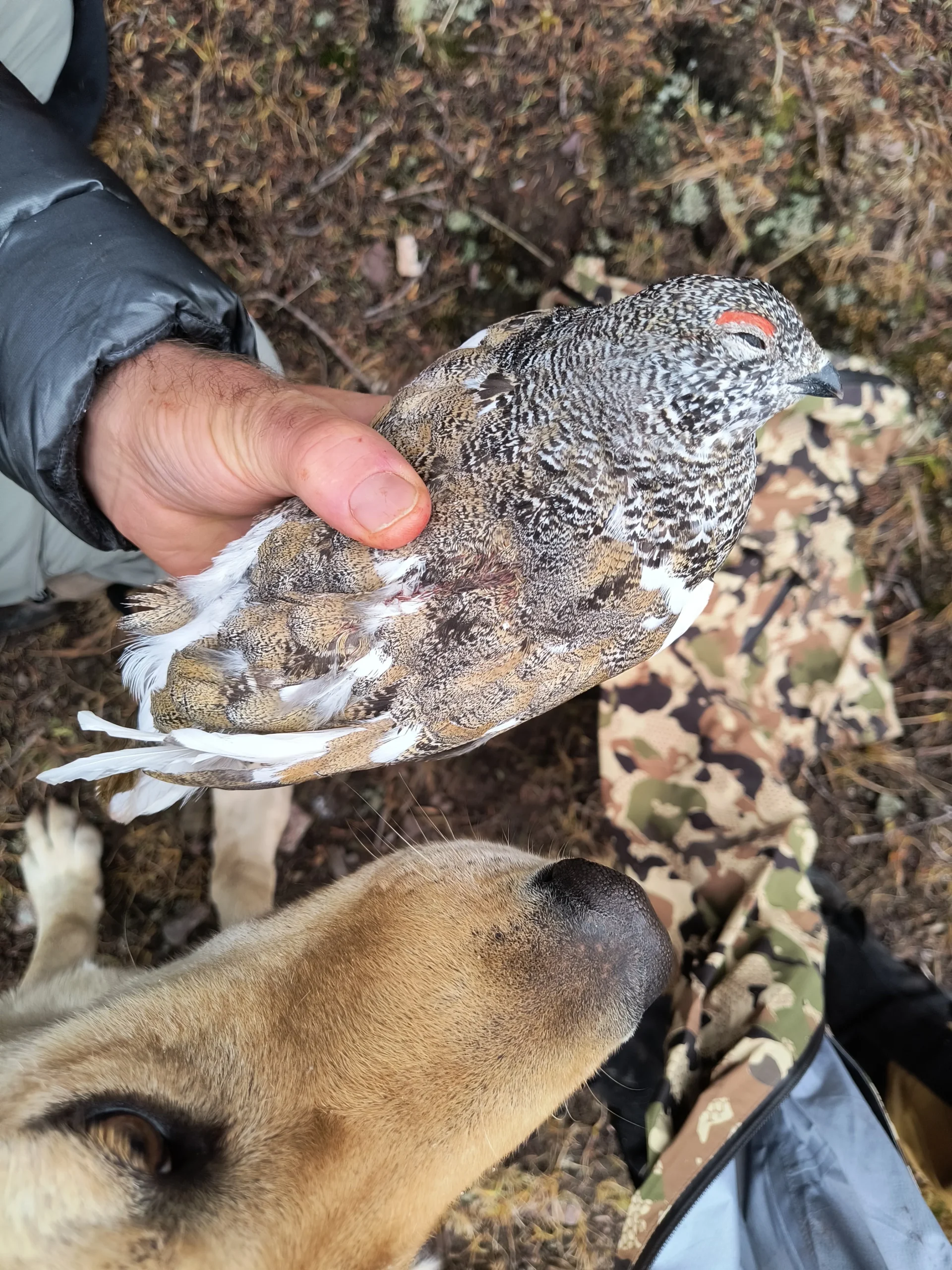
As we slowly worked back down the bouldery slopes of the peak and the terrain turned to rocky plains with short willow, I prepared myself, my friend, and my dogs. I knew this was going to be our best chance, and it didn’t take long for my suspicions to be realized. My older and wiser black lab named Josi alerted me of strangers as we approached the first patch of shin-high willows. Her nose went down, her pace quickened, and her fast jerky movements gave me no doubt that it was time. And, like flashes of white lightning in a clear sky, they were in the air, flying this way and that, dogs chasing and yipping at tail feathers, shotguns raising and blasting. After the moment settled, only one of the elusive birds had been brought down and my younger lab, Blue, was proudly pouncing to bring back the mottled white and brown bird in his slobbery mouth.

Joseph holding a White-tailed Ptarmigan while his Lab Blue ensures the bird is secure Courtesy & Copyright Joseph Kozlowski, Photographer
Joseph holding a White-tailed Ptarmigan while his Lab Blue ensures the bird is secure
Courtesy & Copyright Joseph Kozlowski, Photographer

The bird was a White-Tailed Ptarmigan, a prize upland bird that few hunters have ever seen. Biologists introduced about 50 of these birds to Utah in the mid-1970s as an experiment to see if they could establish a successful population, and the experiment was a success. Ever since, Utah’s High Uintah Mountains have been one of the only places in the lower 48 states where one has a reasonable chance to see the magical bird, a bird who loves the cold, high places, rocks, and willows.

The day continued, and although the fickle weather constantly changed from snow, to rain, to lightning, to blowing, to sun, and to graupel, we were successful in harvesting a few more birds from the majestic landscape.

As we finally made our way back toward camp, tired, wet, and carrying a few hard-earned birds, I found myself thinking less about what we had harvested and more about our experience. Hunting, to me, has been a way to experience nature more fully. It has taken me to wild places I would never otherwise have been, introduced me to natural phenomena I might have overlooked, and has helped me build relationships with people, places, and animals, that have positively shaped my life. There is something about spending a day trying to understand wild animals that changes my appreciation for the world, from the elk moving across the slopes, to the ptarmigan flashing through the alpine air; they all become part of the living landscape, and this may be what keeps calling me back; the opportunity to slow down, pay attention, and appreciate the remarkable beauty and wonder of a world that is so much bigger than myself.

This is Dr. Joseph Kozlowski, and I am wild about Utah!

Credits:

Images: Courtesy & Copyright Joseph Kozlowski, Photographer, Used by Permission
Featured Audio: J. Chase and K.W. Baldwin and lwdickens (freesound.org)
Text: Joseph Kozlowski, Edith Bowen Laboratory School, Utah State University https://edithbowen.usu.edu/
Additional Reading Links: Joseph Kozlowski & Lyle Bingham

Additional Reading:

White-tailed PtarmiganLagopus leucura, All About Birds, The Cornell Lab of Ornithology, https://www.allaboutbirds.org/guide/White-tailed_Ptarmigan/overview

Locating ptarmigans in the Uinta Mountains, Utah Division of Wildlife Resources, https://wildlife.utah.gov/ptarmigan