Bonneville Cisco

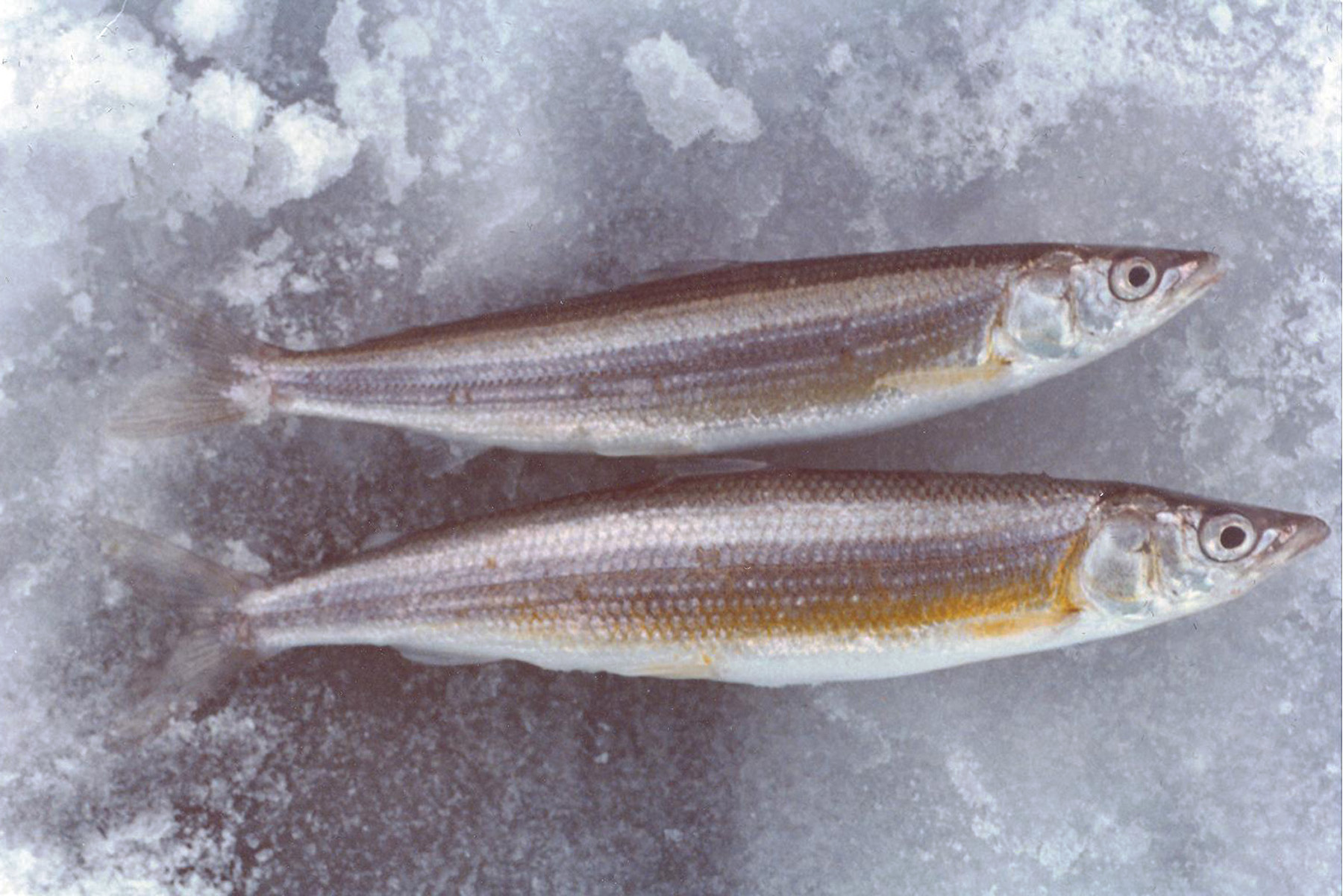
Bonneville Cisco: Female and Male. The more colorful male is on the bottom. Size of samples not indicative of gender.  Photo Copyright Ron Goede
Bonneville Cisco: Female and Male
The more colorful male is on the bottom.
Size of samples not indicative of gender.
Click to view a larger image.
Photo Courtesy &
Copyright © 1979, 2009 Ron Goede
This is Linda Kervin from the Bridgerland Audubon Society.

In mid-January you can witness frenetic fishing along the south-eastern shore of Bear Lake. The Bonneville Cisco are spawning.

These small whitefish are numerically the most abundant fish species in Utah, even though, Cisco are endemic to Bear Lake. And although attempts have been made to transplant them to other waters, they continue to thrive only in Bear Lake.
There are in fact, more endemic fish in Bear Lake than in any other north-American lake: the Bonneville Cisco, the Bear Lake Whitefish, the Bonneville Whitefish and the Bear Lake Sculpin. These deep water salmoniform fish also inhabited Pleistocene Lake Bonneville, the great freshwater sea that covered vast portions of Utah and surrounding states.

The Bonneville Cisco is differentiated from other whitefish by its pointed mouth and smaller size. Growing no larger than 9 inches, it is pale moss green on top with silver sides. Cisco don’t have the spots found on other whitefish.

Cisco eat only small aquatic invertebrates or zooplankton. They are eaten by larger fish in the lake including cutthroat, lake trout, and whitefish. When caught, they are most often breaded whole and deep-fat fried or smoked. Sometimes they are frozen and used as bait to catch cutthroat and lake trout later in the year.

Cisco mature at 3 years and, for a two-week period, prefer spawning on the south-eastern, rocky beach known appropriately as Cisco Beach. The males move first to the area where they wait for the females to arrive. Low water levels in the lake sometimes keep Cisco from the beach; but using fish finders, anglers have found that Cisco spawn in other places throughout the lake. However, they still prefer rocky locations, even if they are in deeper water.

Schools swim parallel, but 3-8 feet from the shore. During ice-on conditions, fishermen drill up to 18-inch holes and fish with nets or lines through the holes. With ice-off, they wade into the water, using smelt nets. Out in the lake, Cisco are caught with lures such as spoons and jigs instead of nets. The current limit is 30.
So if you are near Bear Lake in mid-January, dress warmly and enjoy this unique fishing phenomenon found nowhere else in the world.

Credits:

Picture: Courtesy & Copyright © 1979, 2009 Ron Goede, https://www.bridgerlandaudubon.org
Theme: Courtesy & Copyright Don Anderson as performed by Leaping Lulu https://www.leapinglulu.com/
Voice: Linda Kervin, Bridgerland Audubon Society https://www.bridgerlandaudubon.org
Text: Lyle Bingham and Ron Goede, Bridgerland Audubon Society https://www.bridgerlandaudubon.org

Additional Reading:

The following references were accurate as of the date of publication or most recent update.

Fishes of Utah: A Natural History (Hardcover)
by William F. Sigler (Author), John W. Sigler (Author), Joseph R. Tomelleri (Illustrator),
https://www.amazon.ca/Fishes-Utah-William-F-Sigler/dp/0874804698, pp 23, 24, 194-196

Are Bear Lake’s Ciscos a Joy or Curse?, Angler Guide, https://www.anglerguide.com/articles/112.html

Fishing, Bear Lake Valley Convention & Visitors Bureau, https://bearlake.org/fishing/

Prosopium gemmifer, Bonneville cisco, FishBase, https://www.fishbase.org/Summary/SpeciesSummary.php?id=2683

Utah’s Wildlife Action Plan, Utah Division of Wildlife Resources, Utah Division of Natural Resources, State of Utah, 2015-2025, https://wildlife.utah.gov/discover/wildlife-action-plan.html

Winter Fishing Comes Naturally at Bear Lake, Utah Outdoors, https://www.utahoutdoors.com/pages/bear_lake_winter.htm

Bonneville Cisco Prosopium gemmifer, Fieldguide, Utah Division of Wildlife Resources, Utah Department of Natural Resources, https://fieldguide.wildlife.utah.gov/?species=prosopium%20gemmifer
Bonneville Cisco Prosopium gemmifer, Species Status Statement, [Version 2020-04-20], Utah Division of Wildlife Resources, Utah Department of Natural Resources, https://fieldguide.wildlife.utah.gov/?species=prosopium%20gemmifer
Winter Song Birds

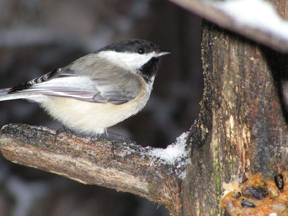
A Black-capped Chickadee
Courtesy Bridgerland Audubon Society
Stephen Peterson, Photographer
This is Linda Kervin from the Bridgerland Audubon Society.

In the icy, short days of winter, you may think that Nature itself has curled up to hibernate. Our gardens are colorless. Deciduous trees are stripped down to bare limbs and twigs. Many songbirds bid us farewell before flying south. In truth, what remains to be seen and heard of nature here in winter is more subtle and less complex. Now is the time to learn calls and songs of birds that reside here year-round, to hear them in solo performances, before the confusing springtime symphonies of birdsong.

This first bird calls its own name.[sound: “Chick-a-dee-dee-dee” #9 Songbirds of the Rocky Mountain Foothills]. That would be a chickadee. Black-capped Chickadees take sunflower seeds one at a time from our feeders. When I’m out snowshoeing or skiing in our forests, inquisitive chickadees are my welcome companions. They put some joy in a wintry day.

Sometimes a winter chickadee flock has other birds. [Sound: “annk-annk” #48 Songbirds of Yellowstone]. This bird sounds like a child’s squeak toy, but that nasal call belongs to the red breasted nuthatch. Look for this chunky small bird at your suet feeder, or cruising up and down tree trunks in its search for bugs.

We also have a minimalist in our winter bird repertoire. [Sound: “tew” #62 Songbirds of Yellowstone]. That single note belongs to the Townsend’s solitaire, which looks like a lean robin, but the somber gray of an overcast sky. Solitaires get through our winters dining mostly on juniper berries. Their call stakes out their winter feeding territory. They are regulars at are heated birdbath, I suppose washing down all those puckery berries.– Winter is the time to appreciate Townsend’s solitaire, before their singular tune is drowned out by the chorus of returning migrants.

You often hear chickadees, nuthatches and solitaires before you see them, as their plumage is neither colorful nor splashy. If you notice these calls on a winter’s day, it is because you are quiet and focused on the nature around you, leaving civilization’s hubub behind. Winter birds can do that for you. We will share more of Kevin Colver’s bird recordings with you this winter on Wild About Utah.

Credits:

Photo: Black Capped Chickadee, Courtesy & Copyright Stephen Peterson, Photographer
Bird Sounds: Courtesy and Copyright 2008 Dr. Kevin Colver, Songbirds of the Rocky Mountain Foothills and Songbirds of Yellowstone and the High Rockies https://wildstore.wildsanctuary.com/collections/special-collections
Theme: Courtesy & Copyright Don Anderson as performed by Leaping Lulu https://www.leapinglulu.com/
Text: Jim Cane and Linda Kervin, Bridgerland Audubon Society https://www.bridgerlandaudubon.org
Voice: Linda Kervin, Bridgerland Audubon Society https://www.bridgerlandaudubon.org

Additional Reading:

The following references were accurate as of the date of publication or most recent update.

Black-capped Chickadee, All About Birds, Cornell Lab of Ornithology, https://www.allaboutbirds.org/guide/Black-capped_Chickadee/

Red-breasted Nuthatch, All About Birds, Cornell Lab of Ornithology, https://www.allaboutbirds.org/guide/Red-breasted_Nuthatch

Townsend’s Solitaire, All About Birds, Cornell Lab of Ornithology, https://www.allaboutbirds.org/guide/Townsends_Solitaire

The Logan Christmas Bird Count

The Logan Christmas Bird Count: A Mountain Chickadee One of 103 bird species found in the 2007 Bridgerland Audubon Christmas Bird Count Photo Courtesy Bridgerlandaudubon.org
A Mountain Chickadee
One of 103 bird species found in the 2007
Bridgerland Audubon Christmas Bird Count
Photo Courtesy Bridgerlandaudubon.org
The Christmas holidays bring us a bevy of welcome annual traditions. Even now I can smell the cookies, hear familiar caroles and see the decorated tree. I hear the western screech owl too, for I also join in the Logan Christmas Bird Count. These are exhaustive one day surveys of all the individuals of every species of bird that can be found in a locality. Christmas Bird Counts began 109 years ago in New York City as a holiday alternative to the excesses of the so-called “side hunt”. From that first inspiration, the Christmas Bird Count has spread to all 50 states, Canada, Mexico and beyond. Last year, most of the 2100 counts were in the US, totting up 57 million individual birds representing nearly 2000 species. Here in Utah, we reported 180 bird species. Provo holds honors as Utah’s first Christmas bird count, held in 1903. Today, hundreds of Utahns participate in 20 local counts, from Saint George north to Bear Lake.

I always join Bridgerland Audubon’s count in Logan, which has been running for 52 years. Last year, we finally topped 100 bird species in our allotted count circle of 150 square miles, the effort of 61 birders. That’s remarkable for a chilly winter’s day, considering that many of our feathered friends, such as hummingbirds, flycatchers and more have hightailed it south for the winter, but note that some northerly species, such as roughlegged hawks, view Utah as the balmy endpoint of their fall migration.

Christmas Bird Counts offer something for everyone, from novices to seasoned birders, and from simple feeder counts to backcountry walkabouts. I’ll be up in the predawn, listening for owls. Every count’s data contributes to long-term research about winter dispersal patterns of birds, their population trends, and impacts of troubles like West Nile virus, which is especially hard on crows, magpies and jays. If you like birds, join in the fun and make the Christmas Bird Count one of your holiday traditions.

All counts are scheduled between December 14 and January 5. Utah’s Christmas Bird counts are listed on our website: just search for Wild About Utah. Our Logan count is on Saturday, December 20. That evening, we’ll flock together for a big potluck and count compilation party.

Credits:

Photo: Courtesy BridgerlandAudubon.org www.bridgerlandaudubon.org

Text: Bridgerland Audubon Society – Jim Cane

Additional Reading:

Christmas Bird Counts in Utah, Utahbirds.org, Milt Moody, Webmaster, https://www.utahbirds.org/cbc/cbc.html

The 109th Christmas Bird Count: Citizen Science in Action, National Audubon Society, Inc. https://www.audubon.org/bird/cbc/index.html

Idaho Circles: https://app.audubon.org/cbcapp/findCircles.jsp?state=US-ID&start=1

Utah Circles: https://app.audubon.org/cbcapp/findCircles.jsp?state=US-UT&start=1

Bird Feeding

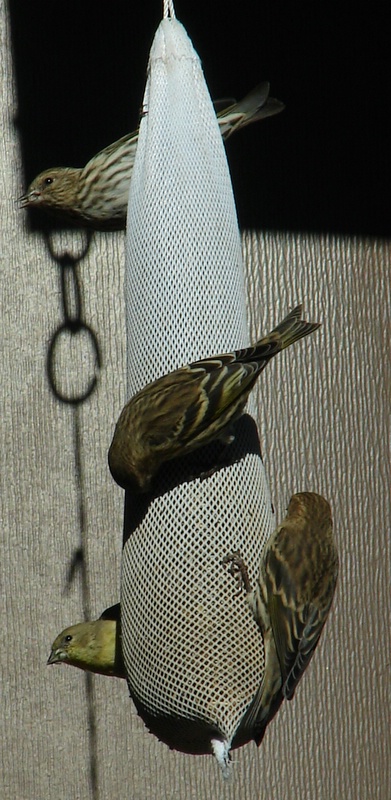
Bird Feeding: Pine Siskins and an American Goldfinch feed on thistle from a sock feeder, Copyright 2008 Jim Cane, Photographer
Pine Siskins and an
American Goldfinch feed
on thistle from a sock feeder
© 2008 Jim Cane

Hopper Feeder, Courtesy and Copyright 2008 Jim Cane, Photographer Hopper Feeder
© 2008 Jim Cane

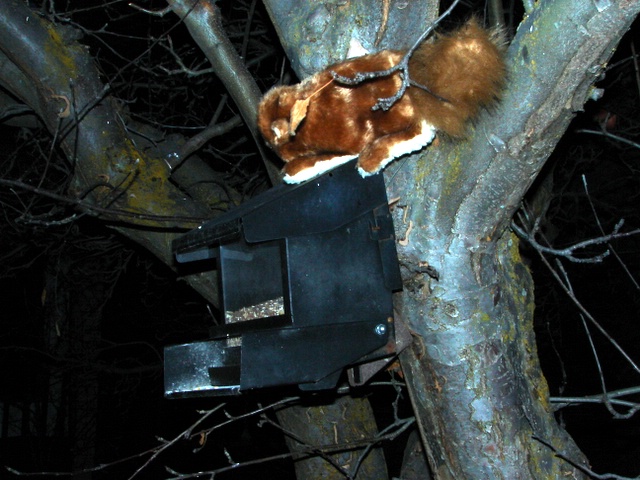
Hopper Feeder with frustrated squirrel, Copyright 2008 Jim Cane, Photographer Hopper Feeder
with frustrated
squirrel
© 2008 Jim Cane

Suet Feeder, Copyright 2008 Jim Cane, Photographer Suet Feeder
© 2008 Jim Cane

Many of our songbirds have departed for tropical climes to spend their winter. I confess that some days I envy them their choice. Like you and I, though, many others remain behind. They will fluff their feathers to tough out the cold, spending these short days in a perpetual hunt for food to keep them warm. You can help their hungry quest.

Remember the movie Mary Poppins and the scene where the lady sings “Feed the Birds”? She was feeding city pigeons, but you can feed our diverse songbirds using a convenient birdfeeder. For loose seed, we use a hopper feeder. The hopper resembles a tiny roofed house which is filled with seed that is dispensed from a trough at its base. To exclude squirrels, we have a metal squirrel-proof feeder, but you could put a baffle on the feeder’s supporting pole. The other common style of seed feeder is a broad tray. It will need a roof and drain holes to keep the seed dry and free of mold. Our feeder is above a stone walkway for birds like juncos that prefer seed spilled on the ground. A ring of upturned tomato cages around this area excludes cats, and the season’s discarded Christmas tree will provide them cover.

The best seed to offer is black oil sunflower seed, rich in fats and proteins, with a thin shell. Our diners include chickadees, finches, sparrows, nuthatches and woodpeckers. If you buy seed mixes, juncos and sparrows will take white millet, but milo or so-called red millet is a filler. Doves and jays like cracked corn too. Goldfinches and pine siskins flock to Nyjer thistle seed dispensed from a fine mesh sock you can buy with the seed.

Woodpeckers and nuthatches appreciate a suet feeder too, being a wire mesh cage containing a block of seed-filled suet, typically rendered from beef kidney fat. Expect magpies to hammer chunks off that suet block occasionally; our dog knows all about it. Nothing quite cheers a wintry day for me like colorful songbirds noisely bustling at our feeders.

If you do put up feeders, consider participating in Project Feeder Watch. You can find details on our web site, WildAboutUtah. Bon apetite!

Credits:

Photo: Courtesy & Copyright 2008 Jim Cane, Bridgerland Audubon Society, www.bridgerlandaudubon.org

Text: Jim Cane, Linda Kervin, Bridgerland Audubon Society

Bird Recordings Courtesy and Copyright Dr. Kevin Colver, WildSanctuary, Soundscapes, https://wildstore.wildsanctuary.com/


Additional Reading:

Backyard Bird Feeding, US Fish & Wildlife Service, https://library.fws.gov/Bird_Publications/feed.html

Project Feederwatch, Cornell Lab of Ornithology, https://www.birds.cornell.edu/pfw/

Educator’s Guide to Bird Study, Cornell Lab of Ornithology, https://www.birds.cornell.edu/schoolyard/all_about_birds/feeding_birds/bird_feeders.htm

The Great Backyard Bird Count, Birdsource.org, https://www.birdcount.org/

Creating landscapes for Wildlife — A Guide for Backyards in Utah, A production of the Utah Division of Wildlife Resources, Utah State University Cooperative Extension Service & Department of Landscape Architecture and Environmental Planning, https://digitallibrary.utah.gov/awweb/awarchive?type=file&item=10215