

Courtesy US National Park Service, Emily Ogden, Photographer
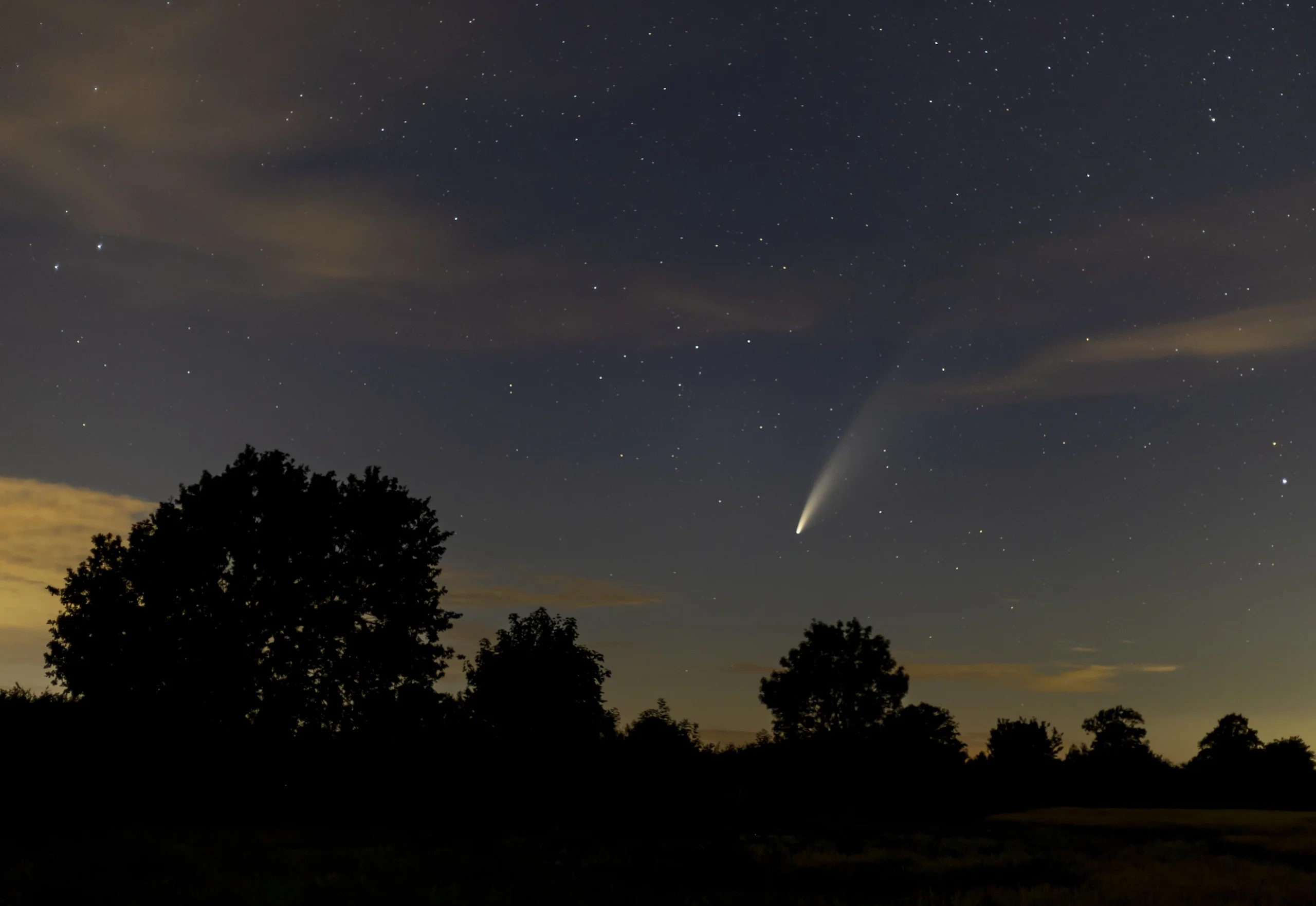
Comet NEOWISE (C/2020 F3)
Courtesy Pixabay, TheOtherKev, Contributor
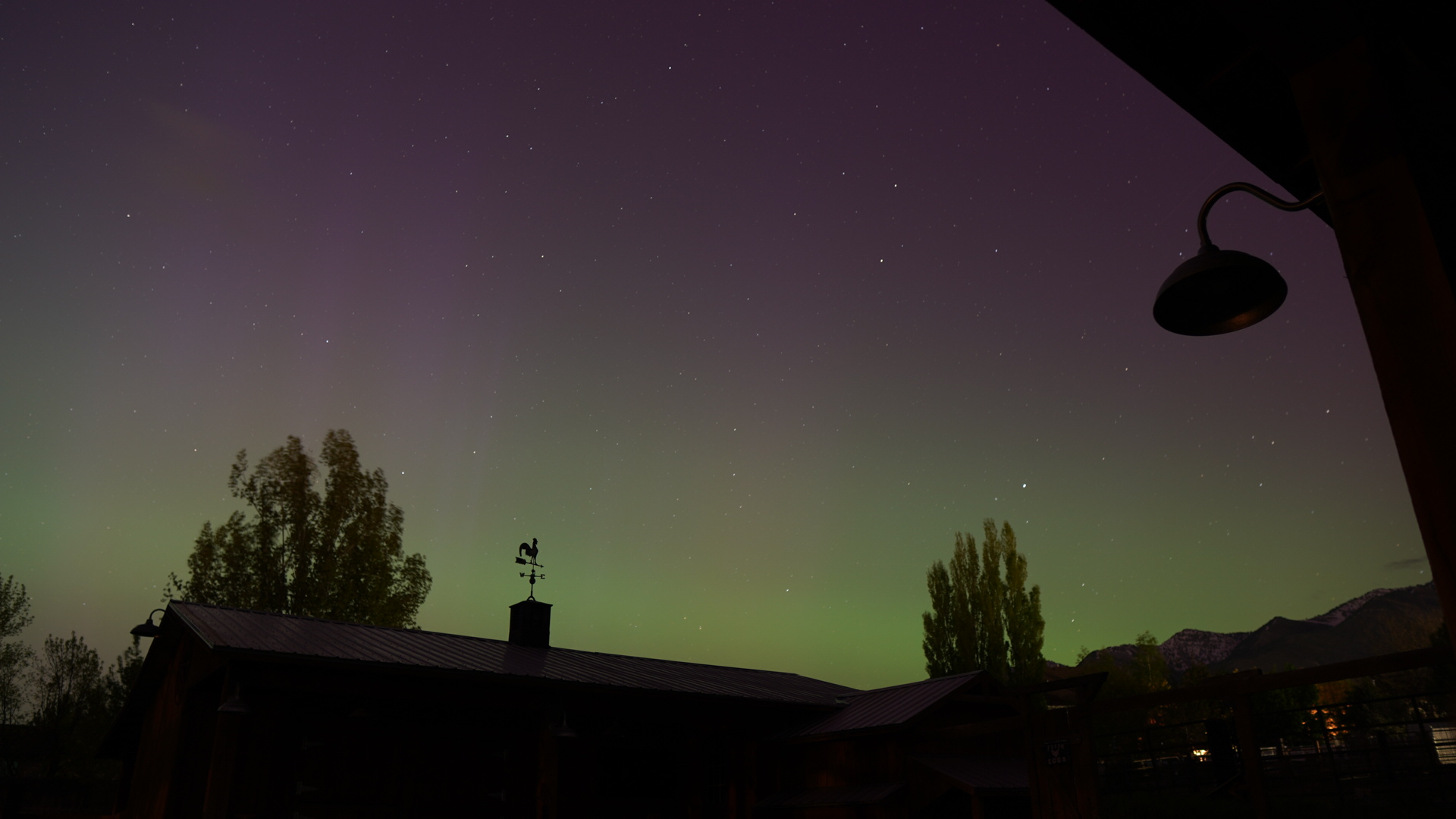 Cache Valley Star Scene
Note the sky glow below
Also note the down-focused light fixture
Courtesy & Copyright Riggs Stewart, Photographer
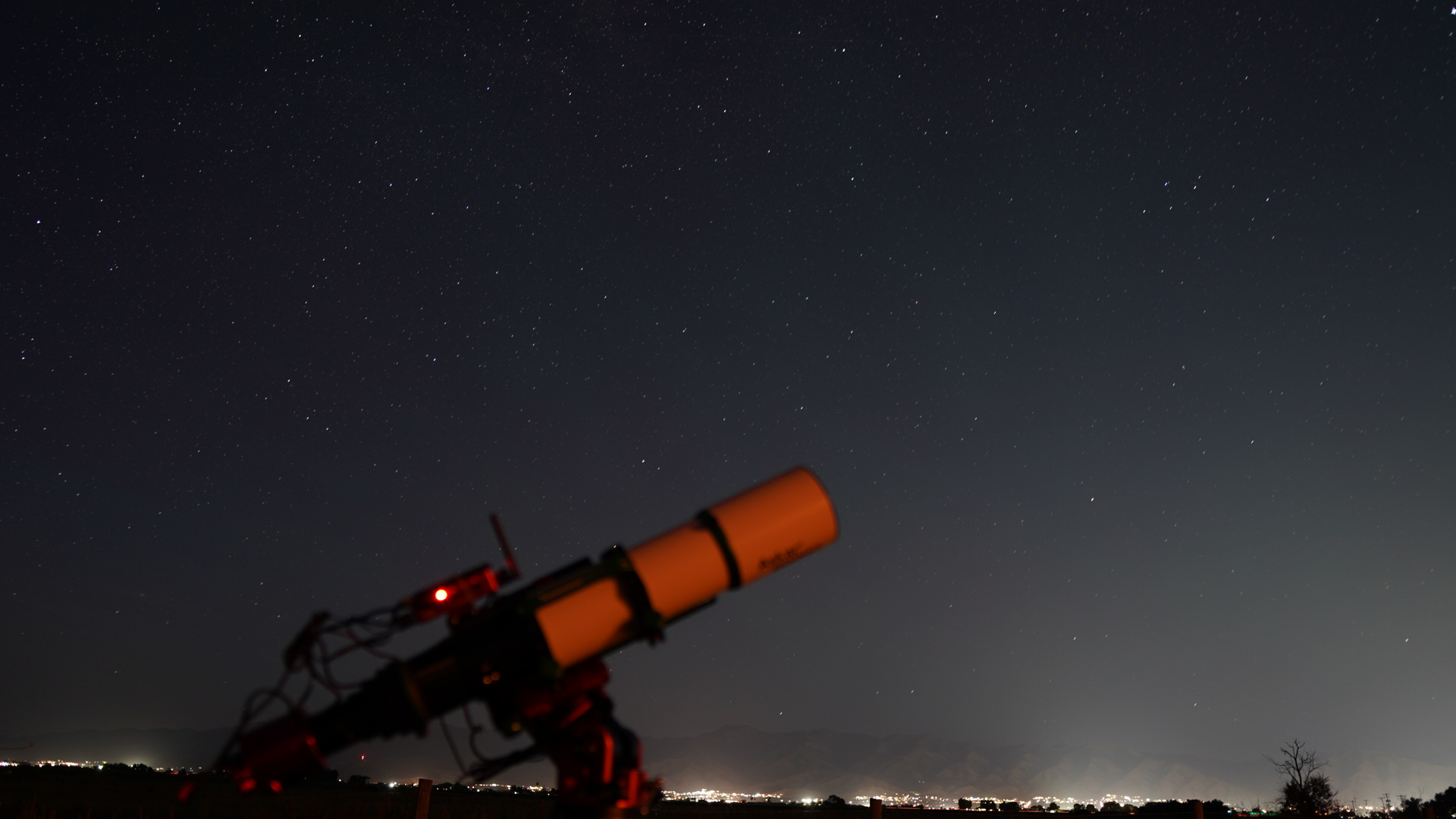 Telescope with Cache Valley in the background
Courtesy & Copyright Riggs Stewart, Photographer
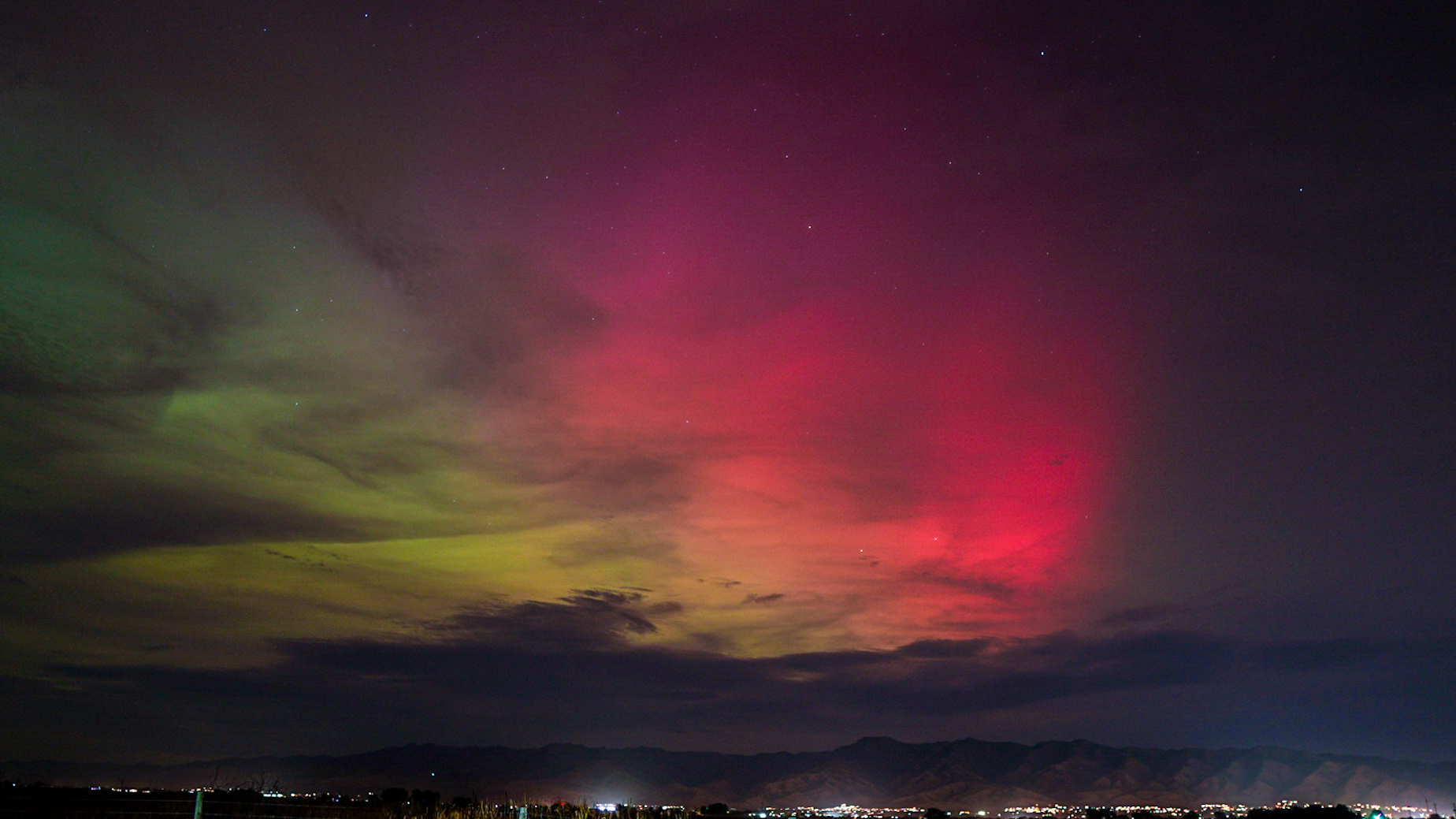 Cache Valley Aurora Borealis, Nov 11, 2025
Courtesy & Copyright Riggs Stewart, Photographer
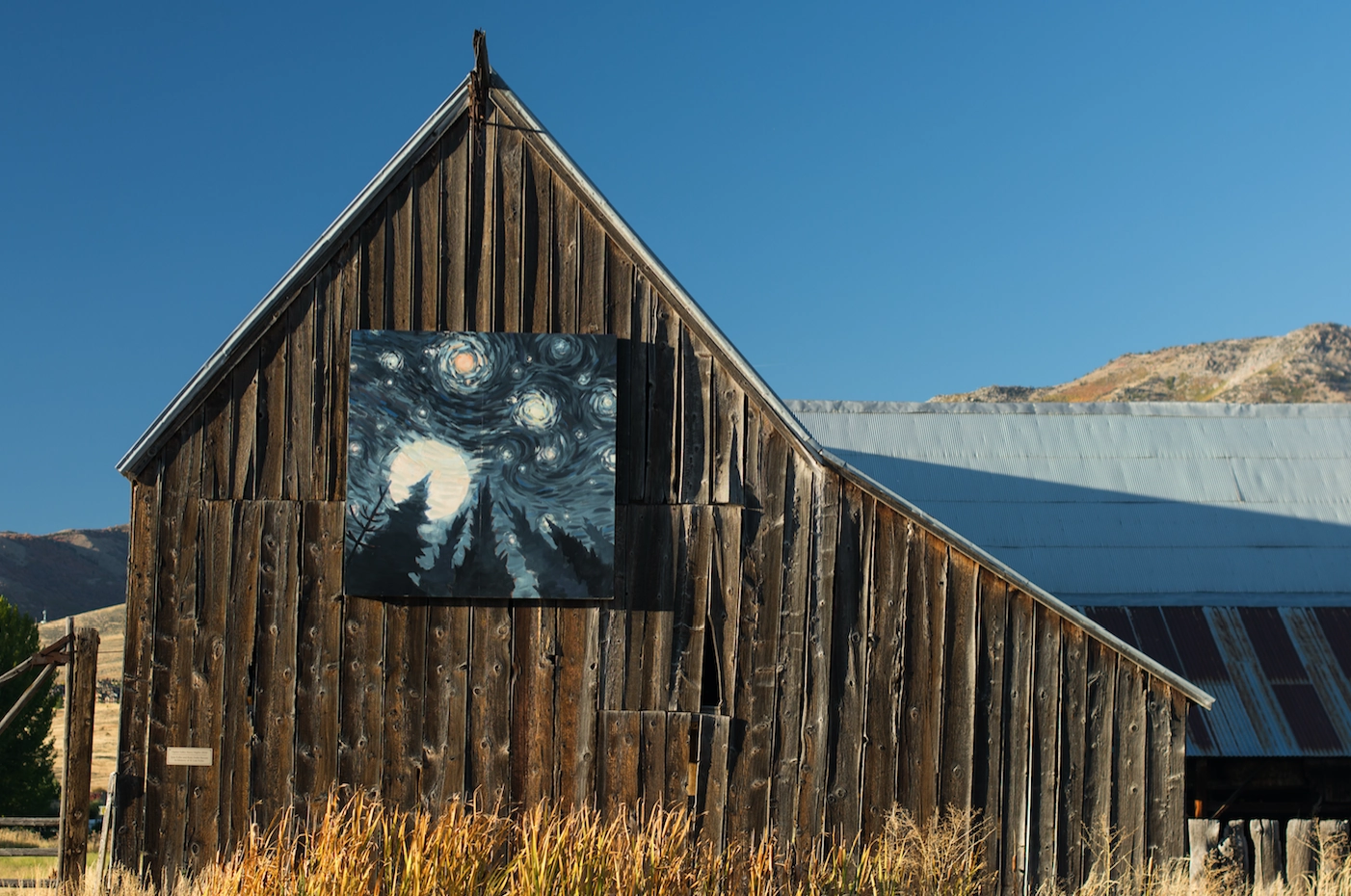 Ogden Valley Starry Nights (2016)
June Fuller and Ruby Fuller Raccasi in memory of R Gale Fuller
Jake Songer, Artist
Photo Courtesy & Copyright Lisa Stoner, Photographer
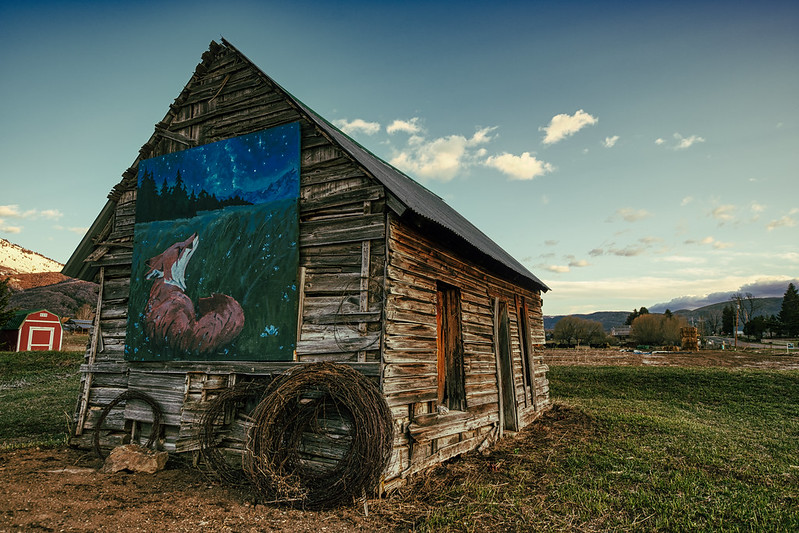 Ogden Valley Starry Nights (2020)
Fox with Milky Way, Eden UT
Solenne Songer, Artist
Photo Courtesy & Copyright Lisa Stoner, PhotographerFor millennia, the only sources of light came from… the stars, the moon, or a warm glowing fire at night, and bright blue sunlight during the day. All forms of life evolved with this very consistent day-night cycle.
In the last few hundred years, we have seen great advancements in lighting technology:
- from the oil lamps of the 1700’s
- to the “light-emitting diodes” or LEDs of today.
These advancements have changed our lives, and for the better! However, as human populations have grown, so has our use of light, and sometimes without much thought about how far light can travel, or the energy that is being used. Moreover, many of the LEDs used today are much brighter and bluer in color than the amber-colored incandescent lights of old.
“Light pollution,” is often referred to as sky glow, glare, or light trespass. It may be unintended, but is typically unwelcome, and can cause harm or discomfort. Reducing light pollution will have positive effects on the well-being and health of all living things, from plants and animals, to humans, including our mental health.
For example, light trespass that slips into a bedroom at night can affect one’s sleep. Not only is this aggravating, it can alter our circadian rhythm, which depends on a natural balance of serotonin, produced during the day under the sun’s blue light, and melatonin, produced at night in the absence of blue light.
As for our mental health, when we connect to something bigger or more profound, our problems tend to seem smaller. And being able to wish upon a star can give hope at any age.
In addition, most people need to feel safe in order to have a sense of well-being. Unfortunately, there is a common misperception that “more light is better” … when in fact, what might be safer, are what DarkSky International refers to as The Five Principles for Responsible Outdoor Lighting: all lights should have a purpose, fall where it is needed, when it is needed, be not any brighter than is needed, and warm-colored.
When outdoor lighting is designed responsibly, not only can we avoid light trespass, we can also rest assured that wildlife will be able to continue with their normal behaviors at night – birds will navigate to their seasonal destinations, newborn turtles will find the ocean’s edge, nocturnal pollinators won’t be distracted from their jobs, and food-finding and mate attraction won’t be interrupted.
When we think of natural resources, few of us think of darkness. If you hear the phrase, “dark skies,” this does not mean “dark ground.” I encourage everyone to think instead, “We can have light, but every day needs a night.”
This is Lisa Stoner, and I’m Wild About Utah’s Starry Skies.
Credits:
Images Milky Way-Courtesy US National Park Service, Emily Ogden, Photographer
Cache Valley sky, aurora & telescope photos – Courtesy & Copyright Riggs Stewart, Photographer
Paintings on Eden barns, Courtesy & Copyright Lisa Stoner, Photographer
Comet, Courtesy Pixabay, TheOtherKev, Contributor https://pixabay.com/users/theotherkev-9436196/
Featured Audio: Credit will be posted soon
Text: Lisa Stoner, Dark Sky Utah
Additional Reading: Lisa Stoner & Lyle Bingham, https://bridgerlandaudubon.org/
Additional Reading
Wild About Utah pieces by Lisa Stoner, https://wildaboututah.org/author/lisa-stoner/
Five Principles for Responsible Outdoor Lighting, DarkSky International, June 1, 2020, Updated June 11, 2024, https://darksky.org/resources/guides-and-how-tos/lighting-principles/
Kyba CCM, Altıntaş YÖ, Walker CE, Newhouse M. Citizen scientists report global rapid reductions in the visibility of stars from 2011 to 2022. Science. 2023 Jan 20;379(6629):265-268. doi: 10.1126/science.abq7781. Epub 2023 Jan 19. PMID: 36656932. https://www.science.org/doi/epdf/10.1126/science.abq7781
Callaway, K. R., Thompson, Andrea, editor, How darkness might save migratory birds
Light pollution is dangerous for birds flying over towns and cities. Here’s how you can help, Scientific American, April 24, 2026, https://www.scientificamerican.com/article/how-darkness-might-save-migratory-birds/
Harrison, Shawn, Dark Skies month celebrated with giveaway, The Herald Journal, April 6, 2026,
https://www.hjnews.com/news/local/dark-skies-month-celebrated-with-giveaway/article_fb0a9898-36cd-4f34-940c-a87c6694ab85.html
Night Sky Tonight in Logan, Utah, USA, Time & Date, https://www.timeanddate.com/astronomy/night/@5777544